
To spot early root problems, look for signs like poor growth, yellowing leaves, or weak stems, which indicate issues underground. Check for foul smells or slimy, brown roots during gentle inspections—these are signs of rot. Also, observe watering habits and soil moisture; irregular watering or waterlogged soil can stress roots. Catching these signs early helps prevent severe decline. If you want to know more about identifying these problems sooner, keep exploring the tips ahead.

Get the little things that make your day delivered free — and shop member deals
- Fast, free delivery on millions of items
- Access to Prime Big Deal Days deals on October 6–7
- Prime Video, Amazon Music and more included
Key Takeaways
- Regularly inspect roots for discoloration, soft spots, or foul odor indicating early rot or disease.
- Monitor plant growth; yellowing leaves and stunted development can signal root issues.
- Check soil moisture levels; waterlogged or very dry soil may stress roots.
- Observe drainage and aeration; poor airflow can cause root suffocation and early problems.
- Address irregular watering habits promptly to prevent fungal infections and root decay.
Have you noticed subtle changes in your plants’ growth or health? These small signs often indicate underlying root problems that, if left unchecked, can lead to decline or even plant death. One of the first clues is often related to soil aeration. When soil isn’t properly aerated, roots struggle to access oxygen, which is crucial for their health. Compact or waterlogged soil reduces airflow, causing roots to suffocate and weaken over time. You might notice that your plants are growing more slowly, their leaves are yellowing, or they’re wilting despite regular watering. These are red flags indicating that root health is compromised, and the soil may need aeration. Loosening the soil gently around the plant or improving drainage can help restore oxygen flow and support healthier root growth.
Another common sign of early root issues is nutrient deficiency, which often manifests as poor growth, pale leaves, or spots on foliage. When roots are unhealthy or damaged, they can’t efficiently absorb nutrients from the soil. Even if you’re fertilizing regularly, your plants may still show signs of deficiency if the roots are compromised. This results in a vicious cycle: weak roots can’t take up nutrients effectively, and the plant’s health deteriorates further. Pay close attention to the color and vigor of your plants; yellowing leaves, stunted growth, or weak stems can all point to root problems. To address this, check your soil’s nutrient levels and consider using a balanced, slow-release fertilizer that supports root development. Additionally, improving soil aeration enhances the roots’ ability to absorb nutrients. Recognizing the importance of proper soil aeration can help prevent many common root issues before they become severe. Proper soil management, including maintaining adequate soil moisture levels, is also essential in preventing these problems from arising. Being proactive with soil health practices can significantly improve the resilience of your plants against root-related issues.
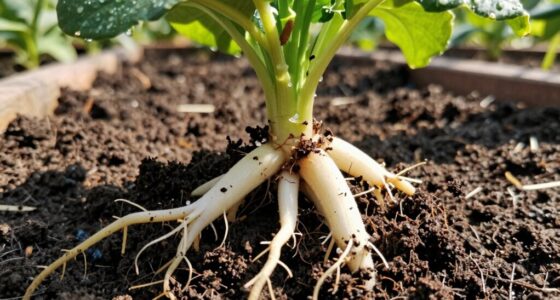
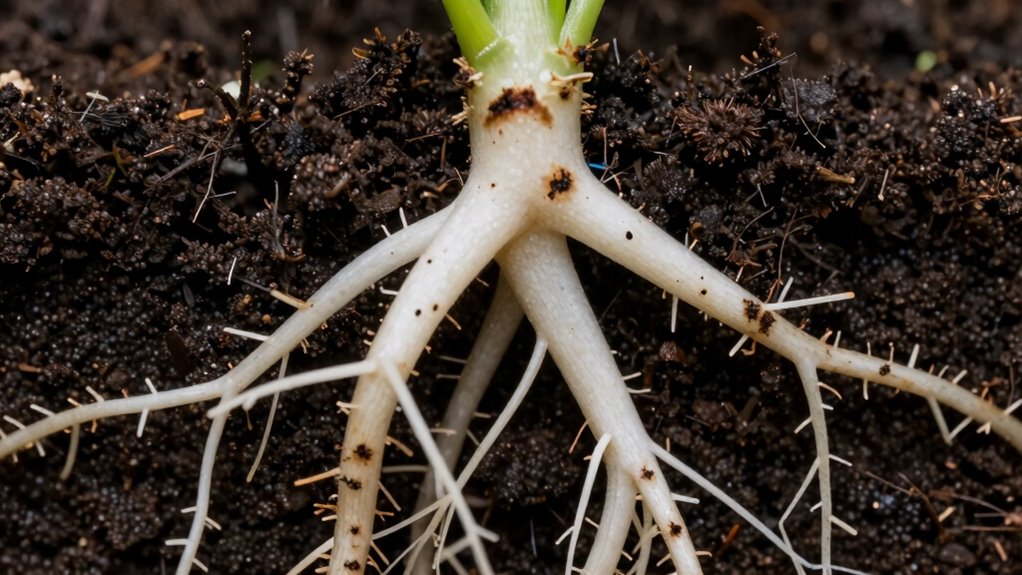
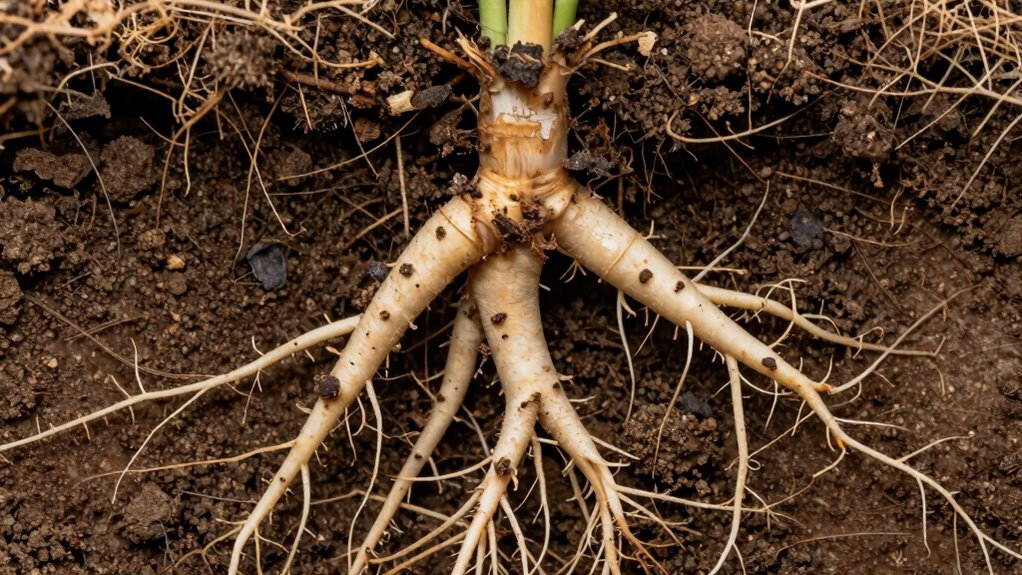
You should also be vigilant for other early signs, like irregular watering patterns or slow drainage, which can contribute to root rot or fungal infections. These issues often start subtly but can escalate quickly if ignored. Healthy roots tend to be white or light tan and firm, whereas rotting roots are brown, slimy, or foul-smelling. Regularly inspecting the root zone and ensuring proper watering habits can help catch problems early. If you notice root rot or other damage, removing affected roots and adjusting watering practices can prevent the problem from spreading. Ensuring proper soil aeration, preventing nutrient deficiencies, and maintaining good watering habits are essential steps in catching and addressing root problems before your plants decline. Early intervention makes all the difference in keeping your plants vigorous and healthy long-term.
As an affiliate, we earn on qualifying purchases.
Frequently Asked Questions
Can Root Problems Be Caused by Pests or Diseases?
Yes, pests and diseases can cause root problems. Pests like root maggots or nematodes attack roots directly, while diseases like root rot thrive in poorly aerated soil. To prevent this, guarantee proper soil aeration and encourage beneficial fungi, which help suppress harmful pathogens. Regularly inspecting roots and maintaining healthy soil conditions can catch issues early and protect your plants from decline.
How Often Should I Inspect Plant Roots?
You should inspect your plant roots every few months, especially during active growing seasons. Keep an eye on soil composition and root growth patterns; any sudden changes can signal trouble. Regular inspections help you catch issues early, preventing decline. By monitoring roots routinely, you uncover hidden problems before they escalate, giving your plants the best chance to thrive. Don’t wait—early detection is your best defense.
Are There Specific Signs of Root Rot?
Yes, there are specific signs of root rot you should watch for. You might notice wilting, yellowing leaves, or a foul smell coming from the soil. Poor soil aeration can lead to waterlogged roots, promoting rot. Additionally, a nutrient imbalance often results from damaged roots, causing stunted growth. Regularly inspecting your plants helps catch these signs early, allowing you to address root issues before they cause more significant decline.
What Tools Are Best for Examining Roots?
Like a detective revealing clues, you’ll want a sturdy trowel or hand fork for root excavation, making it easier to gently lift and examine roots. A soil moisture tester helps determine if overwatering is harming roots, uncovering hidden issues. Use a sharp pruning shear to inspect for rot or damage closely. These tools let you catch problems early, giving your plants a fighting chance before they decline.
Can Overwatering Harm Root Health?
Yes, overwatering can harm root health. Excess moisture in the soil reduces drainage, leading to waterlogged roots that struggle to get oxygen. This creates an environment where roots can rot and become diseased. To prevent this, make sure your soil has good drainage, avoid watering too frequently, and check soil moisture levels regularly. Proper watering habits help maintain healthy roots and overall plant vitality.
As an affiliate, we earn on qualifying purchases.
Conclusion
By paying close attention to subtle signs like wilting leaves or poor growth, you can catch root problems early. Think of your plants as a mirror to their roots—if something’s off above ground, it often hints at trouble below. Regular inspections and understanding these clues help you intervene before issues escalate. Remember, healthy roots are the foundation of thriving plants, so stay vigilant and trust your instincts to keep your garden vibrant and strong.
plant root health inspection kit
As an affiliate, we earn on qualifying purchases.
As an affiliate, we earn on qualifying purchases.
drainage and soil moisture meters
As an affiliate, we earn on qualifying purchases.
As an affiliate, we earn on qualifying purchases.
Halloween Picks
halloween
As an affiliate, we earn on qualifying purchases.