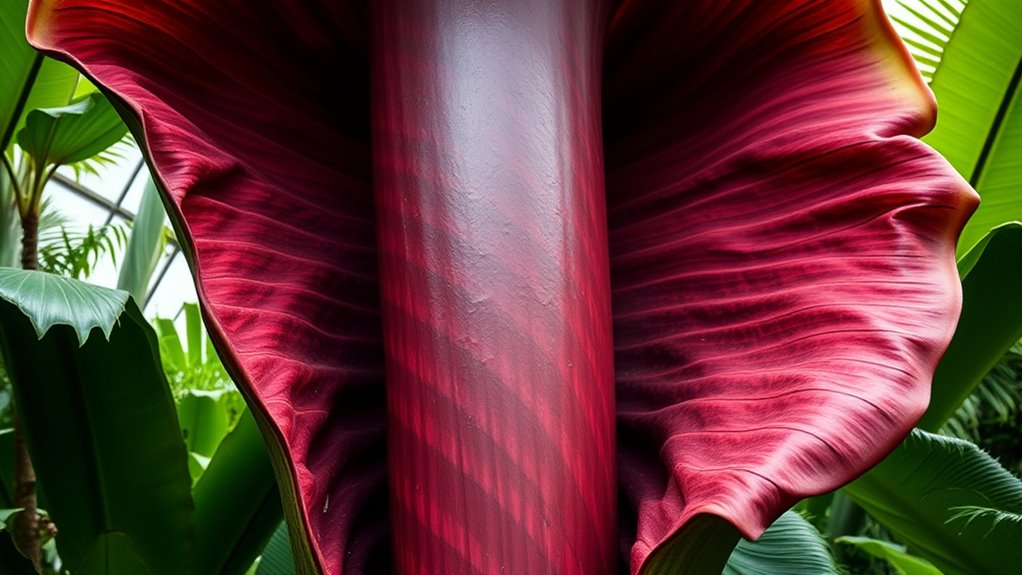

If you explore the corpse flower’s life cycle, you’ll discover how it uses heat and a pungent, flesh-like scent to attract specific pollinators like carrion beetles and flesh flies. The plant’s brief 24-48 hour bloom features dark, flesh-colored spadices and heats up to intensify its aroma, mimicking decayed flesh. This clever, timed strategy guarantees pollination within a limited window. Continue to uncover more about this remarkable process and the secrets behind its unique reproductive approach.
Key Takeaways
- The Titan Arum’s brief 24-48 hour bloom emits a strong, rotting flesh scent to attract specific pollinators like carrion beetles and flesh flies.
- It heats up to human body temperature, amplifying scent emission and aiding in the volatilization of odor compounds for effective dispersal.
- Its interior features flesh-colored spadices that visually mimic decaying flesh, reinforcing the illusion to attract pollinators.
- The plant relies on synchronized heat and scent release during blooming to maximize pollination success within a short time frame.
- The entire life cycle revolves around this fleeting bloom, utilizing complex scent compounds and structural features to ensure reproduction.
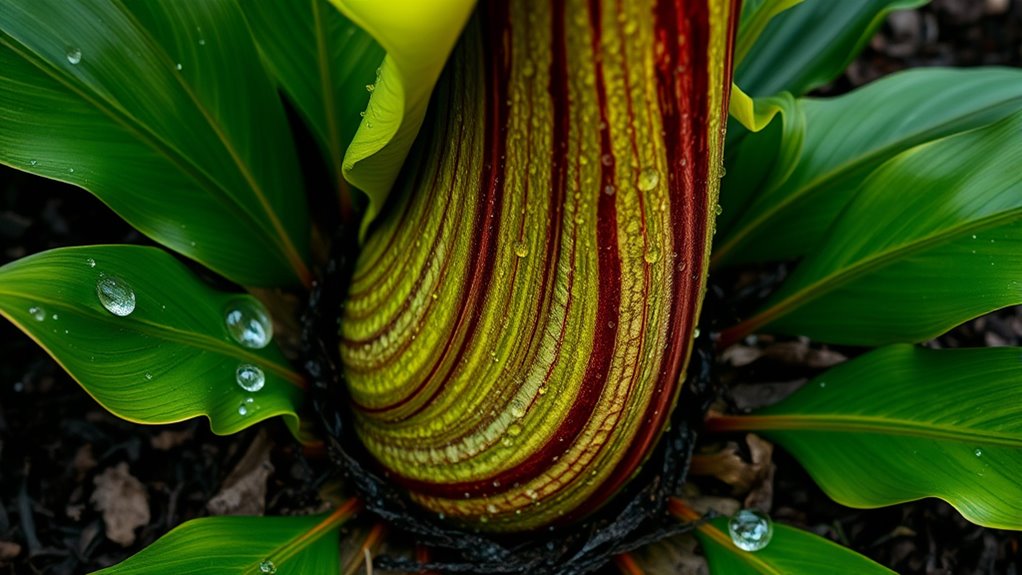
Few plants evoke such fascination and revulsion as the corpse flower, a rare and elusive bloom known for its staggering size and pungent aroma. When it finally unfurls, you can’t ignore its overwhelming scent, which mimics rotting flesh. This smell isn’t just for shock value; it plays a vital role in the plant’s pollination processes. You see, the corpse flower relies on a unique strategy: attracting specific pollinators that are drawn to carrion or decaying matter. During its brief flowering period, the plant emits this foul odor through specialized scent emission mechanisms that are finely tuned to mimic the smell of decomposing flesh. These mechanisms involve the production and release of volatile organic compounds that are highly attractive to certain insects, like carrion beetles and flesh flies, which serve as its primary pollinators.
As the flower heats up—sometimes reaching temperatures comparable to a person’s body—the scent emission becomes more intense. The heat not only amplifies the aroma but also helps volatilize the scent compounds, ensuring they disperse widely into the surrounding air. You might notice that the flower’s interior is lined with dark, flesh-colored spadices that further enhance the illusion of decay, making it irresistible to its target pollinators. These insects are lured in by the smell, thinking they’ve found a dead animal, but instead, they’re unknowingly participating in the plant’s reproductive cycle. They crawl into the flower, come into contact with the sticky pollen that sticks to their bodies, and then carry it to another corpse flower, completing the pollination process.
This entire process hinges on the intricate scent emission mechanisms that the Titan Arum has evolved over millennia. The plant’s ability to produce and emit these complex scent compounds at just the right moment is essential for its survival, especially given how fleeting its bloom is—sometimes lasting only 24 to 48 hours. During this window, the corpse flower maximizes its chances of pollination by attracting the right insects with its pungent aroma. The plant’s colorful spadix and specialized scent emission mechanisms are finely tuned to ensure successful reproduction. So, when you witness a corpse flower in full bloom, remember that every whiff of its stench is a carefully orchestrated biological process designed to guarantee the propagation of this extraordinary plant.
Frequently Asked Questions
How Long Does the Corpse Flower Typically Live?
The corpse flower typically lives for about 3 to 5 years, but its flower longevity is quite short, usually only 24 to 48 hours. Factors like temperature, humidity, and soil health influence its lifespan and blooming cycles. If you care for it properly, you can enjoy its rare bloom multiple times over several years, though each individual flowering event remains fleeting. Keep nurturing it to maximize your chances of witnessing this extraordinary bloom.
Can the Corpse Flower Bloom More Than Once?
You might wonder if the corpse flower can bloom more than once, but reflowering possibilities are rare. Unlike many plants, the Titan Arum usually flowers only once in its lifetime, making cultivation challenging. After blooming, it rarely reflowers, so growers focus on nurturing it for that single spectacular event. If you’re lucky, with ideal care, your corpse flower might surprise you with a second bloom, though it’s not guaranteed.
What Are the Main Pollinators for the Titan Arum?
You’ll find that the main pollinators for the titan arum are carrion beetles and flesh flies, attracted by its strong, foul odor during the pollination process. The flower emits a smell that mimics rotting flesh, drawing in insects seeking decaying material. As they explore for food or mates, they inadvertently transfer pollen, ensuring the plant’s reproduction. This insect attraction is essential for the titan arum’s successful pollination.
How Do Cultivators Care for a Corpse Flower?
Caring for a corpse flower requires careful cultivation techniques and vigilant pest management. You should provide a warm, humid environment, mimicking its natural habitat, with consistent watering and proper drainage. Regularly inspect for pests like thrips or beetles, and remove any affected foliage promptly. You also need to guarantee the plant gets enough sunlight and avoid overfeeding. By combining consistent care with proactive pest prevention, you’ll help your titan arum thrive and flourish.
Are Corpse Flowers Toxic to Humans or Pets?
You don’t need to worry about plant toxicity with corpse flowers; they’re not toxic to humans or pets. While their smell might be unpleasant, they pose no health risks, so pet safety isn’t compromised. However, it’s always wise to keep curious pets away from unfamiliar plants to prevent any accidental ingestion or irritation. Rest assured, caring for a corpse flower is safe for your household, and its unique features won’t harm anyone.
Conclusion
As you witness the wondrous, wilting world of the titan arum, remember its remarkable resilience and rare, riveting bloom. From sprouting spadices to spectacular stinks, each stage tells a story of survival and spectacle. Embrace the extraordinary experience, and let the lifecycle of this colossal corpse flower captivate your curiosity and curiosity’s core. In its imperious impermanence, the titan arum teaches you to treasure transient treasures and timeless tales.