
Some plants close their leaves at night to save water and prevent evaporation, especially in dry environments. They also protect themselves from nocturnal predators and insects, creating a barrier to reduce damage. During the night, closing leaves helps conserve energy since photosynthesis isn’t happening. This behavior is controlled by their internal rhythms, matching their activity to environmental conditions. If you want to understand more about why plants adapt this way, keep exploring the fascinating details behind their nighttime movements.
Key Takeaways
- Closing leaves reduces water loss through evaporation during cooler, humid nighttime conditions.
- It conserves energy by minimizing unnecessary photosynthesis-related activities when sunlight is absent.
- Leaf movement is driven by circadian rhythms, aligning plant functions with environmental cycles.
- Closure acts as a defense mechanism against nocturnal herbivores and insects.
- Reduced leaf exposure helps protect tissues from cooler temperatures and potential damage at night.
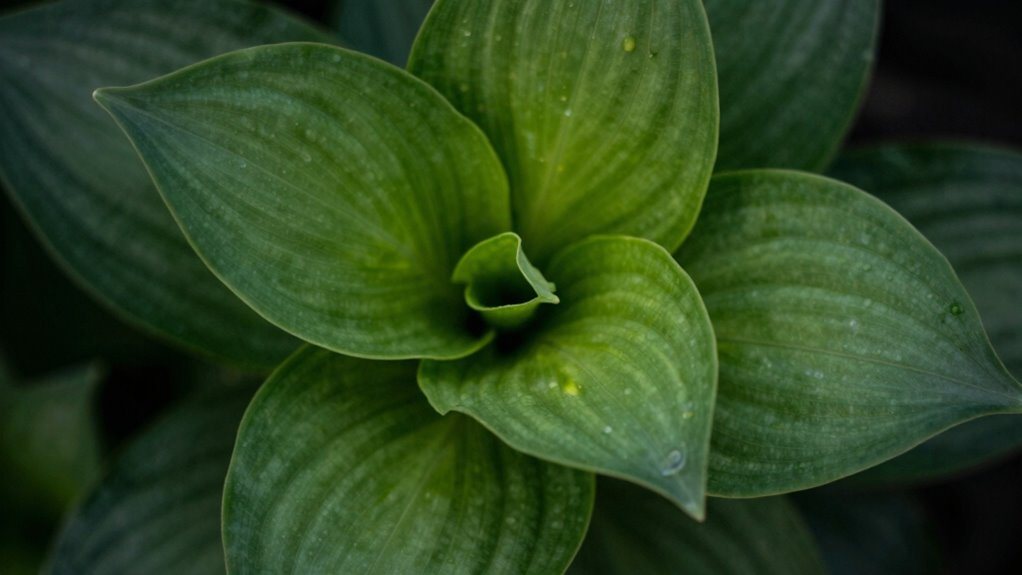
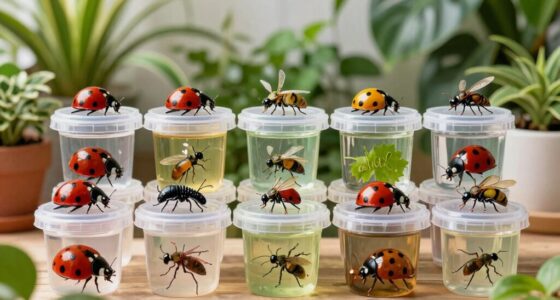
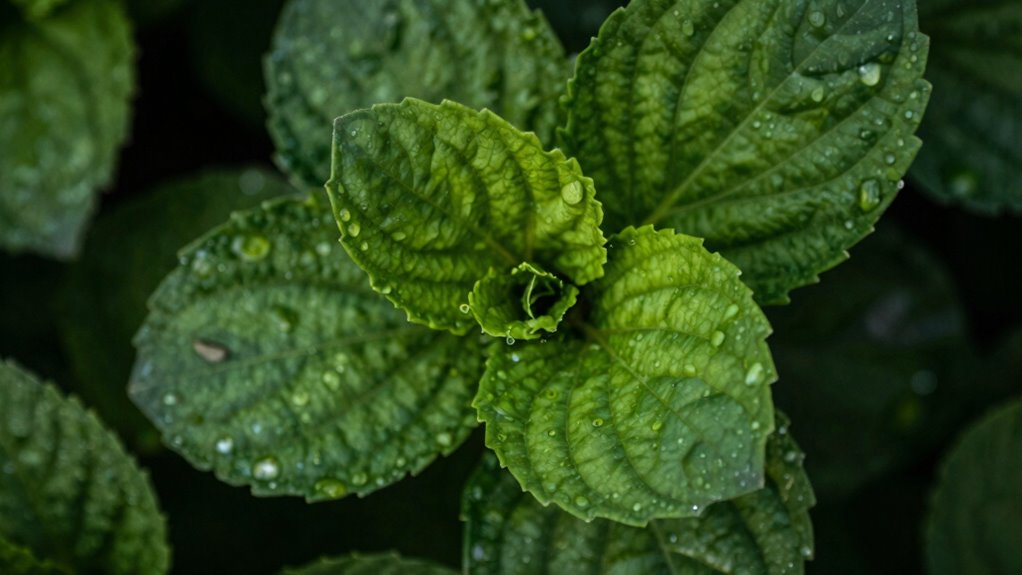
Many plants close their leaves at night to conserve water and protect themselves from the cooler, more humid conditions. When darkness falls, the risk of water loss through evaporation increases as temperatures drop, but humidity rises. By closing their leaves, these plants reduce the surface area exposed to the air, helping them retain moisture. This strategy is especially crucial in dry environments where water conservation is critical for survival. You might notice that some plants, like succulents or desert flora, close their stomata—tiny pores on leaves—more tightly during the night to prevent unnecessary water loss. This adaptation not only conserves water but also allows the plant to survive periods of limited water availability. Additionally, chlorophyll efficiency can be affected by leaf movements, influencing how plants manage energy during different times of the day. Closing leaves at night also influences the plant’s photosynthesis efficiency. During daylight, plants rely on sunlight to produce energy through photosynthesis, a process that depends heavily on open leaves to capture light. However, at night, photosynthesis halts because there’s no sunlight. When leaves are closed, the plant minimizes energy expenditure and reduces the risk of damage from cooler temperatures. It’s a way of conserving resources until the sun rises again. This behavior helps the plant balance its energy budget, ensuring it doesn’t waste valuable nutrients or water when the environment isn’t conducive to photosynthesis. In reality, leaf closure at night is an energy-saving tactic that maximizes overall health and growth potential. Moreover, some plants have developed nocturnal behaviors to further enhance their survival during nighttime challenges. Researchers have also observed that plant movements are often involuntary responses driven by internal circadian rhythms. These rhythms help synchronize plant activities with environmental cycles, making leaf closure a part of their natural biological clock. Your awareness of nocturnal predators also plays a role in why some plants close their leaves. Many animals, such as insects or herbivores that feed during the night, pose a threat to plants. By closing their leaves, plants create a barrier that makes it harder for these nocturnal predators to access their tissues. This defense mechanism reduces the chances of being eaten or damaged, helping the plant survive longer and reproduce successfully. The closing of leaves acts as a form of protection, especially in ecosystems where nighttime herbivory is common.
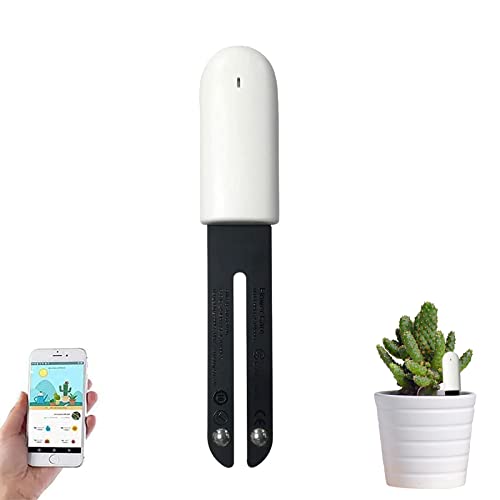
Soil Moisture Meter 4 in 1,Plant Water Monitor,Automatically detect Moisture/Temperature/Light/Fertility,Can Connect to Mobile Phone via Bluetooth,Hygrometer Sensor for Indoor Plants (1pc)
- Multifunctional Plant Care Monitor: Monitors humidity, light, fertility, temperature
- Bluetooth Connectivity: Connects to iOS and Android apps
- Automatic Soil Moisture Detection: Quickly detects soil water levels
As an affiliate, we earn on qualifying purchases.
As an affiliate, we earn on qualifying purchases.
Frequently Asked Questions
Do All Plants Close Their Leaves at Night?
Not all plants close their leaves at night. Many use nocturnal adaptations, such as leaf movement evolution, to survive better in their environments. For example, some plants close their leaves to conserve water or protect themselves from cold temperatures. Others, like certain desert plants, open their leaves during the night. You’ll notice this behavior mainly in plants that have adapted to specific conditions, but it isn’t universal across all plant species.
How Quickly Do Leaves Close After Sunset?
Leaves typically close within a few minutes to an hour after sunset, depending on the plant species. This rapid response helps regulate photosynthesis and conserve water, serving as a nocturnal adaptation. You’ll notice some plants close their leaves quickly to prevent excessive water loss and protect their tissues during the cooler, darker night. This quick closure is a strategic way to maintain balance between oxygen intake and water retention.
Can Environmental Factors Influence Leaf Movement?
Yes, environmental factors influence leaf movement. Light sensitivity affects how plants respond to changes in light, prompting leaves to close or open accordingly. Circadian rhythms also play a key role, as they regulate daily cycles, including leaf movements. When light levels shift or temperatures change, plants adjust their leaf positions to optimize photosynthesis or protect themselves, demonstrating how environmental cues directly impact their behavior and movement patterns.
Do Leaf-Closing Mechanisms Vary Among Plant Species?
Yes, leaf-closing mechanisms vary among plant species. You’ll find that many plants use adaptive strategies driven by circadian rhythms to optimize their survival. Some plants close their leaves at night to conserve water or reduce damage from cold temperatures, while others keep them open for photosynthesis during the day. These variations help plants adapt to their specific environments, ensuring they maximize resources and minimize risks.
Is Leaf Movement Affected by Plant Age or Health?
You’ll find that leaf movement is indeed affected by plant age and health. As leaves age, they tend to close or droop more, partly because of declining cell vitality. Healthy plants, however, actively move their leaves to optimize light and water use. Interestingly, studies show that older or less healthy plants might close their leaves more frequently, possibly as a protective response. So, keeping your plant healthy helps maintain its natural leaf movement.

Circadian Rhythm Chart 24 Hour Body Clock Poster Holistic Health Wall Art Traditional Chinese Medicine Canvas Print for Clinic Living Room Office Decor(Unframed,12x12inch(30x30cm))
- Framing Margin: Includes 0.6in white border for framing
- Durable Canvas Material: Resistant to humidity and environmental damage
- Color Variations: Slight color differences due to monitor settings
As an affiliate, we earn on qualifying purchases.
As an affiliate, we earn on qualifying purchases.
Conclusion
So, next time you marvel at a plant’s seemingly secretive nighttime retreat, remember—it’s actually quite the clever trick. While we often think of plants as passive, they’re quietly closing their leaves to conserve energy and protect themselves. Ironically, in doing so, they remind us that sometimes, the best way to stay strong and survive is to simply retreat in silence. Nature’s subtle wit leaves us wondering who’s really in control—us or the plants.

11Pcs Succulent Tools, Mini Garden Tools, Plant Repotting Set(No Flowerpot)
- Complete Succulent Gardening Set: 11-piece mini gardening tools kit
- Durable High-Quality Materials: Stainless steel, lacquered iron, sturdy wood handles
- Leak-Proof Planting Mat: Waterproof, leak-proof potting mat included
As an affiliate, we earn on qualifying purchases.
As an affiliate, we earn on qualifying purchases.

Bird Netting for Garden Protection – 4 Pack Garden Netting Pest Barrier with Drawstring,3.3Ft x 2.7Ft Mosquito Net Tomato Protective Cover Garden Plant Netting for Cicadas Vegetables Blueberry Bushes
- Protects Vegetables and Fruits: Safeguards crops from pests and birds
- Easy to Use and Adjust: Features a drawstring for quick setup
- Lightweight and Durable: Made of sturdy, transparent PE material
As an affiliate, we earn on qualifying purchases.
As an affiliate, we earn on qualifying purchases.