UV light can damage your plants by penetrating their tissues and disrupting essential processes like photosynthesis. This leads to signs like browning, wilting, or spots on leaves, weakening overall health. Plants cope by producing protective barriers such as a waxy coating and hairs, along with absorbing UV rays through compounds like flavonoids and antioxidants. To learn more about how plants defend themselves and what you can do to help them, keep exploring these natural strategies.
Key Takeaways
- UV light damages plant tissues, causing browning, wilting, and cell disruption that impair overall health.
- Plants develop physical barriers like waxy coatings and trichomes to reflect or absorb UV rays.
- Biochemical defenses, including flavonoids and antioxidants, absorb UV radiation and neutralize damaging reactive species.
- Structural adaptations such as thicker leaves, leaf orientation changes, and pigmentation help minimize UV damage.
- Practical measures like shade cloths and proper positioning support plant resilience against high UV exposure.
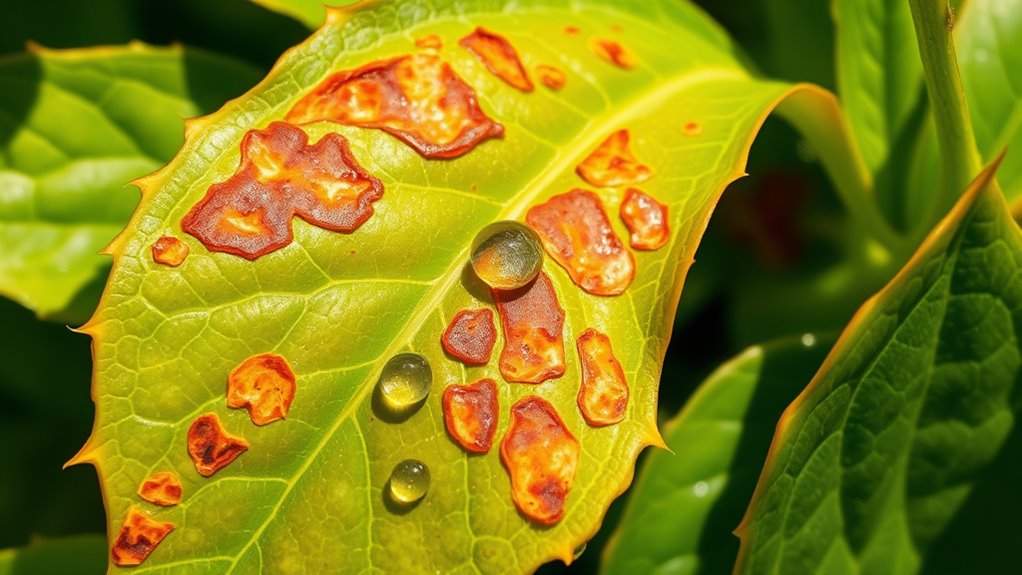
When plants are exposed to excessive ultraviolet (UV) light, they can suffer from sunburn, much like humans do. UV rays penetrate the plant’s tissues, damaging cells and disrupting essential processes like photosynthesis. This damage manifests as browning, wilting, or spotting on leaves, which weakens the plant’s overall health. To survive and thrive under intense sunlight, plants have developed various strategies for UV protection and adaptation. You might notice that some plants produce a waxy coating or a layer of hairs on their surfaces; these features serve as physical barriers that reflect or absorb harmful UV rays. Others synthesize specialized compounds called flavonoids and phenolics, which act as natural sunscreens by absorbing UV radiation before it can penetrate deeper tissues.
Plants protect themselves from UV damage with waxy coatings, hairs, and natural sunscreens like flavonoids and phenolics.
Plant adaptation is a key factor in how they cope with high UV exposure. Many species have evolved structural changes that minimize damage, such as thicker leaves with more robust cell walls or a compact growth form that reduces surface area exposed to the sun. Some plants adjust their leaf orientation, angling leaves away from the sun during the hottest parts of the day, therefore reducing UV exposure. You’ll also find that certain plants change their pigmentation, producing darker or more protective pigments that shield underlying tissues from harmful rays. These adaptations are often the result of genetic variation and natural selection, enabling plants to survive in environments with intense sunlight. Additionally, natural selection plays a crucial role in shaping these protective features over generations.
UV protection doesn’t just involve physical changes; it also includes biochemical responses. When UV levels are high, plants ramp up the production of antioxidants, which neutralize reactive oxygen species generated by UV damage. This response helps prevent cellular deterioration and supports repair processes. Additionally, some plants activate repair mechanisms that remove and replace damaged DNA or proteins, maintaining cellular integrity even under stress. These combined physical and biochemical strategies demonstrate how resilient plants are in their ability to adapt to UV stress.
Understanding these mechanisms highlights the importance of providing the right conditions for your plants. If you’re growing them outdoors in high UV environments, consider shielding them with shade cloths or positioning them where they receive some protection during peak sunlight hours. Ensuring they have access to water and nutrients helps strengthen their natural defenses. By recognizing how plants adapt and protect themselves against UV damage, you can better support their health and longevity, ensuring they remain vigorous despite the challenges posed by sunburn and intense sunlight exposure.
Frequently Asked Questions
How Quickly Can Plants Recover From Sunburn Damage?
Recovery time varies depending on damage severity, but you can generally expect plants to bounce back within a few weeks if the sunburn isn’t severe. Light damage might heal quickly, while more serious burns could take longer. To speed up recovery, make certain your plants get proper watering, shade, and nutrients. Keep an eye on their progress and avoid exposing them to intense sunlight until they show signs of healing.
Are Some Plant Species More Resistant to UV Damage?
Yes, some plant species are more resistant to UV damage. You’ll find that plants with higher plant resistance and UV tolerance often have thicker leaves, protective pigments, or specialized structures like trichomes. These adaptations help them minimize UV harm, allowing them to thrive in intense sunlight. If you want to grow sun-hardy plants, look for varieties naturally equipped with these features, as they’re better suited to withstand UV stress.
Can UV Protection Be Applied Externally to Prevent Sunburn?
Imagine wrapping your plant in a shield of UV protective coatings, like a suit of armor against the sun’s harsh rays. External application of UV protective coatings can help prevent sunburn by forming a barrier that absorbs or reflects harmful UV light. You can apply these coatings to leaves or stems, giving your plant an extra layer of defense, much like sunscreen, to keep it healthy and thriving under intense sunlight.
Does UV Light Affect Plant Reproductive Processes?
UV light influences plant reproductive processes by affecting reproductive timing and triggering UV-induced pigmentation. You’ll notice plants often delay flowering or seed production under intense UV exposure, as they adapt to stress. UV-induced pigmentation, like protective pigments, helps shield reproductive tissues. So, UV light can impact when and how effectively plants reproduce, prompting them to develop strategies to cope with increased UV levels.
How Does Climate Change Impact Uv-Related Plant Stress?
Climate change increases UV radiation fluctuations, exposing plants to more intense and unpredictable UV levels. As global warming effects intensify, plants struggle to adapt to these heightened UV stresses, which can damage their DNA and cellular structures. You’ll notice these impacts as decreased growth and reproductive success. To survive, plants may activate protective mechanisms, but ongoing climate shifts could overwhelm their coping strategies, making them more vulnerable to UV-related stress.
Conclusion
Think of your plants as brave sailors steering a relentless sunlit sea. UV rays are the storms they face, threatening to scorch their leaves and weaken their resolve. Yet, like seasoned mariners, they develop shields—thickened skins and protective compounds—that help them endure. By understanding these defenses, you can guide your garden through the storm, helping your plants grow resilient and thriving, even under the blazing sun. Together, you and your green friends sail toward healthier days.