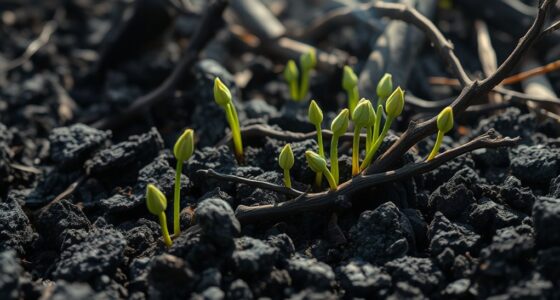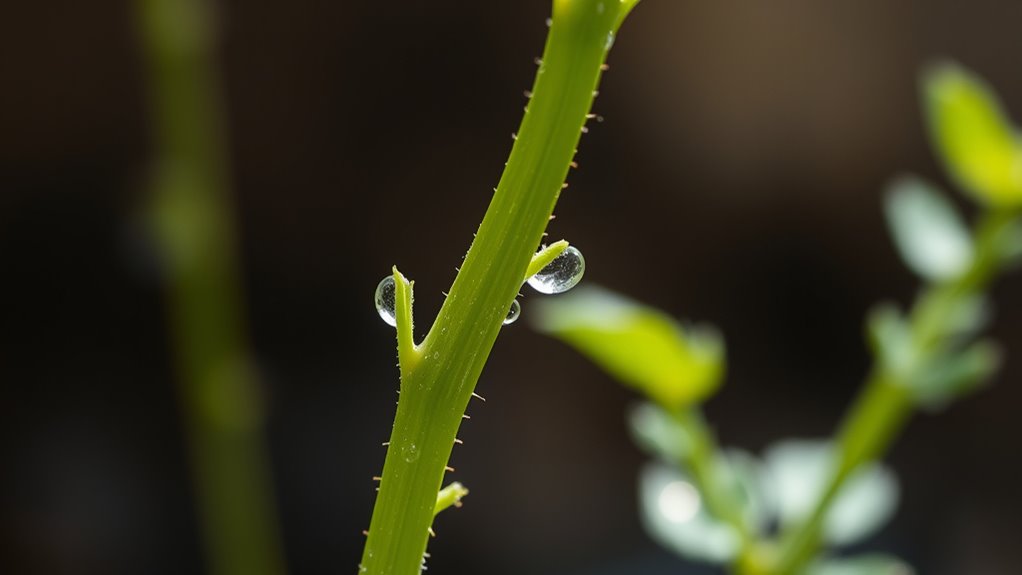

When you touch a plant, it detects the physical stimulus through specialized sensory cells, triggering a response known as thigmomorphogenesis. This process leads to structural changes, such as thicker stems and increased lignin or fiber production, which help the plant become sturdier. Hormonal adjustments, like the redistribution of auxins, also slow down elongation and redirect growth. To uncover how these touch-induced changes enhance plant resilience, explore further insights below.
Key Takeaways
- Touch stimulates plant sensory cells, triggering cellular and molecular responses that alter growth patterns.
- Mechanical stimuli induce thigmomorphogenesis, leading to thicker stems and reinforced tissues for structural strength.
- Touch causes hormonal changes, such as auxin redistribution, which slow elongation and promote sturdiness.
- Regular mechanical contact encourages plants to develop more compact, resilient growth forms.
- These adaptations improve plant survival against environmental stresses like wind and physical contact.

Have you ever wondered how plants change their growth in response to physical contact or mechanical stimuli? It might seem surprising, but plants are highly sensitive to touch and other mechanical signals. When a plant’s stem or leaves are brushed, tapped, or bent, it detects these stimuli through specialized cells that act like sensory receptors. This process triggers a cascade of responses that influence how the plant grows and develops over time. Unlike animals, plants don’t move away from touch; instead, they adapt their structure to better suit their environment, which is a remarkable survival strategy.
Plants sense touch through specialized cells and adapt their growth for survival.
This phenomenon, called thigmomorphogenesis, involves changes at the cellular and molecular levels. When a plant experiences mechanical stress, it often responds by producing more thickening tissues, such as fibers and lignin, which reinforce its structure. As a result, the plant becomes sturdier and less likely to break under future stress. For example, a young sapling that’s regularly brushed by wind or animals will tend to develop a thicker stem compared to a sheltered counterpart. This adaptation isn’t just about strength; it can also influence the shape of the plant, causing it to grow more compactly or develop shorter, bushier forms.
The process is also linked to hormonal changes within the plant. Mechanical stimuli often lead to the production of plant hormones like auxins and cytokinins that regulate growth. When a plant is touched, auxins may redistribute within the tissues, signaling cells to slow down elongation in certain areas and promote thickening. This hormonal response helps the plant redirect its resources toward strengthening its structure rather than elongating excessively. It’s a finely tuned system that allows plants to respond quickly to their environment, ensuring their survival against physical challenges like wind, rain, or animal contact.
Interestingly, thigmomorphogenesis isn’t just a defensive mechanism; it can also be used intentionally in horticulture and agriculture. Growers sometimes apply mechanical stimulation to young plants to produce stockier, more resilient specimens. This technique mimics natural stress and helps create plants better suited for harsh conditions. Additionally, understanding the mechanosensory mechanisms involved in this process can lead to improved cultivation practices. Overall, the ability of plants to perceive and respond to touch demonstrates an intricate form of environmental awareness that’s essential for their adaptation and survival. So next time you gently brush past a plant, remember—you’re engaging with a living organism that’s constantly adjusting itself to thrive in its world.

Engineered Essentials USA Made The Original 90 Degree Plant Trainer- for Low Stress Training (LST) and Plant Training
30 Pack
As an affiliate, we earn on qualifying purchases.
As an affiliate, we earn on qualifying purchases.
Frequently Asked Questions
How Quickly Do Plants Respond to Tactile Stimuli?
You might notice that plants respond to tactile stimuli within hours or days, depending on the species and the intensity of the touch. When you touch or brush against a plant, it quickly detects the stimulus through specialized cells. This triggers a series of cellular responses, leading to changes in growth patterns, like thicker stems or shorter internodes, often within a few days as the plant adapts to its environment.
Are Certain Plant Species More Sensitive to Touch Than Others?
Yes, certain plant species are more sensitive to touch than others. You’ll notice some plants, like Mimosa pudica, react quickly and fold their leaves when touched, while others show minimal response. These differences depend on their evolutionary adaptations and environmental needs. You might find that herbaceous plants tend to be more tactile-sensitive, whereas woody plants are generally less reactive. Your observations can reveal fascinating variations in plant sensitivity to tactile stimuli.
Can Thigmomorphogenesis Be Artificially Induced in Plants?
Yes, you can artificially induce thigmomorphogenesis in plants. Studies show that consistent mechanical stimulation can cause plants to grow sturdier and shorter, mimicking natural touch responses. By gently brushing or shaking plants regularly, you trigger these changes, which can be useful in agriculture or horticulture. This technique helps strengthen plants against wind or physical stress, ultimately improving their resilience and structural stability.
What Are the Molecular Mechanisms Behind Touch-Induced Changes?
You activate molecular mechanisms when you touch plants, primarily involving mechanosensitive channels opening to release calcium ions. This influx triggers signaling pathways, activating proteins like calmodulin and kinases, which then alter gene expression. These changes lead to modifications in cell wall structure and growth patterns. Fundamentally, your touch influences a cascade of molecular events that tell the plant to adapt and grow differently in response to mechanical stimuli.
Does Thigmomorphogenesis Affect a Plant’s Lifespan or Reproductive Success?
Yes, thigmomorphogenesis can influence a plant’s lifespan and reproductive success. When you touch or shake plants regularly, they often grow sturdier, which can extend their lifespan by reducing damage. Stronger stems and healthier structures improve reproductive success by supporting flowers and fruit better. However, excessive or improper touch might stress plants, potentially shortening their lifespan or hindering reproduction, so balance is key.
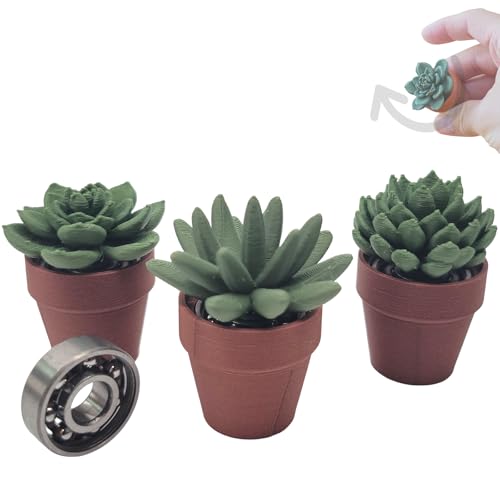
Spinning Succulent Fidget Spinner, 3D Printed Mini Plant Fidget, Stress Relief Spinner for Adults and Teens, Perfect Desk Accessory, Unique Gift for Plant Lovers and Fidget Enthusiasts
🌵Unique Succulent Fidget Toy: Bring a touch of nature to your desk or workspace with this charming succulent-inspired…
As an affiliate, we earn on qualifying purchases.
As an affiliate, we earn on qualifying purchases.
Conclusion
As you touch a plant, you’re like a gentle whisper guiding its growth, shaping its form like a sculptor with invisible hands. Thigmomorphogenesis reveals how your touch transfers life’s secret language, encouraging resilience and strength. Every brush sends ripples through its fibers, transforming vulnerability into vigor. So, remember, your touch isn’t just a fleeting moment—it’s a quiet symphony that nurtures nature’s silent rebirth, reminding us that even the smallest gesture can sculpt a world of growth.

Extendable Plant Stakes, Length Scalable from 17.9IN to 42.3IN Plant Support Stake, Orchid Sticks with Clips for Indoor Outdoor,Garden Stakes for Plant,Tomato,Vegetables,Monstera,Vine – 3Pack
【User-Friendly Accessories】: Each set includes 3pcs 17.9Inch sturdy extendable plant stakes/monstera plant support, 3 detachable top clips, and…
As an affiliate, we earn on qualifying purchases.
As an affiliate, we earn on qualifying purchases.

Set of 2 Cape Sundews | Drosera Capensis Live Carnivorous Plants | Includes 2 Plants, 2 Pots, Long Fiber Sphagnum Moss, and Water Tray | Live Sundews
Live Carnivorous Plants – Set of 2 Cape Sundews (Drosera capensis), perfect for beginner and expert growers alike.
As an affiliate, we earn on qualifying purchases.
As an affiliate, we earn on qualifying purchases.