
Shade-tolerant plants thrive with little light by adapting their growth habits and leaf structures to maximize energy absorption in low-light conditions. They often have broad leaves that capture more sunlight and grow slowly to conserve resources. These plants typically develop strong root systems and require less water and fertilization, making them resilient in shaded spots. If you’re curious about how to successfully incorporate these plants into your space, there’s more to discover just ahead.
Key Takeaways
- Shade-tolerant plants have large, broad leaves that maximize photosynthesis in low-light conditions.
- They often develop efficient chloroplasts to optimize light absorption in shaded environments.
- These plants typically have slower growth rates, conserving energy when light is limited.
- Native shade plants are well adapted to local soil and climate, enhancing their survival with minimal resources.
- Their deep roots help access water and nutrients efficiently, supporting health in low-light, less vibrant conditions.
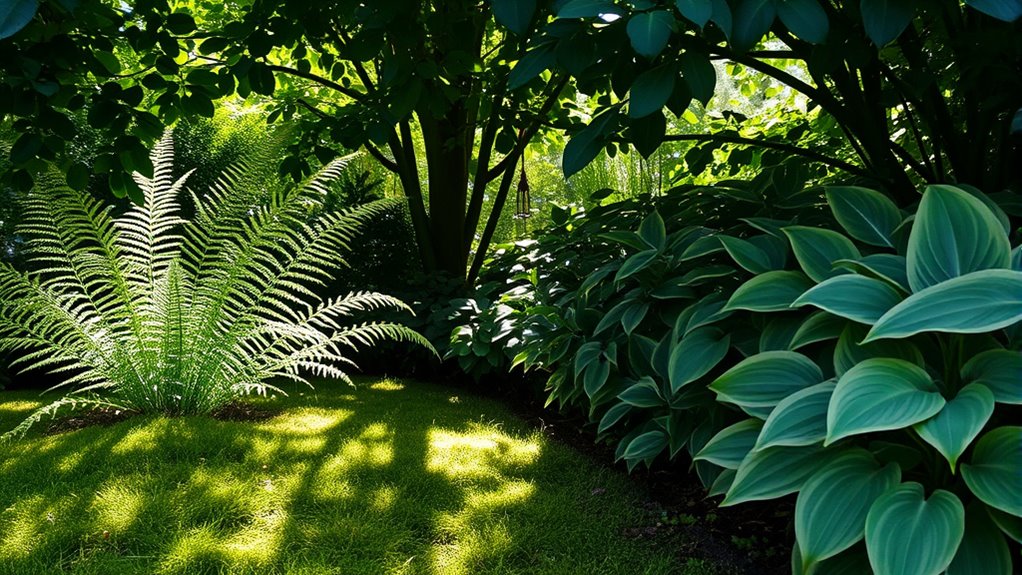
Shade-tolerant plants are ideal for areas with limited sunlight, allowing you to create lush, vibrant gardens even under trees or in shaded corners. If you’re working on urban landscaping, choosing the right shade-loving plants can transform dull, neglected spaces into thriving green retreats. When selecting plants for shaded urban environments, native plant selection becomes especially important. Native plants are adapted to your local climate and soil conditions, making them more resilient and easier to maintain in low-light spots. Plus, they support local ecosystems by providing habitat for native insects and birds, enhancing urban biodiversity.
Native shade-tolerant plants thrive in low-light urban spaces, supporting biodiversity and reducing maintenance needs.
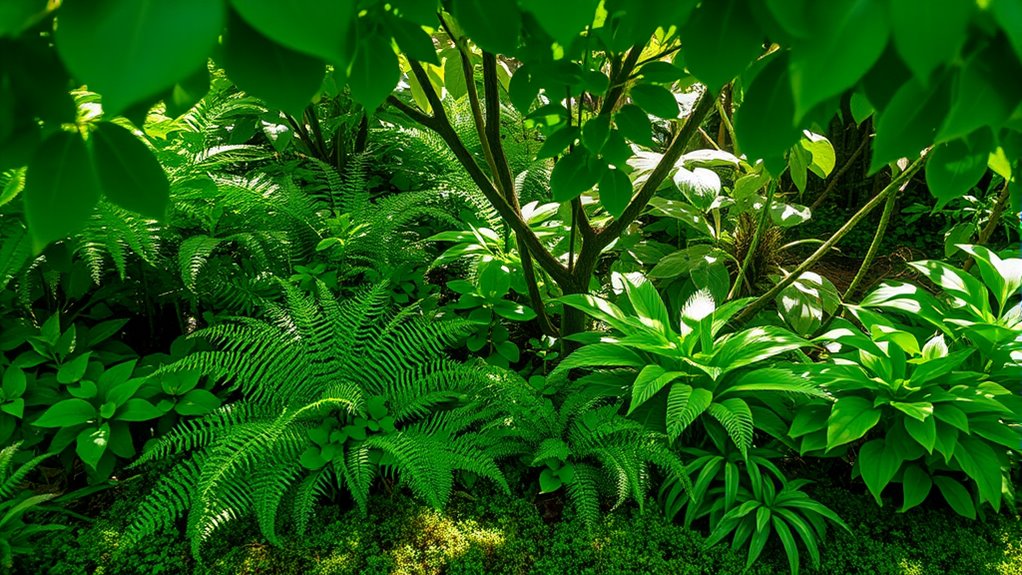
In urban landscaping projects, integrating native shade-tolerant plants ensures your garden looks natural and cohesive. These plants have evolved to thrive without direct sunlight, so they require less watering and fertilizing, which is perfect for city environments where resources can be limited or where maintenance needs to be minimal. For example, plants like ferns, hostas, and certain woodland grasses are excellent choices. They have broad leaves that maximize photosynthesis in low-light conditions, helping your garden stay lively and healthy despite the shadows cast by buildings or trees.
When you focus on native plant selection, you also benefit from plants that are less invasive and more compatible with your local soil and climate. This reduces the risk of pests and diseases, meaning fewer chemical treatments and healthier garden conditions. Native shade plants often have deep roots that help stabilize soil and improve water absorption, making your urban landscape more sustainable. Additionally, these plants often require less pruning and care, saving you time and effort while still providing a rich, layered look in shaded areas.
Another advantage of native, shade-tolerant plants in urban landscaping is their ability to create a sense of place. They connect your garden to the local environment, giving it an authentic, natural feel. These plants can be used effectively to screen unsightly structures, define shaded walkways, or fill in under trees, adding texture and color without overwhelming the space. They also help manage urban heat by providing greenery that cools the air and improves air quality, which is especially beneficial in city settings.
Frequently Asked Questions
How Do Shade-Tolerant Plants Adapt to Low-Light Conditions?
You’ll notice that shade-tolerant plants adapt to low-light conditions by developing unique adaptation mechanisms, such as larger, broader leaves to maximize light capture. They also use efficient photosynthesis strategies, like increased chlorophyll content, to make the most of limited sunlight. These adaptations allow them to thrive in shaded environments, ensuring they can carry out essential processes even when light is scarce.
What Are Common Mistakes When Caring for Shade Plants?
You might think you’re nurturing your shade plants, but common mistakes can turn your efforts into a shadow of success. Overwatering issues drown their roots, while improper pruning stunts growth and weakens their resilience. Avoid letting water sit stagnant, and prune gently to preserve their natural shape. Remember, these plants thrive in patience and subtle care—treat them too harshly, and they’ll struggle to flourish in their dimly lit world.
Can Shade-Tolerant Plants Be Grown Indoors Successfully?
Yes, you can grow shade-tolerant plants indoors successfully. You should pay attention to indoor lighting by placing them near north-facing windows or in spots with indirect light. Avoid direct sunlight, which can scorch their leaves. Proper plant placement is key; keep them away from drafts or heat sources, and make sure they get consistent, low to moderate light levels, helping your shade-tolerant plants thrive indoors.
How Often Should Shade Plants Be Watered Compared to Sun-Loving Plants?
Ever wonder if shade plants need more or less water than sun lovers? You should water shade-tolerant plants less frequently, as they generally prefer a consistent moisture level without sogginess. Their watering schedule should be tailored to their moisture needs, which are usually lower than those of sun-loving plants. Check soil moisture regularly, and water only when the top inch feels dry to keep them healthy and thriving.
Are There Specific Soil Requirements for Shade-Tolerant Plants?
You should guarantee your shade-tolerant plants’ soil has a well-draining composition, rich in organic matter, and maintains a slightly acidic to neutral pH level, typically between 6.0 and 7.0. Avoid heavy, clayey soils that retain too much water, which can cause root rot. Amend your soil with compost or peat moss to improve texture and pH balance, providing the ideal environment for these plants to thrive in low-light conditions.
Conclusion
Now that you know how shade-tolerant plants thrive in the quiet embrace of darkness, you can see them as nature’s gentle whisperers, flourishing where others can’t reach. With patience and care, you’ll nurture a lush sanctuary that defies the shadows, turning dim corners into vibrant havens. These resilient green souls remind us that even in the gloomiest places, life finds a way to dance and flourish—proof that beauty can bloom in the softest, most secret light.