Plants ‘see’ light and time through proteins called phytochromes that act as internal sensors. When hit by red or far-red light, these proteins change shape, activating signals that influence growth, flowering, and seasonal responses. They help plants distinguish day from night and adapt to changing seasons, ensuring they grow at the right time. If you want to understand how this tiny molecular system works, there’s more to discover beyond the surface.

Get the little things that make your day delivered free — and shop member deals
- Fast, free delivery on millions of items
- Access to Prime Big Deal Days deals on October 6–7
- Prime Video, Amazon Music and more included
Key Takeaways
- Phytochromes are proteins that detect red and far-red light, changing shape to signal light conditions.
- They convert between active (Pfr) and inactive forms to interpret light intensity and quality.
- Active phytochromes move into the nucleus to regulate genes controlling growth and development.
- They help plants distinguish day from night and adjust timing for flowering and seasonal behaviors.
- Continuous light monitoring enables plants to respond precisely to environmental cues for survival.
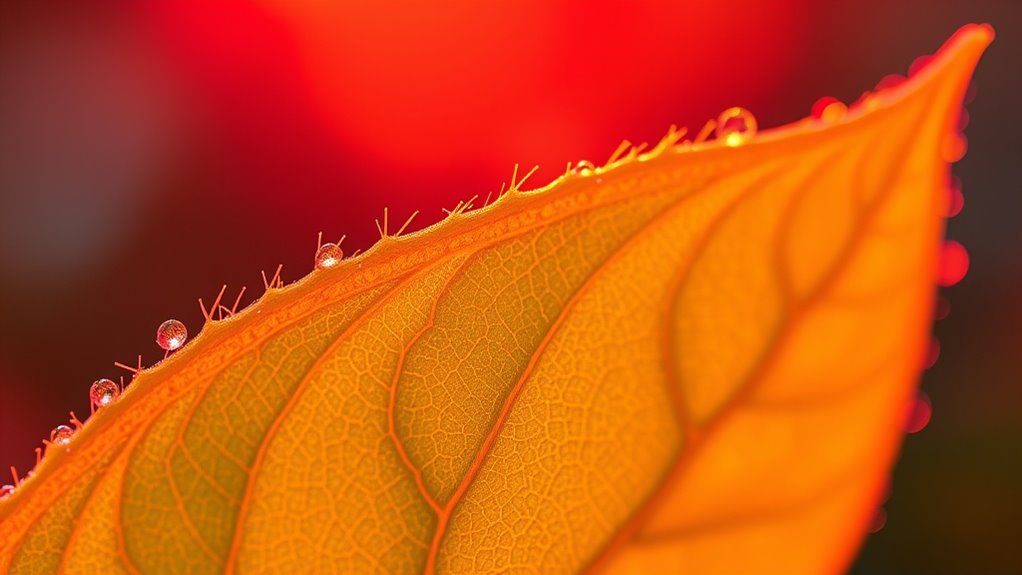
Have you ever wondered how plants detect and respond to light? It’s a fascinating process that allows them to adapt, grow, and thrive in their environment. At the core of this light detection system is a group of specialized proteins called phytochromes. These proteins act like tiny light sensors embedded within plant cells, constantly monitoring the light conditions around them. When light hits a plant, phytochromes change their shape, switching between active and inactive forms. This transformation triggers a cascade of signals inside the plant, ultimately guiding its growth patterns and developmental processes.
Plants sense and respond to light through specialized proteins called phytochromes that trigger growth and development signals.
You might not realize it, but phytochromes are incredibly sensitive and versatile. They primarily absorb red and far-red light, which are the most common wavelengths in sunlight. When exposed to red light, phytochromes shift into an active form called Pfr, which then moves into the nucleus of the plant cell. Once there, they interact with specific genes, turning them on or off. This gene regulation influences many essential activities, such as seed germination, stem elongation, leaf expansion, and flowering time. In dim light or shade, where far-red light predominates, phytochromes revert to their inactive form, signaling the plant to slow down growth or delay flowering, helping it conserve resources.
Your understanding of how plants interpret their light environment reveals that phytochromes don’t just detect light—they interpret it. They act as an internal clock and a light quality sensor, helping plants distinguish between day and night, as well as different seasons. This ability to sense the duration of light exposure, known as photoperiodism, enables plants to synchronize their life cycle with seasonal changes. For example, some plants only flower when days are long, while others bloom in shorter days. Phytochromes are integral to this timing, ensuring plants optimize their reproductive success.
The magic of phytochromes isn’t just limited to detecting light; it’s also about timing. Plants use these sensors to know when it’s the right moment to grow, flower, or prepare for winter. Their ability to constantly monitor and respond to light cues gives plants a remarkable level of environmental awareness, ensuring they adapt appropriately. As you look at a garden or a forest, remember that this invisible molecular system is hard at work, helping plants sense the world around them and respond with incredible precision and timing.
plant grow lights for indoor plants
As an affiliate, we earn on qualifying purchases.
As an affiliate, we earn on qualifying purchases.
Frequently Asked Questions
Can Phytochromes Detect Colors Other Than Red and Far-Red?
No, phytochromes primarily detect red and far-red light, which helps plants sense their environment. They don’t directly detect other colors like blue or green. Instead, plants use different photoreceptors, such as cryptochromes and phototropins, to perceive those wavelengths. By working together, these systems allow plants to respond to a broad spectrum of light, optimizing their growth and development in changing light conditions.
How Do Phytochromes Influence Plant Flowering Under Different Seasons?
When seasons change, your plants rely on phytochromes to tell time. These light sensors detect red and far-red light, helping plants know when to bloom. As days grow longer or shorter, phytochromes shift states, triggering flowering or dormancy. Think of it as your plants having an internal clock, ensuring they’re always in sync with their environment. They don’t miss a beat, no matter the season.
Are Phytochromes Involved in Plant Responses to Artificial Light?
Yes, phytochromes are involved in how plants respond to artificial light. When you expose plants to artificial light, phytochromes detect the light’s wavelength and influence processes like germination, growth, and flowering. They help plants adapt by signaling the presence of light, even if it’s not natural sunlight. So, if you’re growing plants indoors or under grow lights, phytochromes play a key role in guiding their development.
Do All Plants Use Phytochromes for Light Sensing?
Not all plants use phytochromes for light sensing, but many do. You’ll find these photoreceptors mainly in seed plants like angiosperms and gymnosperms, helping them detect light quality, quantity, and duration. Some non-vascular plants and algae use different mechanisms to perceive light. So, while phytochromes are common and essential for many plants’ growth and development, others rely on alternative light-sensing systems.
How Quickly Do Phytochromes Respond to Changes in Light Conditions?
Think of phytochromes as quick-change artists—they respond to light shifts within minutes. When light conditions change, your plant’s phytochromes switch configurations rapidly, sometimes in just a few minutes, to trigger growth responses like germination or flowering. This swift reaction helps plants adapt to their environment, ensuring they seize the best opportunities for survival and reproduction, even as the light around them shifts like a chameleon changing colors.
As an affiliate, we earn on qualifying purchases.
Conclusion
Just like a skilled detective reads clues in the dark, plants use phytochromes to decipher light and time. This tiny molecular wizardry allows them to grow, flower, and survive in a complex world. Understanding this natural magic opens our eyes to the elegant ways life adapts. As you marvel at a blooming flower or a towering tree, remember—they’re all guided by these silent light-sensing sentinels, making the invisible magic of nature truly awe-inspiring.
As an affiliate, we earn on qualifying purchases.
As an affiliate, we earn on qualifying purchases.
Fall Picks
fall essentials
As an affiliate, we earn on qualifying purchases.