
Ephemeral seeds can sleep in the soil from a few weeks up to several decades, depending on the species and environmental conditions. Many seeds stay dormant until conditions like moisture, temperature, or fire signals are just right, ensuring they germinate at the prime time. Some desert seeds even wait decades for rare rain to sprout. If you want to discover what influences these long dormancy periods and how they impact plant survival, keep exploring.
Key Takeaways
- Ephemeral seeds can remain dormant in soil for weeks to a few months, depending on species and environmental conditions.
- Some seeds are designed for rapid germination, with dormancy lasting only until immediate favorable conditions appear.
- Certain desert or ephemeral plants have seeds that stay dormant for several years, awaiting rare rain events.
- Seed longevity varies widely; some seeds can survive in soil for decades if conditions remain unfavorable.
- Environmental cues like moisture, temperature, and light trigger the end of dormancy and initiate germination in ephemeral seeds.
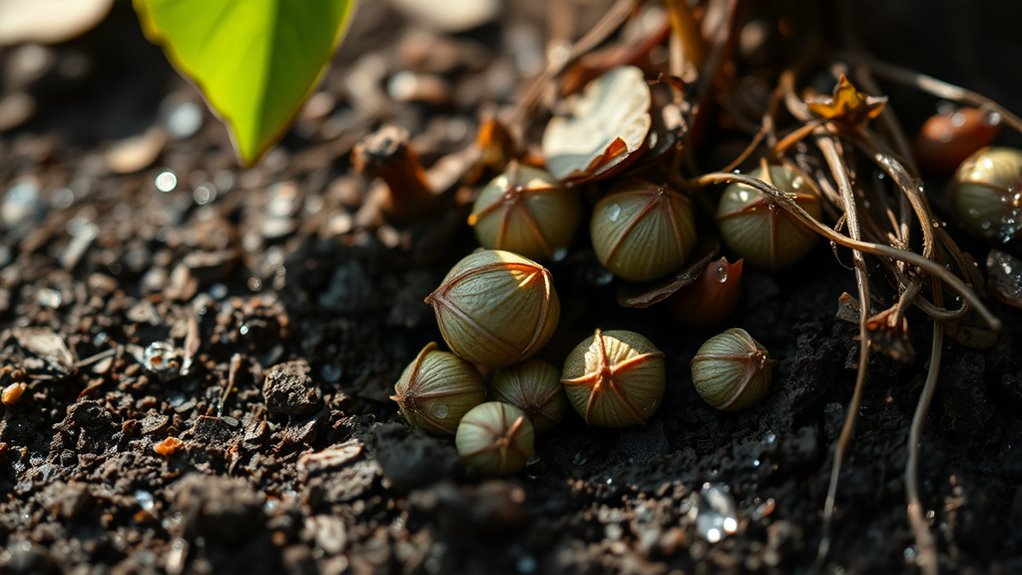
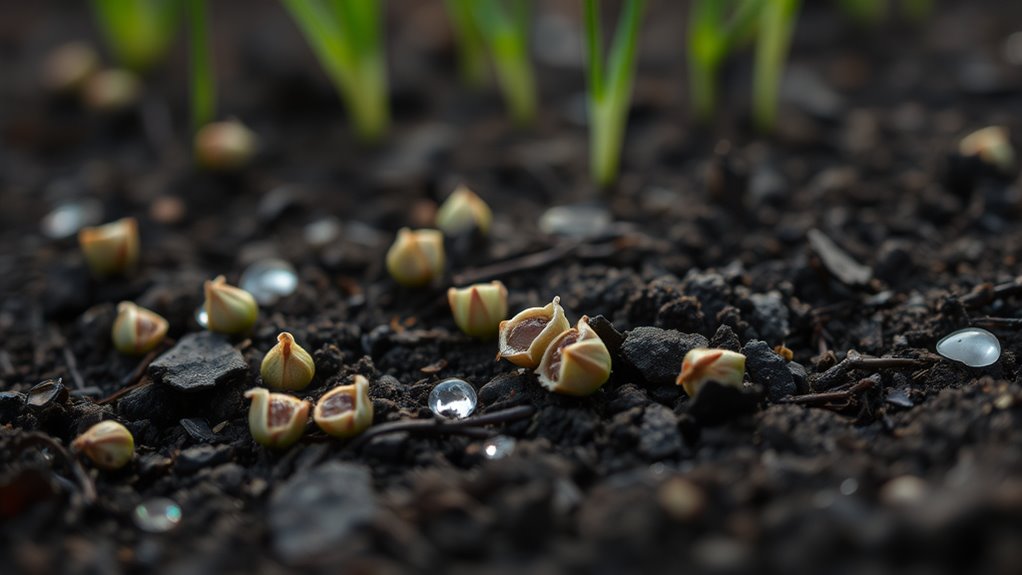
Beneath the surface, seeds lie dormant in the soil, waiting for the right conditions to awaken. This state of seed dormancy can last for varying lengths of time, depending on the species and environmental factors. During dormancy, seeds are essentially in a state of suspended animation, conserving energy until the moment is right for germination. You might wonder, how long can seeds sleep in the soil before they finally sprout? The answer varies widely, with some seeds remaining dormant for just a few weeks, while others can lie in wait for decades.
The key to a seed’s awakening lies in germination triggers—specific environmental cues that signal it’s time to grow. These triggers include temperature changes, moisture levels, light exposure, and sometimes even fire or passing animals. When conditions become favorable, these stimuli break seed dormancy, activating metabolic processes that lead to sprouting. For example, many seeds require a period of cold stratification, where exposure to cold temperatures helps to overcome dormancy. Others need a soaking in water or exposure to light to initiate germination. By sensing these cues, the seed determines whether it’s an opportune moment to invest energy into growth.
Some seeds are remarkably resilient, capable of withstanding harsh conditions for extended periods. This longevity allows certain plants to survive through adverse seasons or droughts, waiting patiently for the right moment to emerge. For instance, some desert seeds can remain dormant for decades, only sprouting after rare rainfall. Conversely, other seeds have a shorter dormancy period, designed to guarantee rapid germination when conditions are immediately suitable. This diversity in seed dormancy strategies allows plants to adapt to their specific environments and increase their chances of successful reproduction.
Understanding seed dormancy and germination triggers is vital if you’re trying to grow plants from seed or conserve wild species. Knowing that some seeds can stay in the soil for years, waiting for the perfect conditions, helps set realistic expectations for growth timelines. It also highlights the importance of environmental cues in managing seed germination, whether in natural ecosystems or agricultural settings. Recognizing seed longevity and its role in plant survival can inform conservation efforts and gardening practices alike. By mimicking or encouraging these triggers—such as providing adequate moisture or temperature—you can promote successful sprouting and ensure the continuation of plant life.
Frequently Asked Questions
Can Seeds Remain Dormant for Decades?
Yes, seeds can remain dormant for decades thanks to dormancy mechanisms that protect them until conditions are right. During seed dispersal, these mechanisms prevent germination until environmental cues like moisture, temperature, or fire trigger awakening. Your understanding of how seeds stay viable over long periods highlights nature’s incredible adaptability, allowing plants to survive harsh conditions and capitalize on favorable growth opportunities even years later.
What Environmental Factors Break Seed Dormancy?
Think of seed dormancy as a locked treasure chest—only certain keys can open it. You’ll break this lock with environmental factors like temperature fluctuations that shake the seed’s coat, signaling it’s time to wake up. Changes in moisture levels and even fire can also pry open that seed coat, awakening the seed to sprout. These natural cues coordinate to tell the seed, “Now’s your moment to grow.”
How Do Seed Banks Influence Biodiversity?
Seed banks play a vital role in conserving biodiversity by storing diverse seeds from various species. They protect genetic diversity, ensuring that plants can recover after environmental disturbances. You can influence seed dispersal by supporting conservation efforts, which helps maintain ecosystems. When seeds are preserved in banks, they serve as a genetic reservoir, allowing future generations to benefit from a rich variety of plant life, fostering resilient and adaptable ecosystems.
Are There Seeds Capable of Surviving Extreme Conditions?
Yes, some seeds can survive extreme conditions thanks to their seed longevity and dormancy mechanisms. You might find seeds that endure high heat, cold, or drought, waiting for the right environment to sprout. These adaptations protect them during harsh periods, allowing them to remain dormant for years or even decades. When conditions improve, these seeds break dormancy and grow, ensuring their species’ survival despite challenging climates.
Can Human Activity Unintentionally Activate Seed Dormancy?
Yes, your activities can unintentionally activate seed dormancy. When you disturb soil through construction, agriculture, or land clearing, you may trigger seed dispersal or break dormancy mechanisms. These actions expose dormant seeds to light, moisture, or temperature changes, awakening them to germinate. Understanding seed dormancy mechanisms helps you manage land better and prevent unwanted sprouting, ensuring ecosystems stay balanced and resilient against accidental activations.
Conclusion
Just like a seed quietly resting in the soil, your potential can stay dormant for years before blooming. Imagine a seed buried in the ground for decades, waiting for the perfect moment to sprout—proving patience is key. Studies show some seeds can survive over a century before waking up. So next time you feel stuck or uncertain, remember that, like these resilient seeds, your moment to grow might just be a little longer than you think.