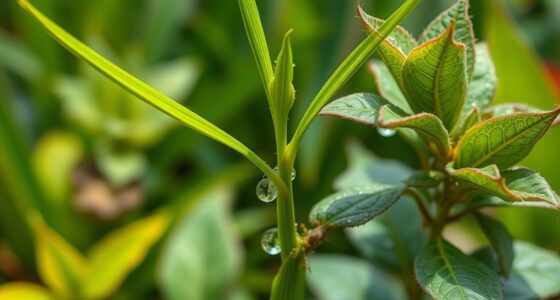
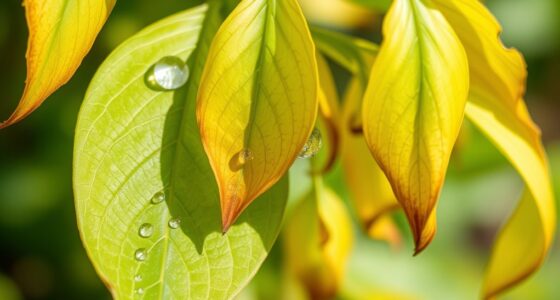
Plant volatiles are natural scents you might think of as perfumes that serve multiple purposes. They attract helpful pollinators like bees and butterflies, ensuring your plants get pollinated efficiently. At the same time, these odors warn neighboring plants of threats and attract predatory insects that control pests. By understanding these chemical signals, you can learn how plants communicate and protect themselves naturally—continuing will reveal fascinating ways these airborne molecules shape ecosystems.
Key Takeaways
- Plant volatiles act as natural perfumes, attracting pollinators for reproduction.
- They release specific scents during herbivory to warn neighboring plants of danger.
- Volatiles attract natural enemies of pests, such as predators and parasitoids, to defend the plant.
- Floral scents serve as signals guiding pollinators efficiently to ensure successful pollination.
- These chemical signals support ecological communication, enhancing plant defense and reproductive success.
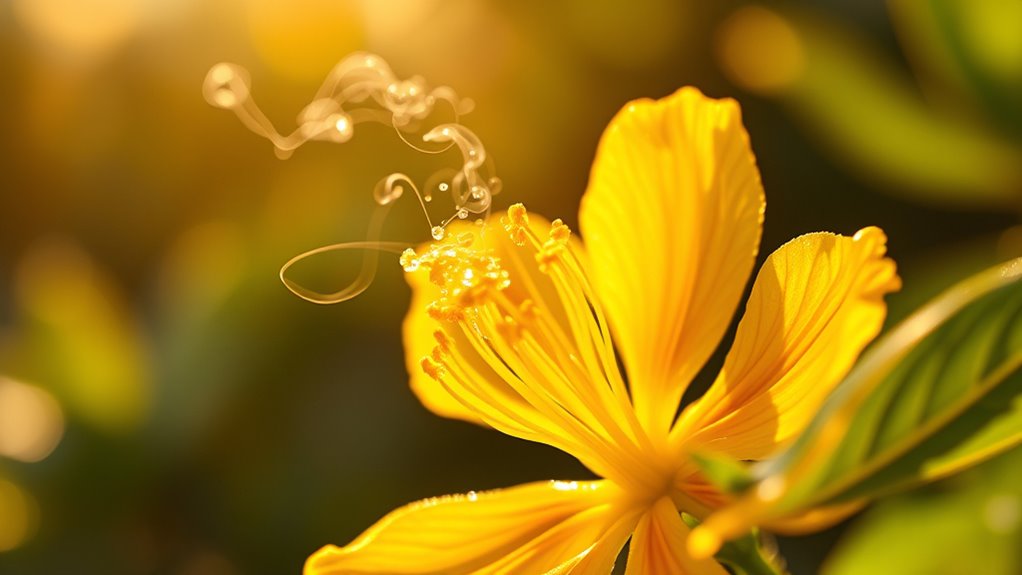
Plant volatiles are natural compounds released into the air by many plants to communicate, defend, and attract. When you walk through a garden or forest, you might not realize it, but these tiny molecules are constantly dispersing into the air around you. They serve as subtle signals, guiding interactions between plants, insects, and even animals. These volatile organic compounds (VOCs) are like the plant’s own perfume, but their purpose goes far beyond scent. They can summon helpful allies, such as pollinators or predatory insects, or they can warn nearby plants of danger, helping them prepare for potential threats.
When a plant is under attack—say, from herbivorous insects—it often reacts by releasing specific volatiles that act as an SOS signal. These airborne chemicals alert neighboring plants, prompting them to bolster their defenses. Think of it as a plant’s way of shouting, “Watch out, danger’s near!” This communication can trigger nearby plants to produce defensive chemicals, like toxins or thickened leaves, making them less appealing to hungry pests. Meanwhile, the volatiles attract natural enemies of the pests, such as predatory wasps or ladybugs. These beneficial insects are lured by the scent of the distress signals, and once they arrive, they help keep the pest population in check. It’s a clever, chemical-based teamwork that keeps plants safer.
On the flip side, some plant volatiles are designed to attract pollinators. When you smell a flower’s sweet fragrance, you’re experiencing the plant’s way of recruiting pollinators like bees, butterflies, or hummingbirds. These insects are drawn in by the specific blend of scents, which act as a floral advertisement. By doing so, the plant ensures its pollen gets transferred from flower to flower, enabling reproduction. It’s a finely tuned system where scent acts as a beacon, guiding pollinators precisely where they’re needed. The chemistry of these scents is so specialized that different plants produce unique blends to attract particular pollinators, maximizing their chances of successful pollination. Additionally, understanding plant volatile chemistry can help in developing more effective pollination strategies in agriculture.
Frequently Asked Questions
Can Humans Detect All Plant Volatile Compounds?
No, you can’t detect all plant volatile compounds. Your nose is sensitive to many, but plants produce a vast array of chemicals, and your olfactory system can only pick up a subset of them. Some compounds are too faint or complex for you to notice, especially if they’re present at low concentrations. While you recognize familiar scents easily, many plant volatiles remain undetectable, hidden in the intricate world of plant chemistry.
Do Plant Volatiles Vary Across Different Climates?
Oh, absolutely, plant volatiles love to throw a global party! Their scents differ across climates, adapting like the ultimate chameleon. In tropical jungles, they’re loud and exotic; in deserts, subtle and sparse. These chemical perfumes shift to attract pollinators or fend off pests, all depending on the environment. So, yes, if you think plants are boring, think again—they’re constantly customizing their aroma wardrobe for their climate’s gossip.
How Do Plant Volatiles Impact Pollinator Health?
You might not realize it, but plant volatiles directly influence pollinator health by guiding them to nutritious flowers and warning them of harmful pathogens or toxins. When you encounter a fragrant bloom, you’re experiencing a chemical signal that helps pollinators navigate and avoid risks. These volatile compounds support pollinator immunity and overall well-being, ensuring healthy populations that benefit both plants and the ecosystems they sustain.
Are Plant Volatiles Used in Natural Pest Control?
Think of plant volatiles as nature’s secret messengers that act as a natural pest control shield. Yes, they’re used in organic farming and pest management strategies. These volatile compounds whisper warnings to predators and parasitoids, summoning them to attack pests. By harnessing this plant language, you can reduce pesticide use, protect your crops, and promote a healthier, more balanced ecosystem—like having an invisible army defending your garden.
Can Plant Volatiles Influence Neighboring Plants’ Defense Mechanisms?
Yes, plant volatiles can influence your neighboring plants’ defense mechanisms. When a plant detects these chemical signals, it often ramps up its own defenses, like producing toxins or strengthening its cell walls. This communication helps your plants prepare for potential threats early, increasing their chances of survival. By understanding these interactions, you can better appreciate how plants work together naturally to ward off pests and diseases.
Conclusion
Imagine walking through a garden where plants release subtle scents, drawing helpful pollinators while warding off pests. For example, when a tomato plant emits specific volatiles, it lures parasitic wasps that hunt harmful caterpillars. By understanding these natural signals, you can appreciate how plants actively defend themselves and attract allies. Embrace these tiny chemical messengers, and you’ll see nature’s clever strategies in action—protecting, attracting, and thriving all around you.