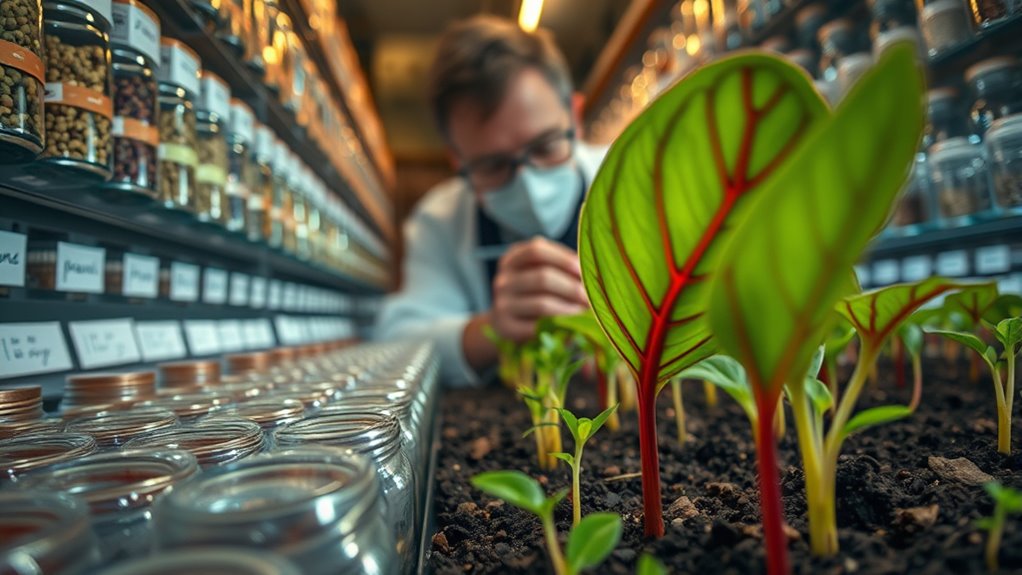

Botanical revival involves using seed banks and breeding techniques to bring back extinct plants, helping preserve biodiversity and restore ecosystems. Seed banks act as genetic vaults, storing seeds from various species for future reintroduction. Breeding methods develop resilient plants that can survive changing conditions. By combining these strategies, you can support habitat restoration and ecological revival. If you keep exploring, you’ll discover more about how these efforts are transforming conservation and helping nature bounce back.
Key Takeaways
- Seed banks preserve genetic diversity, enabling reintroduction of extinct or endangered plant species into natural habitats.
- Breeding programs enhance plant resilience, such as drought tolerance and disease resistance, aiding species revival.
- Genetic engineering accelerates restoring extinct plants and improving their adaptability to degraded environments.
- Habitat restoration combines seed planting and ecological support to facilitate successful plant reestablishment.
- Ongoing conservation efforts support ecological balance, reviving biodiversity and ecosystem functions through botanical revival initiatives.

In recent years, there’s been a remarkable resurgence of interest in botanical practices, driven by a growing desire to reconnect with nature and promote sustainability. You’re likely aware that many plant species face extinction due to habitat destruction, climate change, and human activity. To combat this, scientists and conservationists are turning to innovative methods like seed banks and breeding programs. These efforts aim to bring back extinct plants, preserve biodiversity, and restore ecological balance. Seed banks serve as vaults of genetic diversity, storing seeds from various plant species so they can be reintroduced into their natural habitats when conditions improve. This approach not only safeguards against total loss but also provides a genetic reservoir that can be tapped into for future restoration projects.
Genetic engineering plays a pivotal role in these initiatives. By manipulating the genetic makeup of plants, you can develop resilient variants that are better suited to survive in changing environments or degraded habitats. For example, genetic modifications can enhance drought tolerance or disease resistance, making it easier to re-establish plants in areas affected by environmental stressors. This technology supports habitat restoration efforts, allowing you to accelerate the recovery of ecosystems that have been severely damaged. Through careful breeding and genetic engineering, you can even revive species long thought extinct, restoring their ecological functions and aesthetic value.
When it comes to habitat restoration, your focus should be on creating conditions that support the reintroduction of these plants. This involves not only planting seeds or seedlings but also ensuring that the surrounding environment provides the necessary resources—such as soil health, water, and pollinators—to sustain them. You might work with local communities or conservation groups to develop these habitats, blending traditional ecological knowledge with modern science. The idea is to mimic natural processes as closely as possible, allowing the plants to thrive and re-establish their roles within the ecosystem. This process can take years, but with ongoing care and scientific support, you can witness the gradual revival of entire landscapes. Additionally, utilizing whole-house water filtration systems can help maintain healthy soil and plant environments by ensuring clean water supply for irrigation and habitat creation.
Frequently Asked Questions
How Do Seed Banks Ensure Genetic Diversity of Extinct Plants?
You can guarantee genetic diversity of extinct plants by using seed banks to store a wide variety of seed samples. They focus on genetic preservation, collecting seeds from different populations to maintain variation. Regular testing of seed viability helps keep the stored seeds healthy and ready for future propagation. By conserving diverse genetic material, seed banks maximize the potential to restore resilient, genetically rich plant populations.
Can Extinct Plants Be Restored to Their Original Habitats?
Yes, you can restore extinct plants to their original habitats by conducting historical habitat reconstruction and ecological impact assessments. You’ll identify the precise conditions where the plants once thrived, then carefully prepare those environments to support their growth. This process involves restoring soil, climate, and ecological balance, ensuring the plants can re-establish naturally. Through these steps, you’re helping to revive ecosystems and promote biodiversity.
What Challenges Exist in Breeding Extinct Plant Species?
You face several challenges when breeding extinct plant species. Genetic modification can be tricky because of limited genetic diversity, which affects resilience. Climate adaptation is also a concern, as you need to develop plants that can survive changing environmental conditions. Additionally, ensuring the restored plants are true to their original form requires careful selection and breeding techniques. These hurdles make restoring extinct plants a complex but exciting scientific endeavor.
Are There Ethical Concerns With Resurrecting Extinct Plants?
Resurrecting extinct plants is like rewriting a delicate chapter in nature’s story, raising ethical questions. You might worry that genetic manipulation could disrupt ecological balance, causing unforeseen consequences. While reviving rare plants can restore biodiversity, it’s crucial to contemplate if we’re overstepping moral boundaries or risking unintended harm. You must weigh the potential benefits against possible ecological and ethical costs to guarantee responsible botanical revival.
How Long Can Seed Banks Store Viable Seeds for Reintroduction?
Seed banks can store viable seeds for decades, often up to 50-100 years, depending on seed longevity and storage conditions. To maximize viability, you need to maintain proper storage conditions, such as low temperatures and dry environments. Regular testing helps guarantee seeds remain viable for future reintroduction. Properly managed, seed banks serve as essential reservoirs, allowing you to preserve plant diversity and potentially revive extinct species down the line.
Conclusion
As you witness these efforts to revive extinct plants, remember that each seed stored and each crossbred specimen holds the power to reshape our world. But what if this delicate balance tips too far, and nature’s original beauty is forever lost? The future is in your hands—will you stand by and watch these ancient species slip away, or will you act now to guarantee their mysterious, essential legacy endures for generations to come?