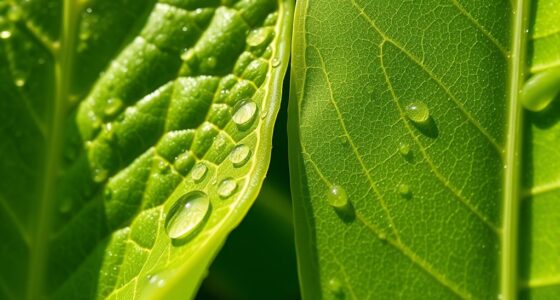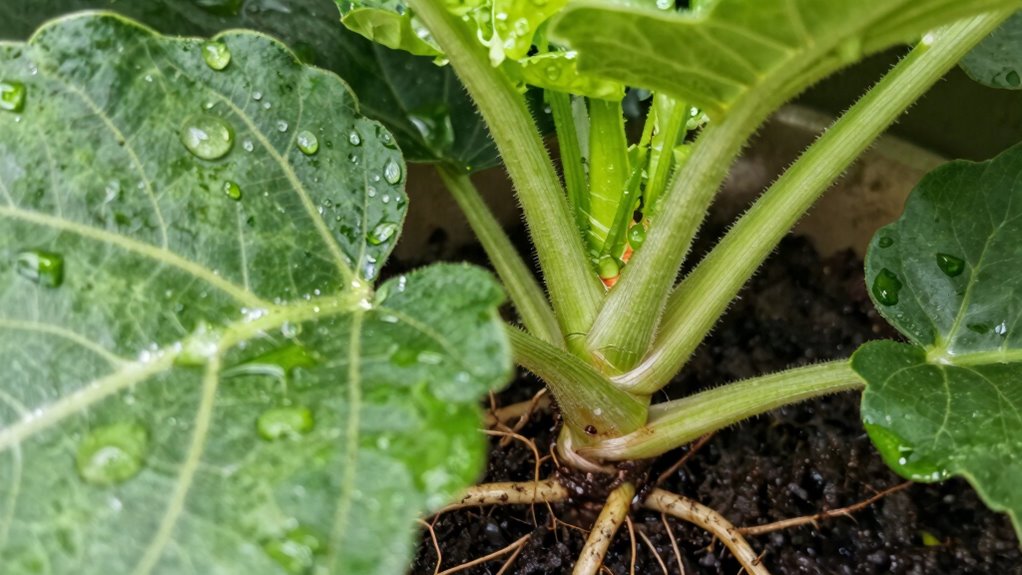

Plants store water in leaves, stems, and roots using special structures and adaptations. Leaves have thick, waxy cuticles and remember parenchyma cells that act as reservoirs, especially in succulents. Stems are often thick or ribbed, with internal tissues that hold water and surface features to reduce loss. Roots extend deep into the soil or store water themselves to provide backup during droughts. If you want to discover how these features work together, keep exploring.

Get the little things that make your day delivered free — and shop member deals
- Fast, free delivery on millions of items
- Access to Prime Big Deal Days deals on October 6–7
- Prime Video, Amazon Music and more included
Key Takeaways
- Plants store water in specialized parenchyma cells within leaves, stems, and roots for drought survival.
- Thick, waxy cuticles and surface structures minimize water loss through evaporation.
- Succulent leaves and stems act as internal reservoirs, holding large amounts of water.
- Roots extend deep or store water internally to access and conserve water during dry periods.
- Stomatal regulation controls transpiration, balancing water retention and necessary physiological processes.

Plants have developed remarkable ways to store water, ensuring their survival during dry periods. When you observe a cactus or a succulent, you’re witnessing adaptations designed to maximize water retention. These adaptations are essential because, during droughts or prolonged dry seasons, water becomes scarce, and plants must efficiently manage their internal supplies. One of the key strategies plants use is evaporation control. By closing stomata—tiny pores on leaves—they reduce water loss through transpiration. Some plants also develop a thick, waxy cuticle on their leaves and stems, creating a waterproof barrier that minimizes evaporation. These features are critical water conservation strategies, allowing plants to hold onto their water reserves longer and survive when water is limited.
Plants store water through adaptations like evaporation control and waterproof barriers to survive dry conditions.
In the leaves, plants often store water in specialized tissues called parenchyma cells. These cells can swell and hold significant amounts of water, acting like natural reservoirs. Succulents, for example, have leaves that are thick and fleshy precisely because they’re packed with water. This internal storage helps the plant maintain hydration during dry spells. When water is plentiful, the plant absorbs more, filling these tissues to capacity; during drought, it taps into these reserves to keep indispensable functions going. The ability to control evaporation is integrated with these storage mechanisms—by adjusting stomatal opening, the plant balances water loss with the need for photosynthesis and other processes.
In stems, water storage is equally important. Many plants develop thick, fleshy stems that serve as water tanks. For instance, cacti have ribbed stems that expand to store water and contract as it’s used. These stems often have a high concentration of parenchyma cells, providing an internal reservoir. Water stored in stems supports the plant’s overall hydration and allows it to withstand dry periods without relying solely on root absorption. Additionally, the stems’ surface structures help minimize water loss, again emphasizing evaporation control as an essential water conservation strategy.
The roots are the first line of defense in water storage. They extend deep into the soil, reaching water sources unavailable to surface roots. Some roots can also store water directly within their tissues, acting as backup supplies for the plant. During droughts, plants may activate these deep or stored water sources, maintaining indispensable functions. You can think of roots as the foundation of a water-saving system—they gather, store, and help regulate water intake. By combining these storage methods with evaporation control and water conservation strategies, plants enhance their resilience to dry conditions, ensuring they survive when water is scarce.
As an affiliate, we earn on qualifying purchases.
Frequently Asked Questions
How Do Plants Prevent Water Loss During Droughts?
During droughts, you can help plants prevent water loss through plant water conservation and drought-resistant adaptations. These include thick, waxy cuticles on leaves, reduced leaf surface area, and deep or widespread roots that access underground water. Some plants also close their stomata to limit water evaporation. By supporting these natural adaptations, you guarantee plants survive dry conditions and maintain healthy growth even during prolonged droughts.
What Role Do Stomata Play in Water Storage?
You’re really on the ball! Stomata play a essential role in water storage by controlling water loss through stomatal regulation. When water is scarce, they close tightly, helping your plant conserve water during droughts. This process is critical for water conservation, allowing plants to balance gas exchange and minimize dehydration. So, stomata act like gatekeepers, ensuring your plant keeps enough water while still breathing.
How Do Different Climates Affect Plant Water Storage?
In different climates, you notice plants adapt to optimize water storage and conserve water effectively. In arid regions, plants develop thick stems and leaves, like succulents, to maximize water storage and reduce loss. In wetter climates, plants may have thinner tissues and open stomata for efficient water use. These climate adaptations help plants survive by balancing water storage and water conservation, ensuring they thrive in their specific environments.
Can Plants Store Water in Their Fruits or Flowers?
Yes, plants can store water in their fruits and flowers. Fruits hydration often acts as a water reservoir, helping the plant survive droughts, while flower water content supports their structure and function. Think of fruits and flowers as tiny water tanks, holding moisture to sustain the plant’s liveliness. This water storage isn’t just for survival; it also attracts animals and helps with seed dispersal, ensuring the plant’s future.
How Does Soil Type Influence Plant Water Retention?
Soil type greatly influences how well a plant retains water. You’ll find that soil texture, like sandy soils, has high water permeability, meaning water drains quickly and doesn’t stay long. Conversely, clay soils have low permeability, holding water longer and providing better retention. When you choose soil with the right texture, you help your plants access water efficiently, preventing drought stress or waterlogging, and ensuring healthier growth.
watering cans for drought-tolerant plants
As an affiliate, we earn on qualifying purchases.
As an affiliate, we earn on qualifying purchases.
Conclusion
Now that you’ve discovered how plants cleverly carry, conserve, and contain water in their leaves, stems, and roots, you can appreciate their amazing adaptability. From tiny tanks to thick, water-wary walls, each part plays a part in preserving precious moisture. Remember, nature’s nurturing networks nurture life, offering a stunning spectacle of survival. So, stand still and see how these silent sentinels store, safeguard, and sustain—showcasing the splendid strength of nature’s water-wise wonders.
As an affiliate, we earn on qualifying purchases.
As an affiliate, we earn on qualifying purchases.
NFL season / tailgating Picks
team gear
As an affiliate, we earn on qualifying purchases.