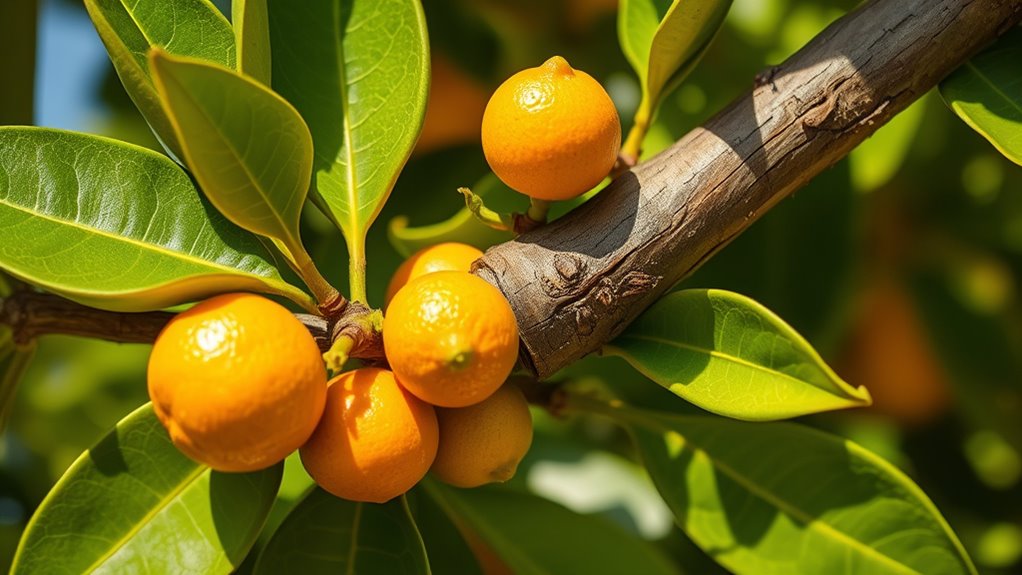

Plant grafting lets you combine different varieties onto one tree, enabling it to support multiple fruits efficiently. By carefully selecting compatible rootstocks and scions, you guarantee they fuse well and grow healthily. Techniques like whip, cleft, or budding are used depending on the plant size and goal. When the plants are compatible, your tree can produce a variety of fruits while saving space and effort. Keep exploring to discover how to make these grafts successful.
Key Takeaways
- Grafting combines compatible plant varieties to grow multiple fruits on a single tree.
- Proper technique and selecting compatible rootstocks and scions are essential for success.
- Different grafting methods, like whip-and-tongue or cleft grafts, suit various plant sizes and types.
- Compatibility ensures healthy growth and optimal fruit production on grafted trees.
- Grafting maximizes space, diversity, and resilience by supporting multiple fruit varieties on one tree.
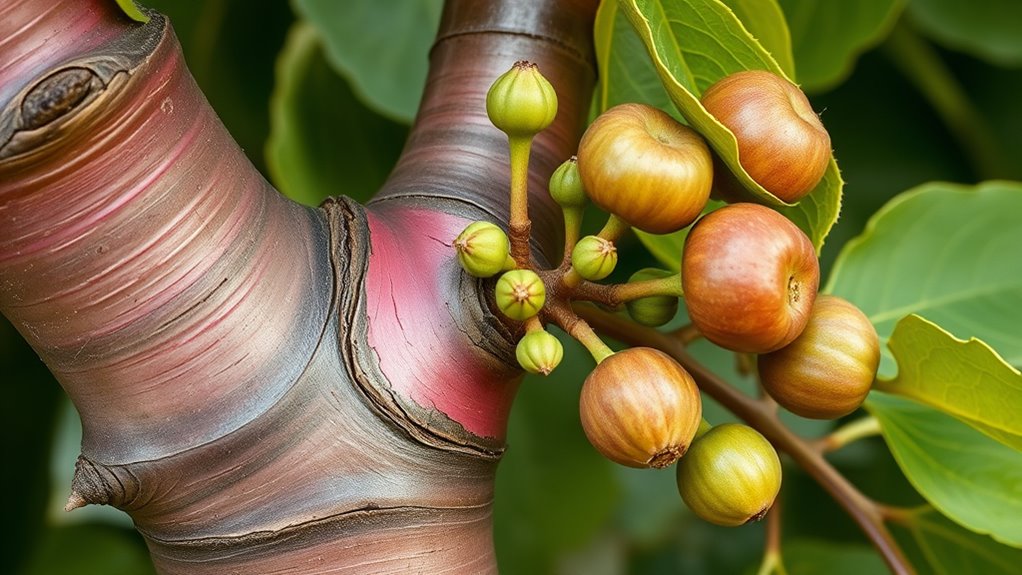
Have you ever wondered how horticulturists combine different plants to create stronger or more desirable varieties? Grafting is a clever technique that makes this possible, allowing one tree to support multiple fruits. When you consider grafting, the key to success lies in understanding fruit compatibility—how well two different plant varieties can grow together. Not every plant can be grafted onto another, so selecting compatible rootstocks and scions is essential. For example, apple varieties grafted onto compatible rootstocks will thrive and produce high-quality fruit, while incompatible pairings may struggle or fail entirely.
Grafting techniques involve several precise steps. You start by choosing a healthy rootstock that offers the desired traits, such as disease resistance or size control. Then, you select a scion—a small branch with buds from the fruit variety you want to produce. The process requires careful cuts, like the whip-and-tongue or cleft graft, to ensure good contact between the cambium layers of the rootstock and scion. This contact is critical, as it allows the tissues to fuse and develop into a unified plant. When done correctly, the grafted union begins to heal, and the scion starts growing from the point of attachment, effectively turning one tree into a multi-fruit producer.
Careful cuts like whip-and-tongue or cleft grafts ensure tissue fusion and successful plant union.
Understanding fruit compatibility also involves knowing which grafting techniques to use. For example, whip grafts work well for young, similar-sized plants, while cleft grafts are better suited for larger, mature trees. In some cases, budding, a type of grafting, is used to insert a single bud from a desirable variety onto a compatible rootstock. This method is especially useful for fruit trees like cherries or plums, where quick and successful grafts are needed. The choice of technique depends on the types of plants involved, their sizes, and the desired outcome.
In addition, well-sourced information helps ensure successful grafting practices, as accurate knowledge about plant compatibility can improve success rates and plant health. Grafting isn’t just about combining different fruits; it’s a way to optimize a single tree’s productivity and resilience. You can grow multiple varieties on one rootstock, saving space and reducing maintenance. Plus, grafting allows you to cultivate trees that might not naturally grow together or survive in your climate. Whether you’re aiming to create a fruit orchard with diverse varieties or simply want to experiment with different combinations, mastering fruit compatibility and grafting techniques opens up a world of possibilities. It’s a powerful tool that transforms a single plant into a versatile, productive tree capable of supporting multiple fruits.
Frequently Asked Questions
How Long Does a Grafted Tree Typically Produce Fruit?
You can expect a grafted tree to start producing fruit within 1 to 3 years, depending on the species and rootstock. The fruit bearing timeline varies, but generally, you’ll see consistent yields after the initial years. Keep in mind the seasonal harvest schedule, which aligns with the fruit types you’ve grafted. Proper care guarantees a steady supply of fresh fruits, often spanning several productive years.
Can Grafted Trees Be Transplanted Easily?
Yes, you can transplant grafted trees, but be prepared for some transplant shock. To guarantee successful root establishment, handle the tree gently, keep the roots moist, and plant it at the same depth as before. Water thoroughly after transplanting and avoid fertilizing immediately. With proper care, your grafted tree will adapt well and continue to thrive in its new location.
What Are the Common Problems Faced in Grafting?
Think of grafting as forging a delicate bond; failures happen when the connection weakens. Common problems include grafting failures, where the scion and rootstock don’t unite properly, and pest susceptibility, which can attack vulnerable junctions. These issues often stem from poor technique, improper timing, or environmental stress. To succeed, you must nurture patience and precision, understanding that even in growth, resilience is built through overcoming these early hurdles.
How Do I Choose Compatible Rootstock and Scion?
To choose compatible rootstock and scion, you need to contemplate rootstock compatibility, ensuring it matches the species and variety you want to grow. Select a healthy, disease-free scion that’s compatible with the rootstock’s genetic makeup. You should also consider climate, soil type, and growth habits. Doing research and consulting local nurseries or experts will help you make the best choices for successful grafting and healthy fruit production.
Is Grafting Suitable for All Types of Fruit Trees?
Did you know that grafting has a success rate of over 80% for many fruit trees? Grafting isn’t suitable for all types of fruit trees, especially if they’re not compatible. To guarantee good fruit tree compatibility and high success rates, you need to select compatible rootstocks and scions. While most apple and pear trees respond well, some citrus and stone fruit trees may be more challenging, so research specific species first.
Conclusion
Now that you see how plant grafting works, you’re armed with a powerful tool to grow multiple fruits on a single tree. It’s like killing two birds with one stone, saving space and resources while increasing your harvest. Just remember, patience is key—sometimes, good things take time to bear fruit. With a little practice, you’ll turn your garden into a thriving orchard, proving that where there’s a will, there’s a way.