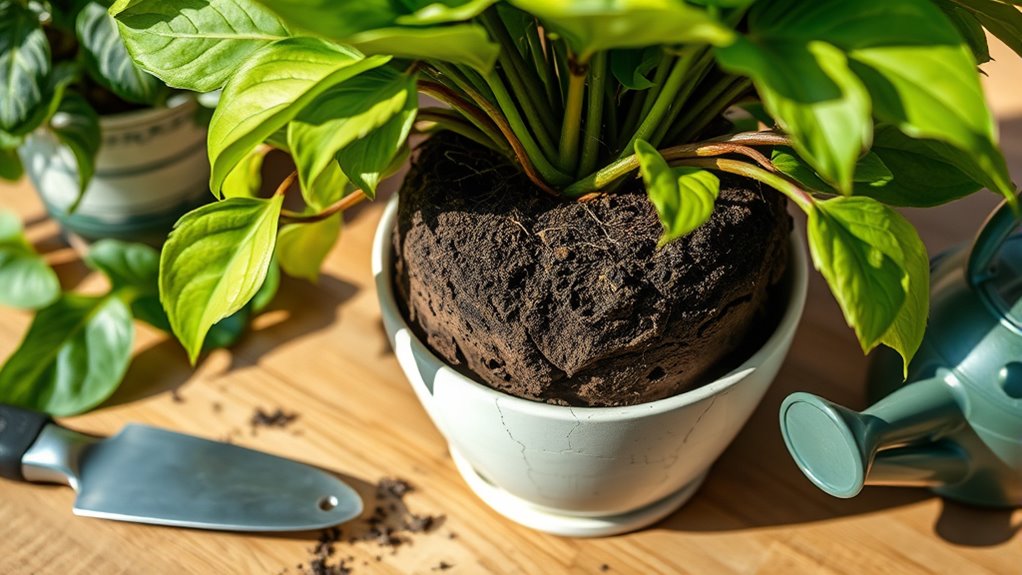

When your houseplant’s growth slows, leaves turn yellow, or roots are circling tightly at the pot’s edges, it’s time to repot. You might notice soil compaction, drainage problems, or roots pushing through drainage holes. These signs indicate the plant needs more space and fresh soil. If you want to keep your plant happy and healthy, understanding how to identify these cues and how to repot properly will help you give it a new lease on life.
Key Takeaways
- Roots circling or growing through drainage holes indicate the plant is root bound and needs a larger pot.
- Soil that is compacted, dry, or crusty reduces drainage and signals it’s time to refresh the soil.
- Slow or stunted growth, yellowing leaves, or wilting suggest the plant may be overcrowded or lacking nutrients.
- Water pooling on the surface or poor soil drainage shows degraded soil requiring repotting with fresh mix.
- Carefully loosen roots and choose a slightly bigger pot with drainage holes to promote healthy growth during repotting.

If your houseplant has been in the same pot for a while, it might be time to contemplate repotting. One of the most obvious signs is when you notice root bound plants. When roots start circling tightly around the pot’s edges, it’s a clear indicator that the plant has outgrown its current space. Roots may even begin to push up through the drainage holes or become visible on the soil surface. This overcrowding prevents the plant from accessing essential nutrients and water, stunting its growth and making it more susceptible to stress and disease. Additionally, as roots become packed, they compete for limited resources, which can weaken the overall health of your plant.
Root bound plants indicate it’s time to repot, as roots circle tightly and may push through drainage holes.
Another sign to watch for is soil degradation. Over time, the soil in your pot loses its ability to retain nutrients and moisture effectively. You may notice the soil becoming compacted, dry, or crusty, and it may no longer serve as a healthy environment for the roots. When the soil’s structure breaks down, it hampers proper drainage and aeration, leading to potential problems like root rot or fungal infections. If you find yourself watering and seeing the water simply run off or pool on the surface instead of soaking in, that’s a sign the soil has degraded and needs replacing.
Beyond root bound plants and soil degradation, other signs point to the need for repotting. Your plant might stop growing or produce smaller leaves than usual, indicating it’s out of space or struggling to absorb nutrients. Yellowing leaves or wilting can also be signs of stress caused by poor soil quality or root congestion. If you notice the plant’s growth has plateaued despite proper watering and fertilizing, it’s likely time to consider repotting.
When you do decide to repot, choose a slightly larger pot with drainage holes to prevent water from stagnating, which can cause root rot. Carefully loosen the roots if they’re tightly bound, and gently remove the old soil. Refresh the root zone with fresh, nutrient-rich soil, avoiding soil that has started to break down or compacted. This process gives your plant space to grow anew, improves soil health, and helps prevent future issues linked to soil degradation and root crowding. Regular repotting is essential to keep your houseplant healthy, thriving, and looking its best.
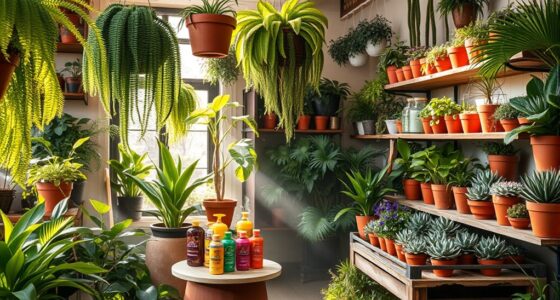
A well-chosen potting mix can significantly improve your plant’s health and growth.
Top picks for "sign houseplant need"
Open Amazon search results for this keyword.
As an affiliate, we earn on qualifying purchases.
Frequently Asked Questions
How Often Should I Repot My Houseplant?
You should repot your houseplant every 1 to 2 years, depending on its growth rate. During this time, check your watering schedule and pest management routine; if you notice roots outgrowing the pot or soil becoming compacted, it’s time to repot. Fresh soil promotes healthy growth and helps prevent pests, so don’t wait too long before giving your plant a refresh.
Can I Repot During the Plant’s Blooming Phase?
You can repot your houseplant during its flowering season, but it might slow down plant recovery. Some experts say it’s best to wait until blooming ends, while others believe careful repotting during flowering can be beneficial if necessary. If you choose to do it during this period, handle the plant gently and guarantee it has ideal conditions afterward. This way, you minimize stress and support healthy growth.
What Soil Should I Use for Repotting?
For repotting, you should use a well-draining soil composition, like a mix of potting soil, perlite, and peat moss. This guarantees proper aeration and moisture retention. Choose a suitable repotting container that provides enough space for growth and has drainage holes. Avoid heavy soils that retain too much water, which can lead to root rot. Proper soil and container choices help your houseplant thrive after repotting.
How Do I Prevent Root Rot During Repotting?
Oh, the irony—forget to guarantee proper soil aeration and water carefully, and root rot becomes inevitable. To prevent it during repotting, use well-draining soil and avoid overwatering. Check that your pot has drainage holes, and water only when the top inch feels dry. This way, you support healthy roots, keep excess moisture out, and give your plant a fighting chance to thrive without the dreaded rot.
Is It Necessary to Prune Roots When Repotting?
Yes, it’s often necessary to prune roots when repotting. Root pruning benefits your plant by encouraging healthy growth and preventing becoming root-bound. You should gently trim away any circling, dead, or damaged roots with clean scissors or pruning shears. This process helps balance the root-to-soil ratio, reduces stress on the plant, and promotes vigorous growth in its new pot. Just be careful not to over-prune, which can harm your plant.
Conclusion
If you notice these signs, don’t ignore them—your houseplant might be crying out for a new home. Repotting can breathe new life into your plant and keep it thriving. Remember, a healthy plant is a happy plant, so act before it’s too late. When in doubt, it’s better to be safe than sorry. After all, a little effort now can save you a lot of trouble down the road.