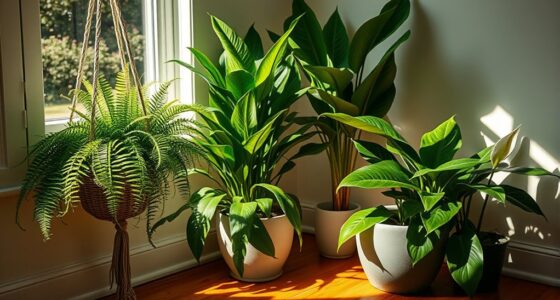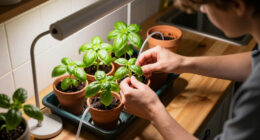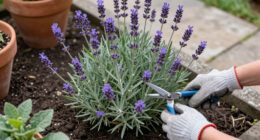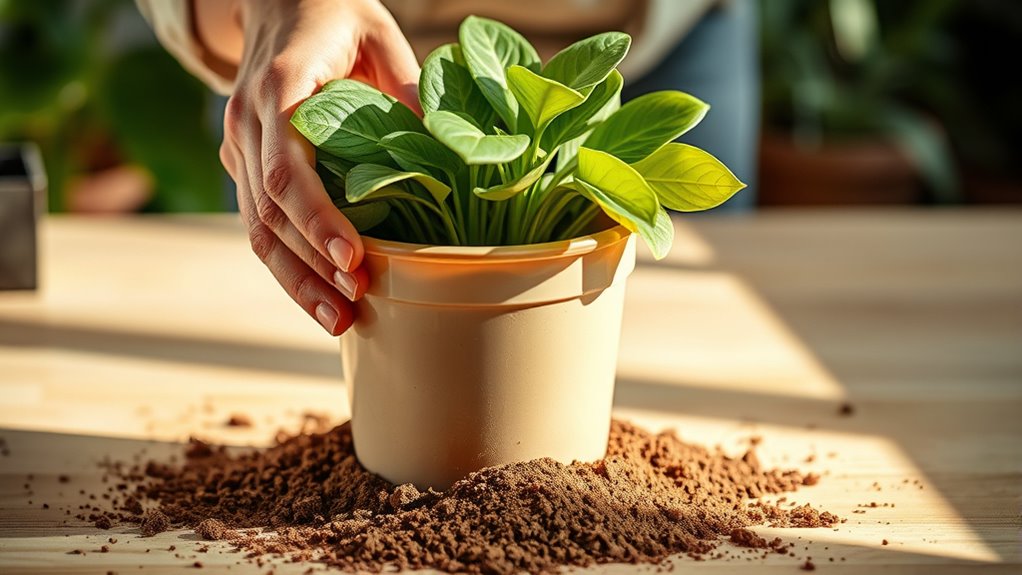

To repot without making a mess, start with slip-potting by preparing your plant outside its current container and supporting the root ball as you slide it out. Use a scoop to add soil carefully, fill around the roots without overpacking, and gently press to eliminate air pockets. Work on a protected surface covered with newspapers or plastic, and have your tools ready. Continue exploring these expert tricks to keep your gardening tidy and efficient.

Get the little things that make your day delivered free with Prime
- Fast, free delivery on millions of items
- Prime Video, Amazon Music and more included
- Member-only deals all year
Key Takeaways
- Use slip-potting outside or on protected surfaces to contain soil spills and facilitate cleanup.
- Support and gently slide the plant out of its current pot to minimize soil disturbance.
- Prepare your workspace with newspapers, plastic sheeting, and tools within reach for efficient, mess-free repotting.
- Control soil addition with a scoop or small shovel, pressing gently to avoid overfilling and air pockets.
- Tease tangled roots carefully and support the plant during transfer to promote healthy growth and reduce soil spillage.
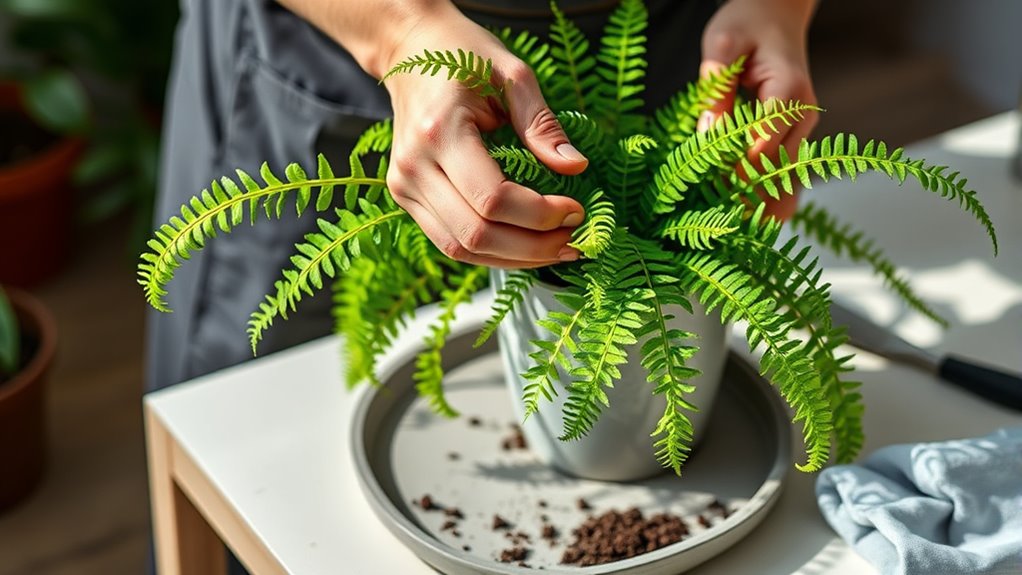
Repotting can be a messy task, but with the right techniques, you can keep your space tidy and stress-free. One of the best methods to minimize mess is slip-potting, which allows you to prepare your plant outside its final container before placing it in its permanent home. To do this effectively, start by choosing a container that’s slightly larger than your plant’s current pot. Carefully slide the plant out, supporting the root ball with one hand while gently tapping the sides of the pot if needed. Once you have the plant out, place it in a clean, flat surface covered with newspaper or a plastic sheet to catch loose soil and prevent spills. Now, you can work on adding fresh potting mix to the new container, avoiding the need to do everything over the sink or in the middle of your room.
While adding the new soil, use a scoop or small shovel to control how much you add, preventing overfilling and minimizing spillage. When you’re ready to transfer the plant into the new pot, hold it at the base and gently set it into the prepared container. Fill around the root ball with soil, pressing lightly to eliminate air pockets, but don’t pack it too tightly. Once the plant is settled, give it a gentle water to help settle the soil and remove any remaining air pockets. The beauty of slip-potting is that you can perform this process outdoors or on a protected surface, reducing cleanup inside your home.
Another pro trick is to prepare your workspace beforehand. Lay down newspapers, plastic sheeting, or a drop cloth to catch soil and plant debris. Keep a small container or bowl nearby to set aside any excess soil or plant material. Wearing gloves can also help keep your hands clean, especially if you’re working with dirt that stains. Using a watering can with a narrow spout allows you to control water flow and avoid splashing soil outside the pot. If you’re dealing with stubborn roots or tangled roots, gently tease them apart before planting. This step minimizes the chance of soil spillage later and promotes healthier root growth.
Additionally, having all your tools within arm’s reach—such as trowels, gloves, and watering cans—streamlines the process and reduces the risk of making a mess while searching for supplies. Remember, patience is key; take your time to work carefully and methodically. This approach not only keeps your space cleaner but also ensures your plant’s health. With these tricks—slip-potting, preparing your workspace, and controlling the soil—you’ll find repotting less stressful and far cleaner, making it easier to enjoy your thriving plants. Exploring portable gardening tools can further enhance your repotting experience by providing specialized equipment designed for cleanliness and efficiency.
As an affiliate, we earn on qualifying purchases.
Frequently Asked Questions
Can Slip-Potting Be Used for All Plant Types?
Slip-potting works well for most plants, especially those with delicate roots or when transplanting into larger containers. However, it’s not ideal for plants with extensive root systems or those that prefer stable, permanent pots. You should also avoid slip-potting for succulents or cacti, as they need well-draining soil and minimal disturbance. Always consider your plant’s specific needs before choosing slip-potting as a repotting method.
How Often Should I Slip-Pot My Plants?
Like a seasoned Renaissance artist, you should slip-pot your plants every one to two years, depending on their growth. Keep an eye out for roots circling the pot’s edge or signs of overcrowding, which indicate it’s time. Regular slip-potting helps prevent rootbound stress and keeps plants healthy. If your plant is thriving, you might stretch to three years, but don’t delay too long to ensure ideal growth and vigor.
What Tools Are Best for Slip-Potting?
You’ll want sharp, clean tools like pruning shears or scissors for slip-potting. Use a small trowel or a palette knife to gently loosen roots and transfer your plant. Gloves can keep your hands clean, and a damp cloth helps clean tools between plants. Having a container of water nearby can also make the process smoother. These tools make slip-potting cleaner, quicker, and less stressful for your plants.
Does Slip-Potting Affect Plant Growth?
Slip-potting generally doesn’t harm your plant’s growth if you do it correctly. It minimizes root disturbance, helping your plant adjust quickly to its new pot. By gently transferring the plant with minimal root disruption, you encourage healthy development and reduce transplant shock. Just make certain you use the right tools and handle the roots carefully, and your plant should thrive in its new home without any negative impact on growth.
Can Slip-Potting Prevent Root Rot?
Yes, slip-potting can help prevent root rot. By gently removing a plant from its current pot and placing it into a slightly larger, well-draining container, you improve airflow and reduce excess moisture around the roots. This process allows you to inspect the roots for any signs of rot, trim affected areas, and guarantee the plant sits in a healthy environment, ultimately minimizing the risk of future root rot.
As an affiliate, we earn on qualifying purchases.
Conclusion
With these pro tricks like slip-potting, you’ll handle repotting with the finesse of a seasoned artist, keeping messes at bay. Think of it as gently laying a new coat of paint without splattering—smooth and controlled. Remember, patience and preparation turn what seems like a muddy mess into a clean, satisfying transformation. So, go ahead, take your time, and watch your plants flourish as effortlessly as a well-orchestrated symphony. Your green thumb just got a whole lot cleaner!
garden plastic sheeting for repotting
As an affiliate, we earn on qualifying purchases.
As an affiliate, we earn on qualifying purchases.
plant support tools for repotting
As an affiliate, we earn on qualifying purchases.
As an affiliate, we earn on qualifying purchases.
Fall Picks
fall essentials
As an affiliate, we earn on qualifying purchases.