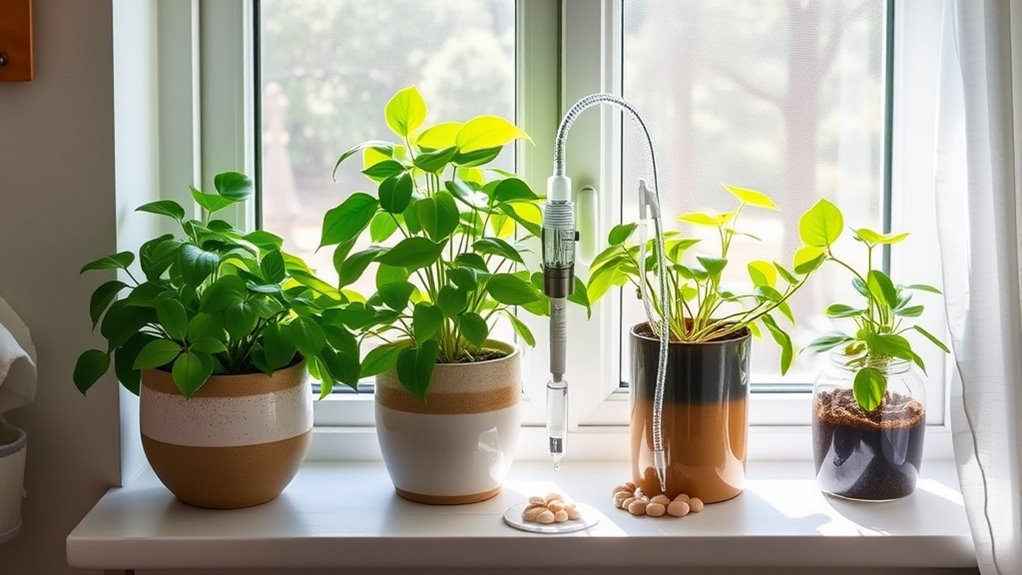

To keep your houseplants hydrated while you’re away, try simple low-tech solutions like using self-watering devices such as reservoirs, wicks, or capillary mats that draw moisture into the soil gradually. Grouping plants in shaded, humid areas can also help reduce water loss. Water your plants thoroughly before leaving to provide extra moisture. If you want more practical tips on maintaining your plants effortlessly during your absence, keep exploring options to support their health.
Key Takeaways
- Use self-watering systems like reservoirs with wicks or capillary mats for gradual, consistent watering without electricity.
- Water plants thoroughly before departure to provide a moisture reserve during your absence.
- Group plants together in shaded, humid areas to reduce water loss and maintain hydration.
- Ensure pots have proper drainage and remove dead leaves to prevent stress and root issues.
- Consider simple DIY solutions like embedding water-filled plastic bottles or using soaked sponges near roots for low-tech watering.
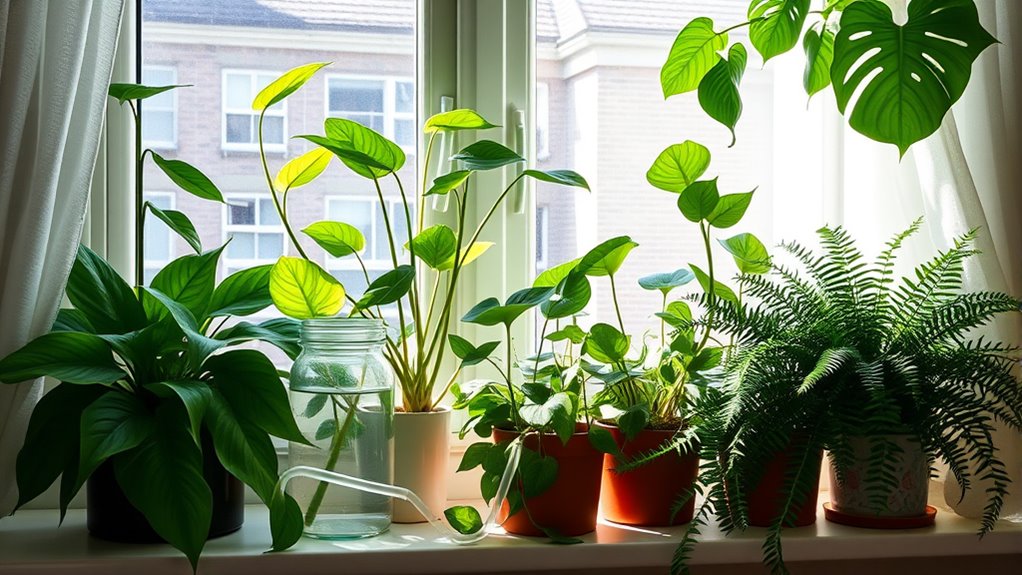
When you’re planning a vacation, taking care of your houseplants shouldn’t be an afterthought. Ensuring they stay healthy while you’re away requires some simple planning, especially when it comes to watering techniques. You might think that watering is straightforward, but the way you approach it can make a big difference in how your plants fare during your absence. By applying effective plant care tips, you can prevent overwatering or underwatering, which are common issues that can stress or even kill your plants.
Start by evaluating the specific needs of each plant. Some thrive in consistent moisture, while others prefer to dry out between waterings. This knowledge will guide your watering techniques. For instance, succulents and cacti need infrequent, deep watering, whereas ferns often require regular moisture. To make watering easier while you’re away, consider the method you’ll use. One simple plant care tip is to thoroughly water your plants just before leaving, ensuring the soil is moist but not waterlogged. Deep watering encourages roots to grow deeper and makes plants more resilient during a dry spell.
Another effective technique involves creating a self-watering system. For example, placing a water reservoir with a wick or a capillary mat can deliver moisture gradually over time. These low-tech solutions rely on capillary action, which draws water from a reservoir into the soil as needed. They’re easy to set up, inexpensive, and require minimal maintenance, making them perfect for short or extended trips.
If you’re looking for a more straightforward approach, consider grouping your plants together in a shaded, humid spot before you leave. This concentrates the humidity and reduces water loss through evaporation, helping your plants stay hydrated longer. Also, think about watering your plants more than usual just before you leave, as this extra moisture can sustain them during the initial days of your absence, especially if you’re not using a self-watering system. Additionally, understanding plant water requirements can help you tailor your care routines to ensure your plants remain healthy during your time away.
Finally, don’t forget to check that your pots have proper drainage to prevent root rot, and remove any dead or yellowing leaves to reduce stress. These simple plant care tips help your plants cope better with temporary changes in watering routines. When you plan ahead and implement these low-tech watering techniques, you’ll find peace of mind knowing your houseplants will remain healthy and happy until you return. Proper preparation means your plants won’t suffer from dehydration or overwatering, giving you one less thing to worry about during your vacation.
Frequently Asked Questions
How Long Can Houseplants Survive Without Water?
You can generally leave houseplants without water for a few days to a week, depending on their drought tolerance and watering frequency. Succulents and cacti handle droughts better, lasting longer without water. Most other houseplants need watering every 5 to 7 days. To prevent stress, consider low-tech solutions like self-watering devices or placing plants in shaded, cooler spots. Always check soil moisture before leaving to avoid over or under-watering.
What Are the Best DIY Watering Systems for Vacation?
For DIY vacation watering, you should try self watering pots or capillary matting. Self watering pots use a water reservoir to supply moisture gradually, keeping your plants hydrated without daily attention. Capillary matting involves placing your plant pots on a fabric that wicks water from a container below, ensuring consistent moisture. Both methods are simple, low-tech, and effective ways to maintain your houseplants while you’re away.
Can Certain Plants Survive Longer Without Watering?
Think of your plants as tiny, thirsty adventurers. Some, like succulents and cacti, can survive longer without water, especially with tools like drip irrigation or self-watering pots acting as their loyal guardians. These systems slow down water loss, giving your plants a break while you’re away. Keep in mind, while some plants are hardy, others still need regular attention to thrive, so choose wisely based on their water-loving needs.
How Do Humidity Levels Affect Indoor Plant Watering Needs?
Humidity levels directly influence your indoor plants’ watering needs. Higher humidity management helps plants retain moisture longer, reducing how often you need to water them. Conversely, low humidity speeds up moisture loss, so you’ll need to water more frequently. To maintain ideal moisture retention, you can increase humidity with trays of water or misting. Keep an eye on your plants’ leaves and soil to adjust watering based on the current humidity levels.
Are There Natural Repellents to Prevent Pests During Absence?
You can totally turn your plants into pest-proof fortresses with natural repellents that work like magic! Use neem oil, garlic spray, or chili pepper solutions—these natural pest preventatives ward off bugs like an army. Just spray your plants regularly before you leave, and you’ll be amazed at how these natural repellents create an impenetrable barrier, keeping pests away during your absence, so your green friends stay pristine and pest-free effortlessly!
Conclusion
So, next time you plan a trip, remember that even a simple self-watering system can save your houseplants from a dry spell. It’s funny how a tiny bit of planning can turn a stressful absence into a carefree escape. Often, it’s the small, low-tech tricks that keep your plants happy, just like how a forgotten watering can unexpectedly becomes your plant’s best friend. With these easy tips, your green friends stay thriving—no coincidence needed.