Sudden yellowing on healthy-looking plants usually happens due to quick changes in watering, nutrient deficiencies, or pests. Overwatering can drown the roots, causing nutrients to become unavailable, while a lack of essential nutrients like nitrogen or iron can trigger rapid yellowing. Pest infestations, like spider mites or aphids, also disrupt nutrient flow and damage leaves. If you want to find out the exact cause and how to fix it, keep exploring these common issues.

Get the little things that make your day delivered free — and shop member deals
- Fast, free delivery on millions of items
- Access to Prime Big Deal Days deals on October 6–7
- Prime Video, Amazon Music and more included
Key Takeaways
- Sudden yellowing may result from abrupt nutrient deficiencies, often caused by overwatering or poor soil conditions.
- Pest infestations like spider mites or aphids can quickly disrupt nutrient flow, leading to leaf yellowing.
- Environmental stress, such as sudden temperature changes or low humidity, can cause rapid yellowing of healthy leaves.
- Root damage or rot from overwatering impairs nutrient uptake, resulting in sudden leaf discoloration.
- Chemical exposure or sudden changes in fertilization can upset nutrient balance, causing rapid yellowing.

Even healthy plants can suddenly develop yellow leaves, which can be confusing and concerning. When your plants look vibrant one day and start yellowing the next, it’s natural to wonder what’s gone wrong. Often, the cause isn’t obvious, and you might think your plant is thriving. However, yellowing leaves can be a sign of underlying issues like nutrient deficiencies or pest infestations. Recognizing these causes helps you address the problem promptly, restoring your plant’s health.
Healthy plants can suddenly yellow; identify nutrient issues or pests to restore their vibrant health.
Nutrient deficiencies are a common culprit behind sudden yellowing. Plants need a balanced supply of nutrients—especially nitrogen, iron, and magnesium—to maintain their green, healthy color. When these nutrients are lacking, chlorophyll production declines, leading to yellow leaves. For example, a nitrogen deficiency often causes widespread yellowing because nitrogen is vital for overall plant growth. Iron deficiency, on the other hand, causes yellowing in new leaves while older leaves stay green. If your plant’s soil is poor or has been overwatered, nutrients can become unavailable, making deficiencies more likely. Regular fertilization with a balanced, plant-specific fertilizer can prevent these deficiencies, but be careful not to overdo it, as excess nutrients can also harm your plant. Additionally, understanding nutrient deficiencies helps you identify the specific issues affecting your plant’s health more accurately. Using soil tests to check nutrient levels can further help diagnose these problems effectively. Ensuring proper soil conditions is essential for preventing nutrient imbalances that could lead to yellowing. Proper watering practices also play a critical role in maintaining healthy nutrient uptake, which can minimize deficiencies. Furthermore, poor drainage can cause roots to rot, impacting nutrient absorption and resulting in yellowing leaves.
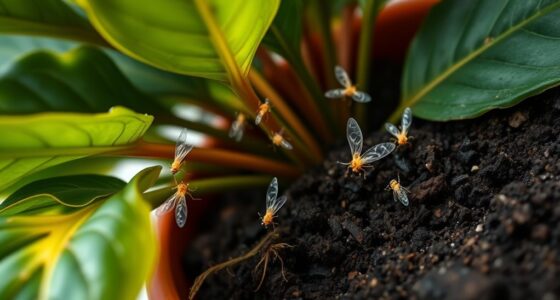
Pest infestations are another significant factor to consider. Tiny pests like spider mites, aphids, or scale insects can latch onto your plant’s leaves, sucking out sap and nutrients. This feeding weakens the plant and disrupts nutrient flow, often resulting in yellow, mottled, or speckled leaves. You might notice webbing, sticky residue, or tiny moving bugs on the underside of the leaves. Pest infestations can develop quickly, especially in indoor environments or outdoor plants exposed to pests. Regular inspection helps catch these problems early, so you can act before the pests cause irreversible damage. Use appropriate treatments like insecticidal soap or neem oil to eliminate pests safely, and always follow the instructions carefully. Proper plant care practices, such as maintaining good hygiene around your garden, can also help prevent pest problems from developing in the first place. Additionally, introducing natural predators or companion planting can support pest control naturally. Proper environmental conditions, like avoiding excessive heat or stress, can make plants less attractive to pests, further reducing infestation risks. Proper watering practices also help in maintaining the plant’s overall health, making it less susceptible to pest attacks.
indoor plant fertilizer for nutrient deficiency
As an affiliate, we earn on qualifying purchases.
As an affiliate, we earn on qualifying purchases.
Frequently Asked Questions
Can Overwatering Cause Leaf Yellowing in Healthy Plants?
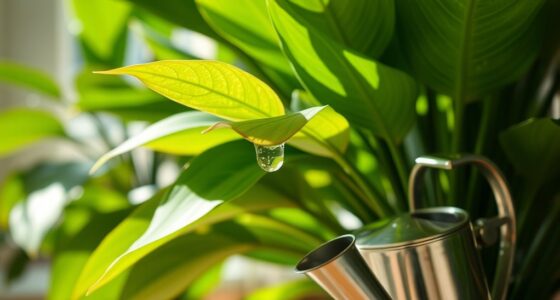
Yes, overwatering can cause leaf yellowing in healthy plants. When you water excessively, it leads to root rot and disrupts the soil balance, making it hard for roots to absorb nutrients. This stress shows up as yellow leaves, even if the plant appears healthy otherwise. To prevent this, guarantee proper watering practices, improve soil drainage, and avoid letting your plant sit in waterlogged soil.
Do Pests Contribute to Sudden Yellowing of Leaves?
Pests and disease outbreaks are the sneaky culprits behind sudden yellowing of your healthy-looking leaves. Imagine tiny invaders, like a pest infestation, stealthily munching away, or a disease outbreak spreading like wildfire—both disrupting your plant’s health. These unwelcome guests steal nutrients and cause stress, leading to yellow leaves. So, yes, pests definitely contribute, turning your vibrant plant into a yellowing, distressed shell of itself.
Can Indoor Air Quality Affect Plant Leaf Color?
Indoor air quality can definitely affect your plant’s leaf color. Airborne toxins from cleaning products or fumes can stress plants, causing their leaves to yellow unexpectedly. Additionally, humidity fluctuations impact plant health, leading to leaf discoloration. When the air is too dry or too humid, your plant struggles to absorb nutrients properly, which can result in yellowing leaves. Maintaining good ventilation and stable humidity helps keep your plants healthy and vibrant.
Is Yellowing a Sign of Nutrient Deficiency?
Yes, yellowing can be a sign of nutrient deficiency. When your plants experience nutrient imbalance or soil pH fluctuations, they struggle to absorb essential nutrients, leading to yellow leaves. You should check the soil pH and adjust it if needed, ensuring nutrients are available. Also, consider fertilizing with a balanced, appropriate fertilizer to restore proper nutrient levels and prevent further yellowing.
Can Recent Repotting Stress Plants and Cause Yellow Leaves?
Think of your plant as a delicate dancer, and repotting as a sudden, jarring move. Yes, recent repotting can stress your plant, causing yellow leaves through repotting shock and root disturbance. When roots are disturbed, they struggle to absorb nutrients and water, leaving leaves pale and yellow. Give it time, proper care, and patience—soon, your plant will regain its rhythm and vibrant green importance.
pest control for spider mites on houseplants
As an affiliate, we earn on qualifying purchases.
As an affiliate, we earn on qualifying purchases.
Conclusion
So, next time your healthy-looking plant suddenly turns yellow, don’t rush to blame it. Sometimes, it’s just nature’s way of reminding you that even the strongest can be caught off guard. Ironically, your care and attention might be the very reason for its distress. Keep observing, adjusting, and learning—because a thriving plant often whispers its secrets softly, if you’re willing to listen. After all, even the healthiest plants need a little patience and understanding.
As an affiliate, we earn on qualifying purchases.
As an affiliate, we earn on qualifying purchases.
NFL season / tailgating Picks
team gear
As an affiliate, we earn on qualifying purchases.