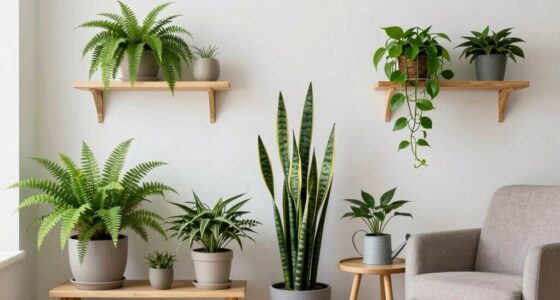
If you use heavy pots, your snake plant will likely stay more stable and have better root support as it grows taller. Heavy materials like ceramic or concrete help retain water longer, promoting healthy roots, but can be harder to move. On the other hand, lightweight pots make it easier to relocate your plant but may compromise stability and require more careful watering. Want to discover how to find the perfect balance for your plant’s health?

Get the little things that make your day delivered free with Prime
- Fast, free delivery on millions of items
- Prime Video, Amazon Music and more included
- Member-only deals all year
Key Takeaways
- Snake plants in heavy pots experience greater root stability and less wobbling as they grow taller.
- Lightweight pots may cause instability, risking tipping or damage as the plant matures.
- Heavier pots retain water longer, supporting consistent moisture levels for healthy root development.
- Lightweight pots drain faster, requiring more frequent watering to prevent drying out.
- Overall, heavy pots promote steady growth, while lightweight pots offer mobility but need more careful watering.

When choosing the right pot for your snake plant, the weight of the container can considerably influence its health and growth. Heavier pots tend to offer better root stability, which is crucial for a plant like a snake plant that grows slowly and prefers steady support. When your plant’s roots are anchored firmly, they can develop more effectively, reducing the risk of tipping over or becoming unstable as it grows taller. The added weight creates a solid base, allowing the roots to spread out naturally without the pot shifting or wobbling. This stability is vital, especially if your snake plant is placed in a high-traffic area or on a surface prone to movement.
Water retention is another critical factor affected by the weight of your pot. Heavier pots, often made from materials like ceramic, concrete, or thick clay, usually retain water longer because of their dense build. This can be beneficial in preventing the soil from drying out quickly, which is a common concern with snake plants since they prefer a well-draining but consistently moist environment. However, too much water retention can lead to overwatering issues, root rot, or fungal problems if the soil doesn’t drain well. That’s why choosing a heavier pot with proper drainage holes is essential—so you get the benefit of water retention without risking oversaturation. Additionally, the material of the pot can influence both weight and water retention, making it an important consideration in your selection process. Proper pot selection can significantly impact the long-term health of your snake plant.
In contrast, lightweight pots like plastic or thin ceramic options are easier to move around and can be practical for adjusting your plant’s location. But because they lack weight, they might not provide adequate root stability, especially as your snake plant grows. The roots can become less anchored, leading to a wobbly or unstable plant. Additionally, lightweight containers tend to drain water more quickly, which might seem advantageous, but it also means you’ll need to monitor watering more carefully to prevent the soil from drying out too fast. If you’re someone who tends to forget watering schedules, a heavier pot might help maintain a more consistent moisture level. Furthermore, material choice can influence how the plant responds to environmental changes, such as temperature fluctuations or humidity levels. A proper watering routine is essential regardless of pot weight to promote healthy growth and avoid issues like root rot or dehydration.
Choosing the right pot size and weight is essential because it directly influences your plant’s overall health and stability. Ultimately, the choice between heavy and lightweight pots hinges on your plant’s size, your space, and your ability to care for it. Heavier pots promote root stability and water retention, fostering a sturdy and healthy growth environment. Lightweight options offer portability but require more attentive watering and support to keep your snake plant thriving. Balancing these factors will help you select the perfect container for your plant’s long-term health.
As an affiliate, we earn on qualifying purchases.
Frequently Asked Questions
How Does Pot Material Affect Snake Plant Health?
The pot material directly impacts your snake plant’s health by influencing soil moisture and root health. Heavier ceramic or terracotta pots promote better drainage, preventing overwatering and keeping roots healthy. Lightweight plastic pots may retain more moisture, risking root rot if you don’t monitor soil moisture carefully. Choosing the right material helps you maintain ideal soil conditions, ensuring your snake plant stays strong, healthy, and thriving over time.
Can a Pot Size Influence Snake Plant Growth Rate?
Yes, pot size influences your snake plant’s growth rate. A larger pot provides more space for root development, encouraging healthier growth. It also offers better water retention, reducing frequent watering needs and preventing root rot. Conversely, a small pot restricts root expansion and dries out quickly, stunting growth. To optimize your plant’s health, choose a pot that balances ample room for roots with appropriate water retention.
Do Snake Plants Prefer Certain Pot Shapes?
Snake plants don’t have strict pot shape preferences, but you should consider both aesthetic and functional aspects. Tall, narrow pots can accentuate their upright growth, while wider, shallow pots may improve stability. Choose aesthetic pots to complement your decor or functional ones for better drainage and root health. Ultimately, select a shape that suits your space and allows proper root development, ensuring your snake plant thrives regardless of pot style.
How Often Should I Repot My Snake Plant?
Like a vintage typewriter needing an upgrade, you should repot your snake plant every 2-3 years. If you notice rootbound issues or poor soil drainage, it’s time to move it to a larger pot. Repotting helps prevent roots from choking and improves soil aeration. Use well-draining soil and choose a pot with drainage holes. This keeps your plant healthy, happy, and thriving in its new home.
What Are Signs of Overwatering in Snake Plants?
You’ll notice overwatering in your snake plant through signs like root rot and poor soil drainage. The leaves may turn yellow or become mushy, and you might see a foul odor from the soil. Overwatering causes excess moisture, leading to root rot that hampers nutrient absorption. To prevent this, make sure your pot has good drainage and only water when the top inch of soil feels dry.
As an affiliate, we earn on qualifying purchases.
Conclusion
Choosing between heavy and lightweight pots is like selecting the right dance partner for your snake plant. Heavy pots offer stability, anchoring your plant like a steadfast anchor in stormy seas. Lightweight pots, on the other hand, are like a gentle breeze—easy to move but less stable. Whichever you pick, remember your snake plant thrives best when it feels supported and cared for, growing strong and tall like a mighty oak reaching for the sun.
heavy-duty plant pot with drainage
As an affiliate, we earn on qualifying purchases.
As an affiliate, we earn on qualifying purchases.
self-watering snake plant container
As an affiliate, we earn on qualifying purchases.
As an affiliate, we earn on qualifying purchases.
Columbus Day / Indigenous Peoples' Day Picks
long weekend sales
As an affiliate, we earn on qualifying purchases.