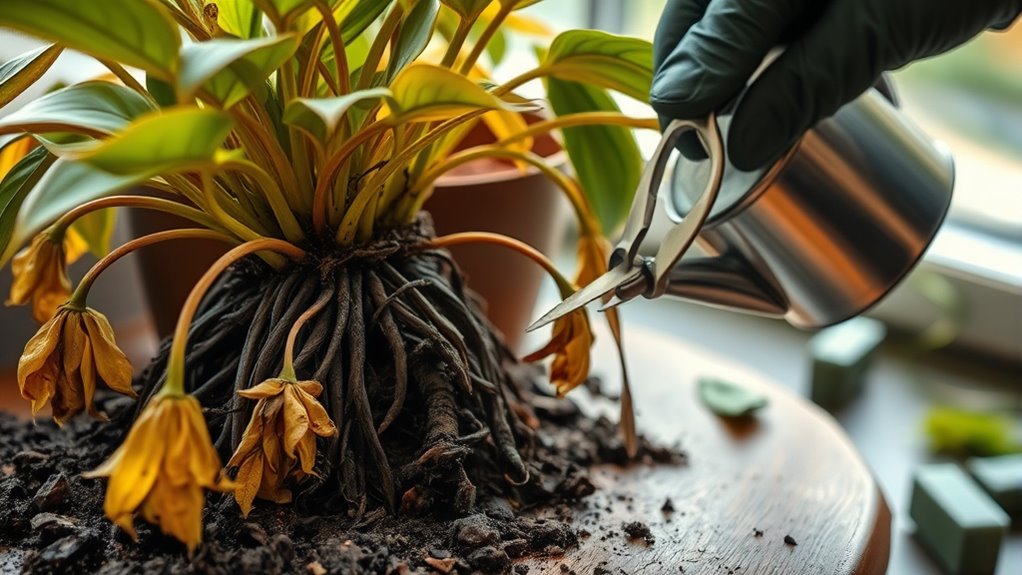
To rescue a dying houseplant, first check if it needs water by feeling the soil; water thoroughly only when dry. Inspect for pests and remove any you find, using natural treatments if needed. Adjust its environment by providing appropriate light, increasing humidity if necessary, and repotting if soil is compacted. Remove dead leaves and maintain clean surroundings. For detailed steps to revive your plant and guarantee its recovery, continue exploring proven techniques and expert tips.
Key Takeaways
- Assess and adjust watering practices based on soil moisture and plant type.
- Inspect for pests and treat with natural remedies or remove pests manually.
- Improve environmental conditions by providing appropriate light and humidity.
- Remove damaged leaves and reposition the plant for optimal recovery.
- Monitor plant health regularly and modify care routines as needed.
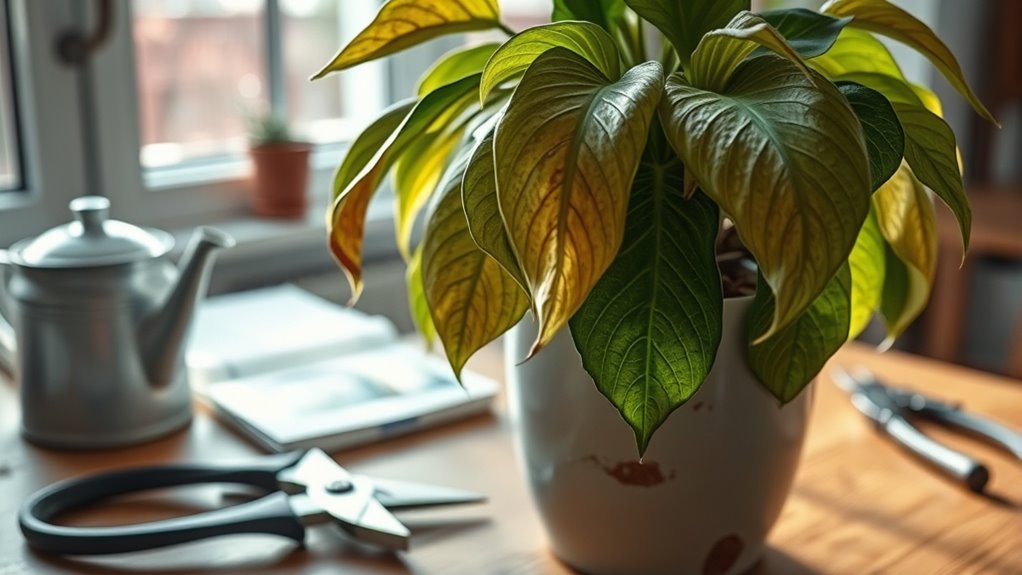
If your houseplant is looking unhealthy or droopy, don’t give up hope—many plants can bounce back with the right care. The first step is to evaluate its watering schedule. Overwatering and underwatering are common issues that lead to plant decline. Check the soil moisture by sticking your finger about an inch into the soil; if it feels dry, it’s time to water. If it’s still moist, hold off and wait a few days. When you do water, do so thoroughly until excess drains from the bottom of the pot, ensuring roots get enough moisture without becoming waterlogged. Consistency is key, so establish a watering routine based on your plant’s specific needs. For example, succulents require infrequent watering, while ferns thrive with regular moisture. Adjust your watering schedule accordingly to prevent future stress.
Next, inspect your plant for pests. Pest control is essential because insects can weaken your plant, causing yellowing leaves, spots, or stunted growth. Look closely at the undersides of leaves and stems for signs of pests like spider mites, aphids, or mealybugs. If you spot any, gently remove them with a soft cloth or a cotton swab dipped in rubbing alcohol. You can also try natural pest control methods, such as neem oil or insecticidal soap, to eliminate infestations safely. Regularly inspecting your plant helps catch pest problems early before they become severe. Keep the area around your plant clean and free of fallen leaves or debris, which can harbor pests and disease.
In addition to watering and pest control, ensure your plant is in the right environment. Adequate light, proper humidity, and good airflow are crucial for recovery. Move your plant to a location where it gets the appropriate amount of sunlight—neither too much nor too little. If your plant prefers higher humidity, consider misting it regularly or placing a humidifier nearby. Avoid placing it in drafty areas or near heating vents, which can further stress the plant. Sometimes, repotting can help if the soil is old or compacted, preventing proper root growth and nutrient absorption.
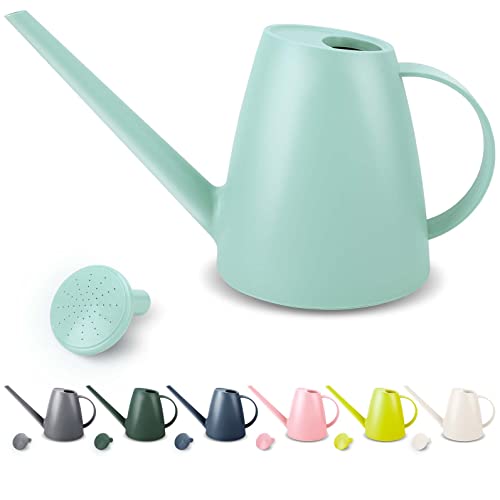
Watering Can for Indoor and Outdoor Plants – Long Spout Water Can for Garden, Flower, House Plants – 1.8L/1/2 Gallon (Green)
Customizable Water Flow: Watering can with a detachable shower nozzle, easily switch between a steady stream or gentle…
As an affiliate, we earn on qualifying purchases.
As an affiliate, we earn on qualifying purchases.
Frequently Asked Questions
How Often Should I Water a Struggling Houseplant?
You should water your struggling houseplant when the top inch of soil feels dry, usually once a week, but adjust based on your plant’s hydration needs. Check regularly to prevent overwatering, which can worsen health issues. Keep in mind that watering frequency varies with factors like light, humidity, and pot size. Consistent, moderate watering helps restore your plant’s hydration and encourages healthy growth.
What Are Signs of Overwatering Versus Underwatering?
You notice leaf discoloration or wilting, which could point to either overwatering or underwatering. Overwatering often causes soil drainage issues, making roots rot and leaves turn yellow or brown. Underwatering, however, leads to dry, crisp leaves and soil pulling away from the pot edges. Check the soil moisture—wet soil suggests overwatering, while dry soil indicates underwatering. Adjust your watering schedule accordingly to revive your plant.
Can I Use Household Items as Plant Fertilizers?
Yes, you can use household items as plant fertilizers by exploring DIY compost and natural alternatives. For example, coffee grounds, banana peels, and eggshells provide essential nutrients like nitrogen and potassium. These natural options enrich your soil without chemicals. Just guarantee you research proper preparation and application methods to avoid over-fertilizing and harming your plant. Using household waste is eco-friendly and cost-effective for nurturing healthy houseplants.
How Long Does It Take for a Plant to Recover?
Imagine your plant basking in renewed energy, and you’ll see recovery varies based on the plant’s condition. Typically, you’ll notice new growth within a few weeks, but full recovery can take a month or more. The recovery timeline depends on factors like care, lighting, and watering. With patience and proper attention, your plant’s growth will flourish, transforming its appearance and bringing life back into your space.
When Should I Consider Repotting a Dying Plant?
You should consider repotting a dying plant when you notice poor soil drainage or root health issues, like roots circling the pot’s edge or black, mushy roots. If the soil stays soggy despite watering less, or the plant shows no new growth, it’s time to repot. Choose a slightly larger pot with proper drainage, gently remove the damaged roots, and use fresh, well-draining soil to give your plant a fresh start.

Bonide Systemic Houseplant Insect Control, 8 oz Ready-to-Use Granules for Indoors and Outdoors, Protects Plants from Insects
Protect plants from insect damage with Systemic Houseplant Insect Control Granules from Bonide; this product is a low…
As an affiliate, we earn on qualifying purchases.
As an affiliate, we earn on qualifying purchases.
Conclusion
With these simple steps, you’ll breathe new life into your dying houseplant faster than you can blink! Before long, your once-lost plant will be thriving so vibrantly, it’ll outshine the sun itself. Don’t give up—your green thumb can turn around even the most hopeless, wilting plant into a lush, unstoppable jungle. So grab your tools, follow these tips, and prepare to witness a revival so astonishing, your plant will become the envy of every home!

LEVOIT Top Fill Humidifiers for Bedroom, 2.5L Tank for Large Room, Easy to Fill & Clean, 28dB Quiet Cool Mist Air Humidifier for Home Baby Nursery & Plants, Auto Shut-off for Safety, 25H
𝙁𝙖𝙨𝙩 𝙃𝙪𝙢𝙞𝙙𝙞𝙛𝙞𝙘𝙖𝙩𝙞𝙤𝙣 𝘼𝙡𝙡 𝙉𝙞𝙜𝙝𝙩: Runs for up to 25 hours on low thanks to its SUPER LARGE capacity…
As an affiliate, we earn on qualifying purchases.
As an affiliate, we earn on qualifying purchases.

Miracle-Gro Houseplant Potting Mix – Fertilized Indoor Plant Soil for Containers, Designed to be Less Prone to Gnats, 4 qt.
INDOOR GROWING: Growing indoors is easy under the right conditions; Miracle-Gro Houseplant Potting Mix is an indoor plant…
As an affiliate, we earn on qualifying purchases.
As an affiliate, we earn on qualifying purchases.