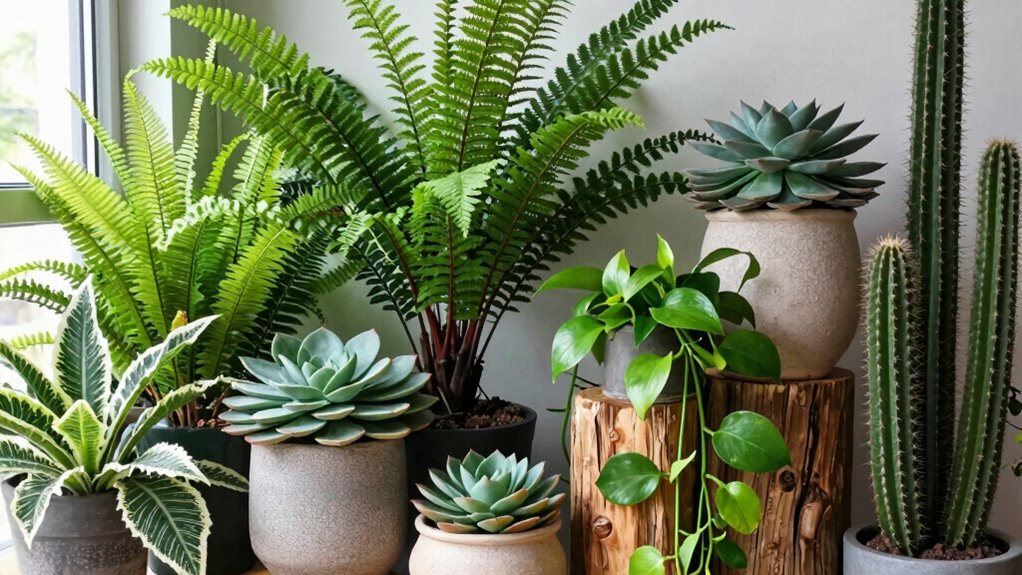

To mix texture and height in a plant display, start by placing taller plants in the back or center, then surround them with medium and low-growing varieties to create depth. Combine smooth, coarse, and veined leaves to add visual interest, and use containers made of different materials like ceramic or metal to emphasize textural contrast. Experiment with light and positioning to highlight the variety, and you’ll discover how to craft an engaging, dynamic display that catches the eye at every turn.

Get the little things that make your day delivered free — and shop member deals
- Fast, free delivery on millions of items
- Access to Prime Big Deal Days deals on October 6–7
- Prime Video, Amazon Music and more included
Key Takeaways
- Arrange taller plants at the back or center, with medium and low plants around them for balanced height.
- Combine plants with contrasting textures, like smooth and rough, to add visual interest.
- Use container styles and materials that enhance or complement the plants’ textures.
- Layer different heights and textures to create depth and prevent monotony.
- Adjust plant placement based on light and observation to emphasize textures and height.
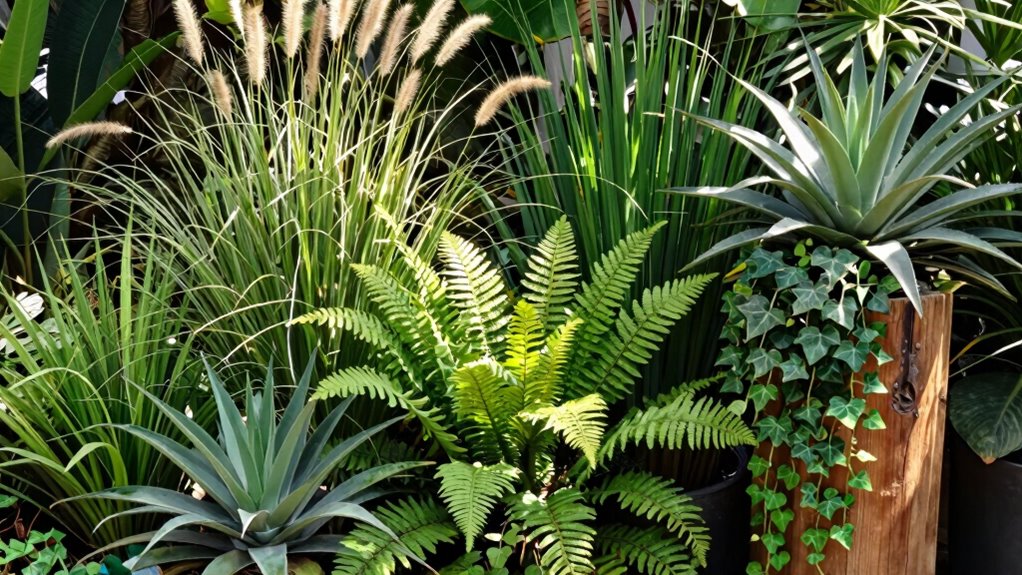
Creating a dynamic plant display involves more than just choosing beautiful plants—it’s about balancing texture and height to add visual interest. To achieve this, you need to carefully consider your container styles and the light requirements of each plant. The right container can elevate your display by complementing the plants’ textures and heights, while also supporting their growth habits. For instance, sleek, modern containers with clean lines work well with bold, sculptural plants, while rustic or textured pots enhance the natural feel of lush, leafy varieties. When selecting containers, think about size and proportion; taller plants often look striking in larger, sturdy containers that anchor them visually, whereas trailing or low-growing plants work better in smaller or shallow pots.
Understanding the light requirements of your plants is vital when mixing textures and heights. Some plants thrive in full sun, developing bold leaves and vibrant colors, while others prefer shade and grow more delicate, fine-textured foliage. By grouping plants with similar light needs, you avoid stressing them and can create a cohesive, harmonious display. For example, place sun-loving plants with coarse, spiky textures in bright, open areas, and reserve shaded spots for plants with fine, feathery leaves that flourish in indirect light. This not only guarantees each plant’s health but also helps you craft layers of height and texture that naturally complement each other. Incorporating plant care guidelines can further support their health and longevity. Additionally, paying attention to soil quality ensures that your plants receive the proper nutrients and drainage for optimal growth. Regularly monitoring plant health can help you catch issues early and keep your display thriving.
As you plan your display, consider layering different heights to create depth. Place taller plants at the back or center, depending on your space, and surround them with medium and low-growing varieties. Mix textures by combining smooth-leaved plants with those that have rough or deeply veined surfaces. This contrast keeps the viewer’s eye moving across the display, preventing it from becoming monotonous. Experimenting with container styles and materials—like ceramic, metal, or woven baskets—can also add tactile interest and emphasize the textural diversity of your arrangement. These choices can emphasize the textural differences of your plants and contribute to the overall aesthetic.
Finally, pay attention to how light interacts with your display throughout the day. The way sunlight hits your plants can emphasize or soften textures, and highlight the varying heights. Regularly observe your arrangement and be ready to reposition containers or plants to maximize the visual impact of textures and heights. With thoughtful selection of container styles, an understanding of light requirements, and strategic layering, you’ll create a plant display that’s vibrant, balanced, and visually engaging.
decorative plant containers for indoor display
As an affiliate, we earn on qualifying purchases.
As an affiliate, we earn on qualifying purchases.
Frequently Asked Questions
How Do I Choose the Right Plants for Mixed Textures?
To choose the right plants for mixed textures, focus on plant pairing by combining smooth, glossy leaves with rough, feathery foliage for striking texture contrast. Consider plant height and growth habits to create visual interest—pair taller, spiky plants with low, bushy varieties. Mix broad-leafed plants with fine, delicate foliage. This approach helps you craft a balanced, dynamic display that highlights different textures and adds depth to your garden or container.
What Lighting Conditions Suit Different Plant Textures?
You should match plant textures to your lighting conditions by considering soil moisture and sunlight requirements. For instance, bold, textured plants like succulents thrive in full sun with well-drained soil, while soft, delicate plants prefer partial shade and consistently moist soil. By understanding each plant’s needs, you can create a display that highlights textures beautifully while ensuring healthy growth in your specific sunlight and moisture conditions.
How Often Should I Prune Plants in a Mixed Display?
Ignoring the need for a consistent pruning schedule can clutter your display and hinder healthy growth. You should prune plants in a mixed display regularly, typically every few weeks, to maintain their shape and encourage growth upkeep. For faster-growing plants, prune more often, while slower growers need less frequent attention. This balance ensures your display remains dynamic, visually appealing, and healthy, highlighting different textures and heights effectively.
Can I Mix Indoor and Outdoor Plants Together?
Yes, you can mix indoor decor with outdoor gardening, but you should consider their specific needs. Choose plants with similar light, water, and humidity requirements to guarantee they thrive together. Use outdoor plants to add height and texture to your indoor displays, and incorporate indoor plants into outdoor setups for variety. This blending creates a dynamic, visually appealing space, but always monitor each plant’s environment to keep them healthy.
What Are Common Mistakes to Avoid in Plant Height Arrangement?
To avoid common mistakes in plant height arrangement, focus on maintaining a balanced plant height distribution to prevent clutter or gaps. Use visual flow techniques by placing taller plants at the back or center and shorter ones in front, guiding the eye naturally through the display. Avoid overcrowding, which disrupts harmony, and guarantee each plant’s height complements its surroundings for a cohesive, appealing look.
As an affiliate, we earn on qualifying purchases.
Conclusion
By mixing textures and heights, you create a dynamic, visually appealing plant display that captivates any space. Don’t forget, incorporating varied plant forms can boost your display’s aesthetic by up to 60%, according to recent design insights. This balance keeps your arrangement lively and engaging, encouraging viewers to explore every detail. So, experiment with different foliage and stature, and watch your plant display transform into a stunning focal point that truly reflects your style.
metal plant stands for height variation
As an affiliate, we earn on qualifying purchases.
As an affiliate, we earn on qualifying purchases.
shallow pots for trailing plants
As an affiliate, we earn on qualifying purchases.
As an affiliate, we earn on qualifying purchases.
NFL season / tailgating Picks
team gear
As an affiliate, we earn on qualifying purchases.