In hanging pots, pothos trails downward with a flowing, lush appearance, requiring regular pruning to keep it tidy and healthy. In floor pots, it spreads out more, creating a fuller, more expansive look with less frequent pruning. Both setups need well-draining soil and proper watering to prevent root rot. Managing growth habits through pruning and soil care helps your pothos thrive. Keep exploring to discover tips on maintaining your plant’s best shape and health.

Get the little things that make your day delivered free with Prime
- Fast, free delivery on millions of items
- Prime Video, Amazon Music and more included
- Member-only deals all year
Key Takeaways
- Hanging pothos cascades downward, requiring regular pruning, while floor pothos spreads outward with less frequent trimming.
- Hanging pots emphasize trailing growth; floor pots support more expansive, fuller foliage.
- Well-draining soil and drainage are crucial in both setups to prevent root rot.
- Watering frequency varies: hanging pots need careful excess water management, while floor pots depend on soil dryness.
- Growth management differs: trailing in hanging pots needs pruning, while spreading in floor pots benefits from shaping.
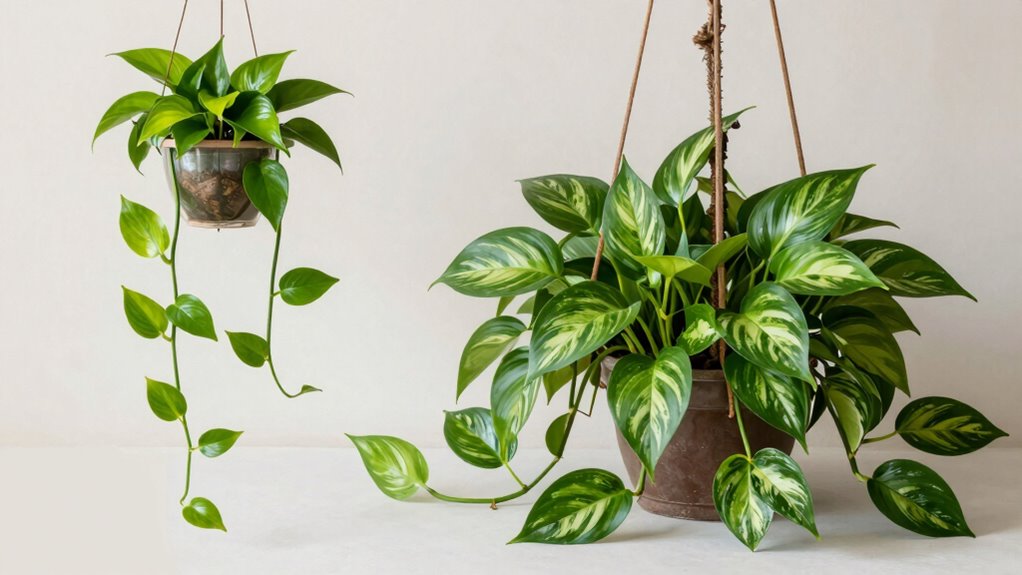
Pothos is a popular and versatile houseplant that thrives whether grown in hanging or floor pots. How you care for it depends largely on where you place it. When you grow pothos in hanging pots, the plant tends to cascade downward, creating a lush, flowing display. This growth habit makes pruning techniques vital; you want to trim back any leggy or damaged vines to encourage healthy, bushier growth. Regular pruning also helps control the plant’s length, preventing it from becoming unruly or overly heavy. Because pothos loves well-draining soil, confirm the hanging pot has good drainage holes to avoid waterlogging, which can lead to root rot. When watering, check that excess water can escape freely, and avoid letting the plant sit in stagnant water. Additionally, ensuring proper soil drainage is essential to prevent common issues like root rot. Incorporating sound science into watering practices, such as understanding how water interacts with soil and roots, can further promote plant health. Moreover, using a pot with a lightweight material can help prevent the pot from becoming too heavy as the plant grows larger.
In contrast, when pothos grows in floor pots, it usually has more space to spread out, allowing for a fuller, more expansive look. Here, you might not need to prune as often, but regular trimming can help promote denser foliage and prevent the plant from becoming overly leggy. Pruning techniques are straightforward—you simply cut back stems just above a node, encouraging new growth from that point. This is especially useful if the plant starts to grow unevenly or if you want to shape it for aesthetic purposes. Soil drainage remains equally essential in floor pots. Use a high-quality potting mix designed for houseplants, and confirm your pot includes drainage holes. Proper soil drainage prevents water from pooling at the bottom, which can cause root rot or other health issues. When watering, always check the top inch of soil; only water when it feels dry, and avoid overwatering, which is a common mistake. Adjusting watering frequency based on seasonal changes can help maintain optimal moisture levels for the plant’s health.
Growing pothos in hanging and floor pots involves understanding how the plant’s growth habits differ and adjusting your care accordingly. In hanging pots, the plant’s trailing nature demands regular pruning to keep it healthy and attractive, while in floor pots, you can give it more room to grow but still need to monitor soil drainage and watering carefully. Whichever way you grow it, maintaining good pruning techniques and confirming excellent soil drainage are key to keeping your pothos thriving. Both setups can produce stunning, lush foliage, but they require attentive care tailored to their growth styles. By paying attention to these details, you’ll enjoy a vibrant, healthy pothos that enhances your space, whether hanging from the ceiling or sprawling across the floor.
hanging pothos plant pot with drainage holes
As an affiliate, we earn on qualifying purchases.
As an affiliate, we earn on qualifying purchases.
Frequently Asked Questions
How Does Light Exposure Differ for Pothos in Hanging Versus Floor Pots?
In hanging pots, you’ll find your pothos exposed to higher light intensity and more direct sunlight, creating varied shadow patterns throughout the day. Conversely, in floor pots, the plant often receives diffused or lower light levels, resulting in softer shadow patterns. You should adjust your watering and fertilizing accordingly, as the differences in light exposure impact growth rate and leaf variegation. Make sure your pothos gets the right balance for healthy, vibrant growth.
What Are Common Pests Specific to Hanging and Floor Pothos?
Imagine tiny pirates attacking your Pothos; common pests include spider mites, mealybugs, and scale insects, which can hide in hanging or floor pots. To thwart these invaders, practice pest prevention and pest identification early. Regularly inspect your plant’s leaves and stems, and treat infestations promptly with neem oil or insecticidal soap. Keeping your Pothos healthy and clean helps it resist pests, ensuring lush, vibrant growth.
How Does Watering Frequency Vary Between Hanging and Floor Pothos Containers?
You should water your pothos more frequently in hanging pots because the roots dry out faster due to increased exposure and better drainage needs. In floor pots, watering can be less frequent, as the soil retains moisture longer. Always check root moisture levels before watering, ensuring excess water drains properly to prevent overwatering. Adjust your schedule based on the plant’s environment to promote healthy growth in both container types.
Can Pothos Adapt to Both Indoor and Outdoor Environments in These Pots?
Yes, you can adapt your pothos to both indoor air quality and outdoor resilience. Indoors, it thrives in filtered light, improving air quality, while outdoors it handles varying weather conditions. You just need to adjust watering and placement accordingly. Keep it protected from extreme weather, and your pothos will flourish in either environment, providing lush greenery and air-purifying benefits wherever you choose to grow it.
What Are the Best Pruning Practices for Pothos in Different Pot Types?
Think of pruning your pothos as sculpting a green masterpiece. Use clean, sharp scissors to trim back leggy vines and encourage bushier growth. For growth regulation, prune just above leaf nodes to promote fuller, healthier foliage. Regularly prune to remove dead or yellowing leaves, maintaining the plant’s shape. Whether in hanging or floor pots, consistent pruning helps control size, boost vigor, and keeps your pothos looking vibrant and lush.
As an affiliate, we earn on qualifying purchases.
Conclusion
So, whether your pothos drapes elegantly from a hanging pot or sprawls confidently on the floor, it’s clear they’re versatile little plants. You’d think the way they grow would be straightforward, but nope—each method comes with its own quirks. Ironically, the very freedom of hanging or sprawling can make caring for them a delightful challenge. In the end, it’s their unpredictable growth that keeps you hooked—proof that even plants love a little bit of rebellion.
As an affiliate, we earn on qualifying purchases.
As an affiliate, we earn on qualifying purchases.
Fall Picks
fall essentials
As an affiliate, we earn on qualifying purchases.