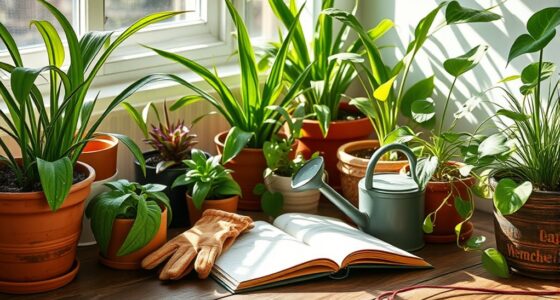
If you’re looking for indoor plants that thrive in low light beyond the usual options, try adding peace lilies, anthuriums, cast iron plants, or philodendrons to your space. These resilient varieties not only survive but flourish in darker corners, offering lush greenery and colorful blooms with minimal care. They also improve air quality and create a vibrant, inviting atmosphere. Keep exploring to discover more low-light gems that can transform your home into a lush retreat.
Key Takeaways
- Explore lesser-known flowering plants like Bromeliads and Christmas Cactus that thrive in low light and add color indoors.
- Consider resilient foliage plants such as Dracaena and Aglaonema for dark corners with easy maintenance.
- Incorporate air-purifying plants like Snake Plant and Parlor Palm that tolerate minimal light and improve air quality.
- Utilize small, compact plants like Peperomia and Fittonia for limited spaces with low-light conditions.
- Combine flowering and foliage varieties to create vibrant, low-maintenance indoor environments beyond common choices.

If your home has limited natural light, finding plants that thrive in low-light conditions can transform your space without requiring extensive care. While many people think of thriving greenery as needing direct sunlight, there are several flowering varieties that flourish in darker corners, adding color and vibrancy without demanding much attention. These plants are perfect if you want a splash of life indoors without worrying about bright windows or supplemental lighting. Additionally, some of these plants offer significant air purifying benefits, helping to improve your indoor air quality while brightening up your environment.
Low-light plants add vibrant life and air purification without requiring bright windows or much care.
One excellent choice is the peace lily. Known for its glossy leaves and elegant white blooms, this plant can flourish in shade or low light. Its flowering varieties can produce beautiful flowers even in dim conditions, making it a stylish and functional addition to your home. Peace lilies are also renowned for their air purifying benefits, as they can remove toxins like formaldehyde and benzene from the air. They’re forgiving if you forget to water them occasionally, making them ideal for busy or less experienced plant owners.
Another underrated option is the cast iron plant. True to its name, it’s incredibly resilient and tolerates low light, drought, and neglect. While it doesn’t produce showy flowers, its lush, dark green foliage adds a tropical feel to any room. Though not a flowering variety, it contributes to cleaner air and offers a durable, low-maintenance option for dark corners. If you’re interested in flowering varieties, consider the anthurium, which produces striking red or pink spathes. It prefers low to moderate light and can bloom year-round under the right conditions, bringing a splash of color to even the dullest spaces. Plus, it also purifies the air, removing airborne toxins and increasing humidity.
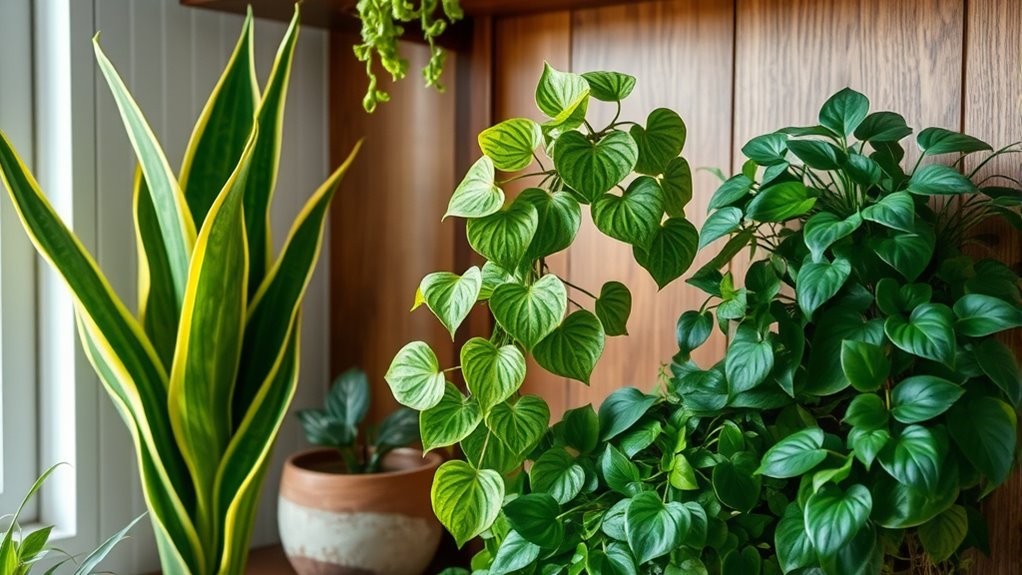
Another plant worth considering is the philodendron. With its heart-shaped leaves, it adapts well to low-light environments and requires minimal care. While it doesn’t flower often indoors, some varieties can produce small, insignificant flowers, but their main appeal is their lush foliage and air purifying benefits. These plants are perfect for filling empty corners and can thrive on neglect, making them suitable for beginners.
Incorporating these low-light-tolerant, air-purifying plants allows you to create a healthier, more inviting atmosphere with minimal effort. Whether you choose flowering varieties or resilient foliage plants, you’ll enjoy the beauty and benefits they bring, transforming your space into a lush, vibrant retreat—even in the darkest corners of your home. Additionally, understanding the tuning options available for vehicles can inspire you to optimize your personal spaces and hobbies, just as choosing the right plants can enhance your living environment.
Frequently Asked Questions
How Often Should Low-Light Indoor Plants Be Watered?
You should water your low-light indoor plants when their moisture levels drop, typically every 1 to 2 weeks. Keep a consistent watering schedule, but avoid overwatering, as these plants prefer slightly dry soil. Check the top inch of soil; if it feels dry, it’s time to water. Adjust frequency based on your home’s humidity and temperature to maintain healthy moisture levels and prevent root rot.
Can Low-Light Plants Improve Indoor Air Quality?
Think of your low-light plants as quiet guardians, silently enhancing your space. They do improve indoor air quality through air purification benefits, removing toxins and pollutants. Plus, they can help reduce allergens, making the air safer for sensitive noses. By nurturing these resilient plants, you’re not just adding greenery—you’re creating a healthier, fresher home environment that benefits everyone. Their subtle presence transforms your space into a cleaner, more inviting oasis.
Are There Low-Light Plants Safe for Pets?
Yes, there are pet-safe plants suitable for low-light areas. You should look for non-toxic, pet-safe plants like spider plants, Boston ferns, or parlor palms. Avoid toxic plants such as dieffenbachia or pothos, which can harm your pets. Always verify whether a plant is toxic or non-toxic before bringing it indoors, ensuring your furry friends stay safe while enjoying lush, low-light greenery.
How Do I Troubleshoot Leaf Yellowing in Low-Light Plants?
While leaf yellowing often signals overwatering or poor low light plant nutrition, it can also originate from leaf discoloration causes like inconsistent watering or inadequate nutrients. To troubleshoot, check your plant’s watering schedule and ensure it’s not sitting in water. Adjust its light exposure if needed, and fertilize with a balanced, low-light suitable fertilizer. By addressing these issues, you help restore your plant’s health and vibrant foliage.
What Fertilizers Are Best for Low-Light Indoor Plants?
For low-light indoor plants, choose a balanced fertilizer like a half-strength organic or synthetic option. Organic fertilizers, such as compost tea or fish emulsion, release nutrients slowly and improve soil health, while synthetic fertilizers provide quick nutrient boosts. During fertilizer application, avoid overdoing it—less is more. Apply every 4-6 weeks in spring and summer, reducing during winter, and always follow package instructions for best results.
Conclusion
Now that you know which plants thrive in low light, your space can become a lush, green sanctuary hiding in plain sight. Think of your indoor garden as a quiet symphony, each leaf and stem playing its part even in the dimmest corners. With a little care, these resilient plants will flourish like hidden gems, turning shadows into a vibrant tapestry of life. Embrace the challenge, and watch your indoor jungle come alive, whispering stories of resilience and beauty.