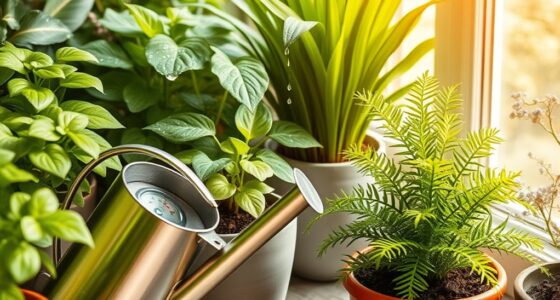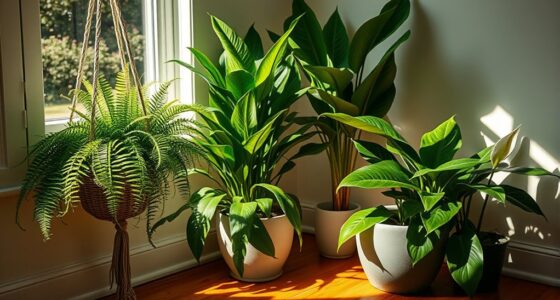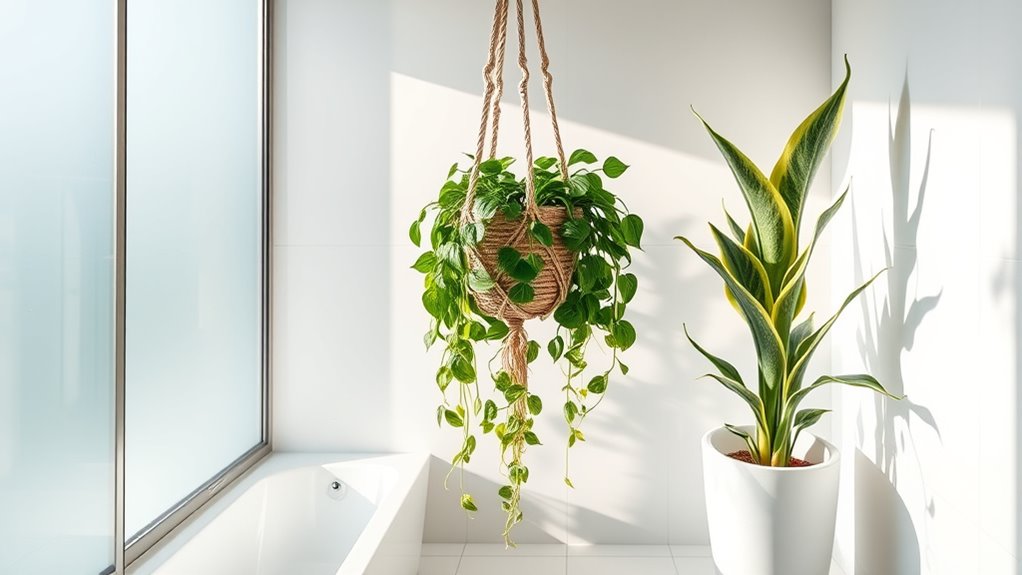

If you’re looking for top indoor plants that thrive in bathrooms, consider snake plants and pothos for their low light tolerance and easy care. Peace lilies and ferns, like Boston or maidenhair, love the humidity and add lush texture to your space. These plants help purify the air and boost humidity levels, creating a calming atmosphere. To discover more about these green favorites and how to care for them, keep exploring further.
Key Takeaways
- Choose low light tolerant plants like snake plants and pothos that thrive in bathroom conditions with minimal sunlight.
- Incorporate humidity-loving plants such as peace lilies and ferns that flourish in moist, high-humidity environments.
- Select air-purifying plants like snake plants and ferns to improve indoor air quality and remove toxins.
- Opt for low-maintenance plants suitable for busy lifestyles, including pothos and Boston ferns.
- Use hanging or shelf placements to maximize space for trailing and lush bathroom-friendly plants.

Bathrooms can be ideal spots for indoor plants because of their humidity and low light levels, which many houseplants actually favor. If you’re looking to add greenery to your bathroom, choosing plants that excel in these conditions can make your space both more inviting and healthier. Some plants are natural air purifiers, helping to remove toxins from the air, while also thriving in the low light and moisture typical of bathrooms. This combination makes them perfect for creating a calming, fresh atmosphere without requiring much maintenance.
Bathrooms are perfect for low-light, humid plants that purify the air and add natural beauty.
Low light plants like the snake plant or pothos are excellent options because they don’t need direct sunlight to flourish. Snake plants are particularly resilient—tolerant of neglect and capable of surviving in dim corners. Pothos, with its trailing vines, can grow happily in shaded areas and adds a lush look to shelves or hanging baskets. These plants are not only low light but also excellent for air purification, helping to filter out formaldehyde and other airborne toxins that can accumulate in indoor spaces. Their ability to clean the air enhances your bathroom’s overall air quality, making it a healthier environment for everyone.
Another great choice is the peace lily, which loves humidity and low light. It’s known for its beautiful white flowers and its ability to purify air, removing mold spores and other pollutants common in bathrooms. The peace lily’s tolerance for moisture means it can handle the humid conditions of your bathroom without fuss. Plus, it’s forgiving if you forget to water it occasionally, making it ideal for busy or forgetful plant owners. Its presence can also help regulate humidity levels, preventing mold growth and maintaining a comfortable environment.
Finally, consider adding ferns like the Boston fern or maidenhair fern. Ferns thrive in high humidity and low light, making them perfect bathroom companions. They add a soft, lush texture and help increase air purification by filtering airborne toxins and excess moisture. Ferns prefer consistent moisture, so if your bathroom is humid enough, they’ll do well without much fuss. Just ensure they’re not exposed to direct drafts or sudden temperature changes, which can stress them out.
Frequently Asked Questions
How Often Should I Water Bathroom Plants?
You should water your bathroom plants when their soil feels dry to the touch, usually once a week or so. Stick to a consistent watering schedule to guarantee proper plant hydration without overwatering. Keep an eye on humidity levels, as they can affect how often you need to water. Remember, bathroom plants often need less frequent watering due to the moist environment, so adjust based on your specific plant’s needs.
Can Artificial Lighting Replace Natural Light for Indoor Plants?
Think of artificial lighting as a gentle moonlight guiding your indoor garden through the night. It can indeed replace natural light, offering consistent illumination for plant growth optimization. With the right spectrum and intensity, artificial lights mimic sunlight, encouraging healthy growth. So, yes, you can rely on artificial lighting to nurture your plants, especially in spaces where natural light is scarce, turning even the gloomiest corner into a thriving green sanctuary.
Are There Plants That Tolerate High Humidity Without Watering Frequently?
Yes, you can choose plants that tolerate high humidity and require low watering. Plants like ferns, orchids, and peace lilies thrive in humid environments and don’t need frequent watering. They absorb moisture from the air, reducing your watering chores. By selecting these plants, you’ll enjoy lush greenery without constantly tending to watering needs, making them perfect for bathrooms or other humid spaces where high humidity naturally occurs.
What Are Common Pests Affecting Bathroom Indoor Plants?
Did you know that over 25% of indoor plant owners face pest issues annually? Common pests affecting bathroom indoor plants include spider mites, mealybugs, and aphids. To prevent these infestations, pest prevention is key—regularly inspect plants, keep humidity levels balanced, and avoid overwatering. Addressing these issues early helps protect your plants, ensuring they stay healthy and vibrant despite the common infestations that can threaten their growth.
How Do I Prevent Mold on Bathroom Plant Pots?
To prevent mold on your bathroom plant pots, focus on mold prevention and plant pot maintenance. Guarantee proper drainage by using pots with drainage holes and avoid overwatering. Wipe down the pots regularly to remove excess moisture, and place them in well-ventilated areas to reduce humidity. Keep the soil surface dry and consider using a fungicide if mold persists. Consistent care helps keep your plants healthy and mold-free.
Conclusion
Now that you know which indoor plants thrive in bathrooms, you’re ready to transform your space into a lush oasis. Did you know that bathrooms with plants can improve humidity levels and even boost your mood? With just a few easy-care plants like ferns or pothos, you’ll enjoy cleaner air and a more inviting atmosphere. So go ahead, add some greenery—you’ll be surprised how much it enhances your daily routine!