Many believe you don’t need a light meter at home because modern cameras handle exposure well. However, they can be fooled by tricky lighting, high contrast, or strong colors, leading to under or overexposed shots. A dedicated light meter offers precise measurements, giving you better control—especially in challenging conditions or for capturing scenes exactly as you see them. Keep going to discover why mastering this tool can transform your photography and boost your confidence behind the camera.
Key Takeaways
- Modern cameras’ built-in meters can be fooled by complex lighting, making a dedicated light meter still valuable.
- Light meters provide precise exposure readings, especially in high-contrast or tricky outdoor lighting conditions.
- Casual photographers benefit from using light meters to achieve consistent, well-exposed images without guesswork.
- Learning to operate a light meter enhances understanding of light and exposure principles, improving overall photography skills.
- A light meter ensures accurate exposure in challenging environments, giving confidence and control over your images at home.
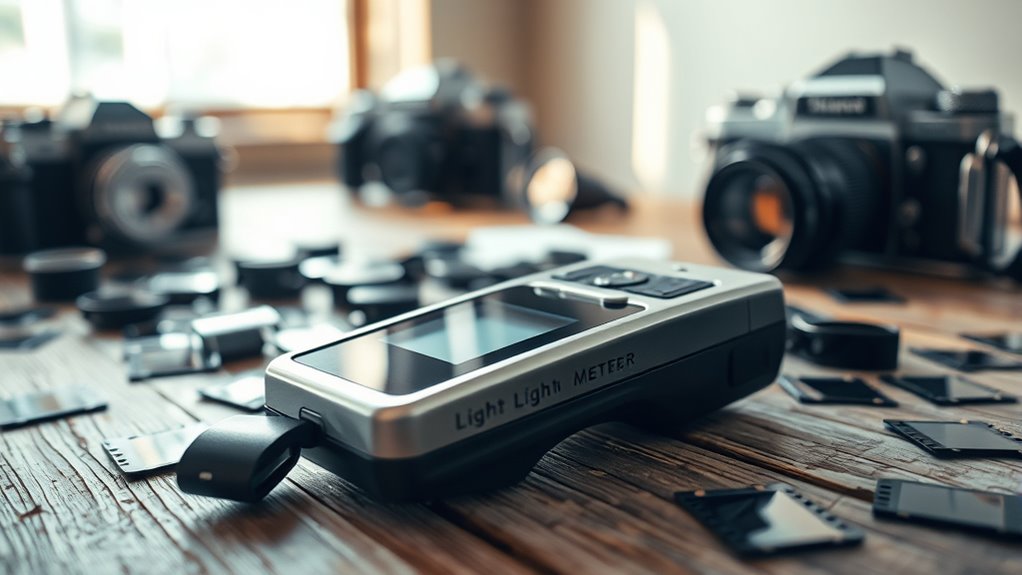
Many photographers believe they fully understand how light meters work, but several common myths can lead to incorrect exposures and missed shots. If you’re wondering whether you really need a light meter at home, it’s worth examining these misconceptions. First, some think that modern digital cameras automatically handle exposure perfectly in every situation. While cameras have sophisticated metering systems, they’re not infallible. They can be fooled by tricky lighting, such as backlighting, high contrast scenes, or subjects with strong color casts. Relying solely on your camera’s meter might leave you with underexposed or overexposed images. That’s where a dedicated light meter can step in, providing a precise measurement of light that helps you set correct exposure settings every time, especially in complex conditions.
Another myth is that light meters are only necessary for studio or professional work. Many casual photographers assume that because they mostly shoot outdoors or in well-lit environments, they don’t need one. But even in bright daylight, light levels can vary dramatically depending on the time of day, weather, or environment. For example, shooting in shaded areas or during sunrise and sunset can introduce subtle lighting nuances that a light meter can accurately quantify. This helps you avoid the common mistake of relying on guesswork or exposure compensation, which can result in less-than-ideal photos. Whether you’re capturing a family picnic or a landscape, a light meter can make your life easier by ensuring consistent, well-exposed images.
Some people believe that light meters are outdated technology, replaced entirely by digital sensors. While it’s true that modern cameras have built-in meters, these are often designed for convenience rather than precision. In tricky lighting situations, they might give misleading readings. A dedicated handheld light meter, especially one that measures incident light (the light falling on your subject), can give you a more objective reading. This allows you to set your camera’s exposure manually with confidence, ensuring your images come out exactly as you envision. It’s especially useful when shooting in high-contrast scenes or when working with film, where exposure accuracy is critical.
Additionally, many photographers overlook the benefit of learning to use a light meter effectively, which can significantly improve their understanding of light and exposure principles. This straightforward skill can elevate your photography skills considerably. It’s a straightforward skill that pays off in improved control over your images. Whether you’re a hobbyist or an aspiring professional, having a light meter at home provides an extra layer of precision, helping you capture scenes exactly as you see them — beautifully lit, perfectly exposed, every time.
Frequently Asked Questions
Can a Light Meter Improve My Smartphone Photography Skills?
Yes, a light meter can improve your smartphone photography skills. It helps you measure the actual light in a scene, allowing you to adjust your camera settings more accurately. With this knowledge, you can capture better-exposed photos, especially in challenging lighting conditions. While smartphones have built-in tools, a dedicated light meter gives you precise readings, giving you greater control and helping you elevate your photography game.
Are Digital Light Meters More Accurate Than Traditional Ones?
Think of digital light meters as the high-tech GPS of photography—they’re generally more accurate than traditional ones. Digital meters quickly analyze light with precision, often providing instant readings that help you make better exposure decisions. While traditional meters have a nostalgic charm, digital models leverage advanced sensors and software, making them more reliable and easier to use. So, if accuracy matters, go digital—you’ll thank yourself behind the lens.
How Often Should I Calibrate My Light Meter?
You should calibrate your light meter at least once a year or whenever you notice inconsistent readings. If you use it frequently or work in changing environments, consider calibrating every six months. Regular calibration guarantees accuracy, especially if you rely on precise lighting measurements for photography or other tasks. Keep track of calibration dates, and follow the manufacturer’s instructions for proper procedures to maintain consistent performance.
Is a Light Meter Necessary for Indoor Lighting Setups?
You don’t necessarily need a light meter for indoor lighting setups, especially if you’re just experimenting or doing casual photography. Often, you can rely on your camera’s built-in light meter or use smartphone apps to gauge exposure. However, if you want precise control over lighting conditions, especially for professional shoots or detailed projects, investing in a light meter can make a big difference in achieving perfect exposure every time.
Can a Light Meter Help With Color Correction in Photos?
Yes, a light meter can help with color correction in photos. It measures the light in your scene, allowing you to adjust your camera settings accurately for consistent exposure and color balance. By using a light meter, you guarantee that your photos have true-to-life colors and proper brightness. This tool is especially useful when shooting in tricky lighting conditions or when you want precise control over your image quality.
Conclusion
Don’t buy into every myth about light meters; sometimes, it’s not worth sweating the small stuff. If you’re just starting out or shooting casually, your eyes and experience can go a long way. A light meter isn’t a magic wand—it’s a tool to help, not a crutch. So, don’t let the fear of missing out keep you from experimenting. Remember, sometimes you’ve got to roll with the punches and trust your gut.