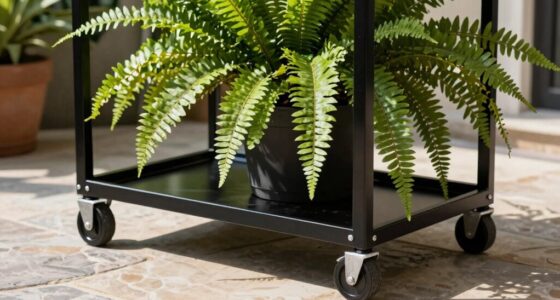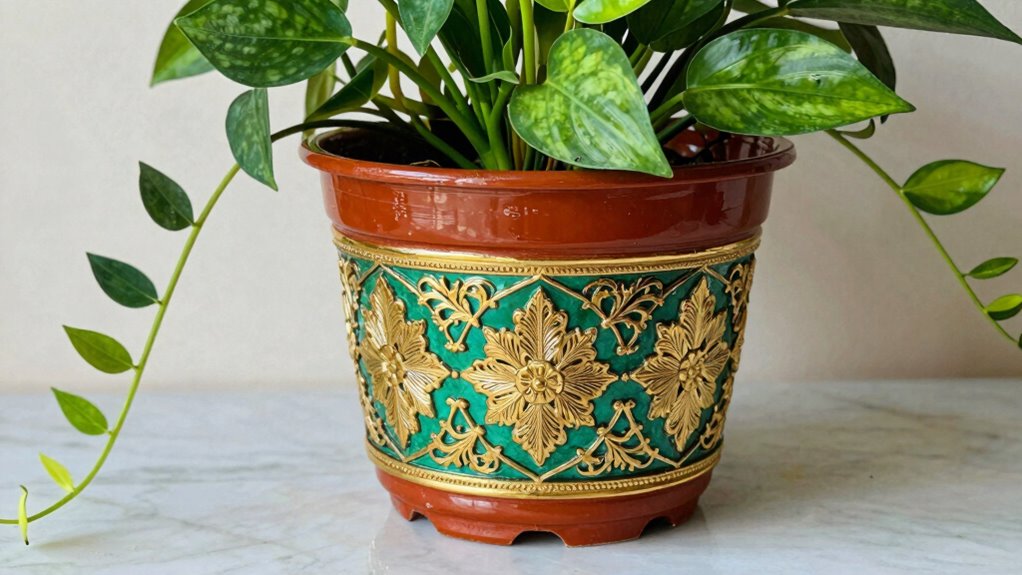

Decorative cachepots instantly boost your plant displays with style and sophistication, adding a cohesive look that suits various interior styles. They don’t interfere with root conditions since they typically don’t hold soil directly, ensuring proper drainage and healthy roots. Made from durable materials, they withstand frequent handling and weather changes, while also catching excess water to protect surfaces. If you want to discover more about how cachepots enhance your plant setup, keep exploring the benefits they offer.

Get the little things that make your day delivered free with Prime
- Fast, free delivery on millions of items
- Prime Video, Amazon Music and more included
- Member-only deals all year
Key Takeaways
- Enhance visual appeal without disturbing the plant’s root environment or soil conditions.
- Improve drainage and prevent root rot by avoiding water pooling around roots.
- Protect furniture and floors from water damage and soil debris.
- Allow easy plant swaps and seasonal updates without repotting.
- Complement interior decor styles while maintaining healthy plant growth.
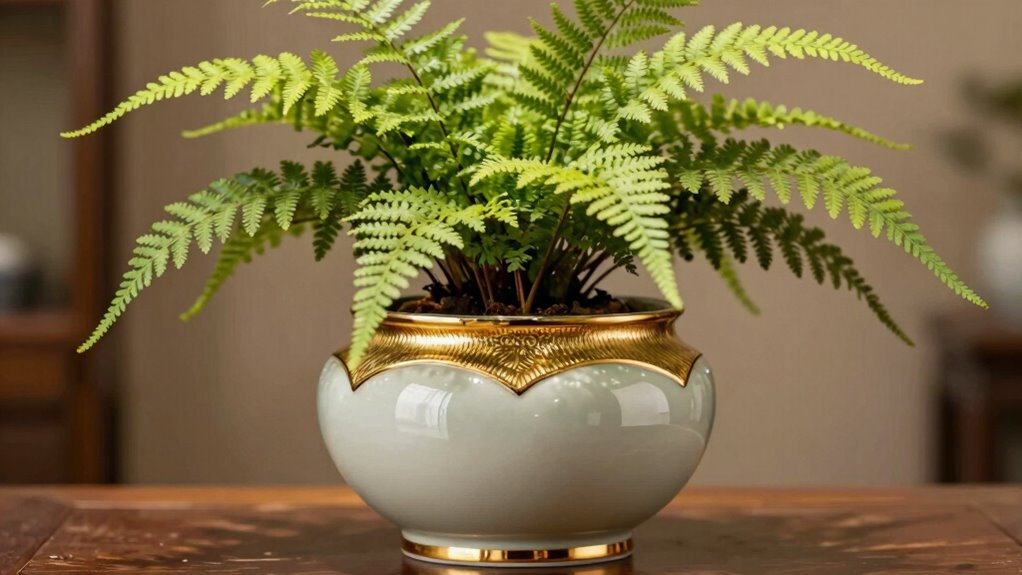
Ever wondered how to effortlessly elevate your plant display? Decorative cachepots are the perfect solution. They instantly add style and sophistication without interfering with your plant’s root conditions. Unlike planting directly into decorative containers, cachepots are designed to sit around the actual plant container, offering an aesthetic upgrade without sacrificing functionality. This means you get the beauty you want while keeping your plant’s health intact.
One of the key benefits of using decorative cachepots is their ability to enhance your space without compromising plant drainage. Since they don’t hold soil directly, they prevent water from pooling around the roots, which can lead to root rot. When choosing a cachepot, pay attention to the material durability. Materials like ceramic, metal, or high-quality plastic are sturdy choices that withstand frequent handling and cleaning. Their durability ensures that your cachepot remains attractive over time, even in high-traffic or humid environments. Incorporating natural landscaping elements can further complement the aesthetic of your cachepots and create a cohesive look.
Decorative cachepots prevent water pooling, protecting roots and maintaining plant health with durable, stylish materials.
You also gain flexibility in your plant arrangements. With a decorative cachepot, you can easily switch out plants or update your display seasonally. This adaptability means you don’t need to repot or disturb the roots; instead, you simply replace the inner container or move your plant to a different cachepot. It’s a simple way to refresh your decor while maintaining ideal plant health. Plus, the variety of materials and designs available means you can select a cachepot that complements your interior style—be it modern, rustic, or eclectic. This versatility is especially beneficial for interior decor enthusiasts seeking to match their aesthetic.
Another advantage is that decorative cachepots can serve as a protective barrier for your furniture and flooring. When placed beneath a plant container, they catch excess water and soil debris, preventing potential damage. Their material durability ensures they won’t crack or degrade easily, even with regular use or accidental bumps. This protective function adds peace of mind, especially in busy households or spaces with children and pets. Additionally, understanding the material properties of cachepots helps ensure you select the best option for your environment. Properly choosing a cachepot also aligns with regional climate considerations, especially if you keep your plants outdoors.
Products Worth Considering

Husqvarna Automower 550 Commercial Robotic Lawn Mower
Greenworks 48V (24V x 2) 21-inch Self-Propelled Lawn Mower, Battery Kit

Orbit B-hyve XR Smart Indoor/Outdoor Sprinkler Controller, 16 Zones
As an affiliate, we earn on qualifying purchases.
Frequently Asked Questions
Do Cachepots Affect Plant Watering Routines?
Yes, cachepots can affect your watering routine. Since they often lack drainage holes, they can cause excess moisture retention, leading you to water less frequently to prevent overwatering. You need to monitor moisture levels carefully because the cachepot’s design may trap water, potentially harming your plant. Adjust your watering frequency accordingly, ensuring you don’t overwater or underwater, and consider using a saucer to help manage excess moisture.
Can Decorative Cachepots Be Used Outdoors?
Yes, you can use decorative cachepots outdoors, but choose ones with outdoor protection and weather resistance. These features help safeguard your plants from rain, wind, and sun, preventing damage and maintaining their appearance. Look for cachepots made from durable materials like resin, ceramic, or treated wood. Proper outdoor cachepots guarantee your plants stay healthy and stylish, even when exposed to the elements.
Are There Eco-Friendly Cachepot Options Available?
Yes, eco-friendly cachepots made from sustainable materials are available. You can choose options like recycled metal, biodegradable fibers, or sustainably sourced wood. These designs not only look attractive but also reduce environmental impact. By selecting eco-conscious cachepots, you support sustainability while adding decorative charm to your space. They’re perfect for environmentally aware gardeners who want stylish, sustainable solutions without compromising on aesthetics.
How Do Cachepots Influence Indoor Humidity Levels?
Cachepots don’t just hold plants—they can dramatically influence indoor humidity levels! By containing soil moisture, they help control humidity, preventing it from soaring or plummeting. When watering, a cachepot traps excess moisture, creating a mini humidity oasis or barrier. This subtle impact helps you maintain perfect indoor conditions, making your space feel more comfortable and your plants happier. It’s like having a humidity control superhero right on your shelf!
Can Cachepots Be Reused for Different Plants Easily?
Yes, you can reuse cachepots for different plants easily, but you should consider plant compatibility and material durability. Make sure the cachepot’s size suits the new plant’s root system, and check if the material can handle moisture to prevent damage. Clean the cachepot thoroughly before reuse to avoid pests or diseases. Choosing durable materials like ceramic or metal makes reusing more practical and helps preserve your plants’ health.
Conclusion
A decorative cachepot is like a stylish cloak that transforms your plant’s humble roots into a masterpiece of visual harmony. It adds a splash of personality, turning a simple container into an artful statement without disturbing the delicate roots beneath. With each glance, you’re reminded that beauty and function can dance together gracefully, making your plant’s display not just a sight to behold, but a heartfelt expression of your style—without ever disturbing its silent, life-giving core.