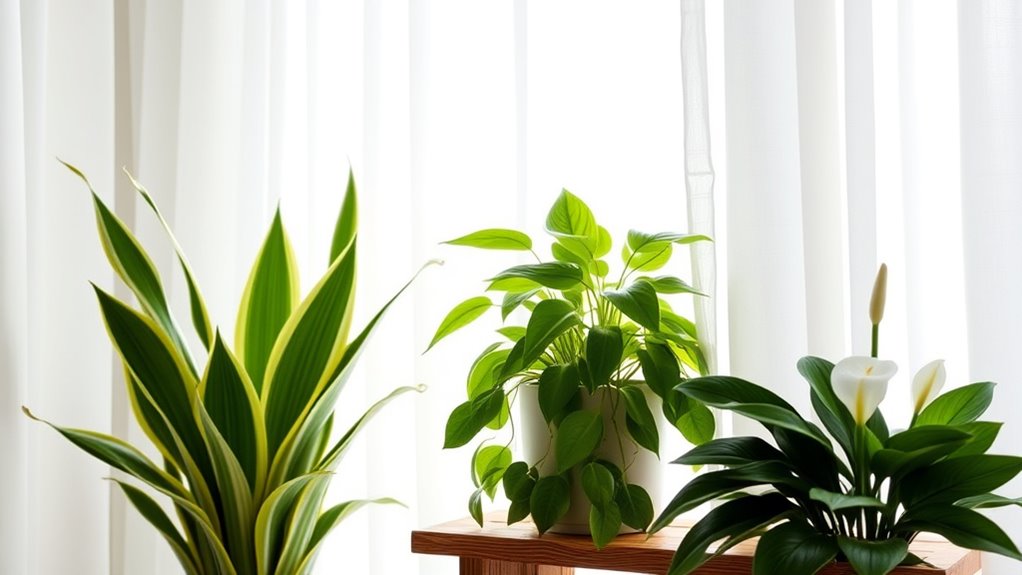

If you’re new to indoor gardening, start with low-maintenance plants like snake plants and pothos, which thrive with minimal effort. These hardy options adapt well to varying light conditions and don’t need frequent watering—just check the soil and water when it’s dry. Developing a simple, consistent care routine will help your plants flourish and brighten your space. Keep going, and you’ll discover even more ways to enjoy effortless indoor greenery.
Key Takeaways
- Choose hardy, forgiving plants like snake plants and pothos that tolerate occasional neglect.
- Match plant light needs with your home’s natural lighting to ensure healthy growth.
- Establish simple watering routines, allowing soil to dry out between waterings to prevent overwatering.
- Opt for low-maintenance plants that thrive with minimal attention, such as succulents and cacti.
- Regularly observe plants to adjust care and promote resilience, making indoor gardening easier and more rewarding.
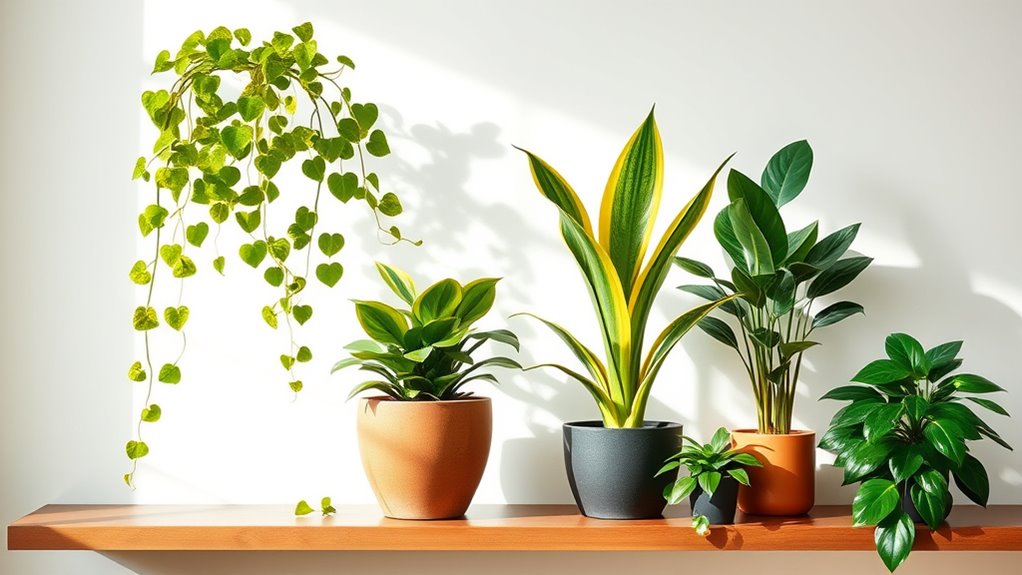
Starting with indoor plants can seem intimidating, but many varieties are perfect for beginners. The key is choosing plants that don’t require constant attention and are forgiving if you forget to water them occasionally. When starting out, it’s helpful to understand how watering schedules and plant lighting play essential roles in keeping your new greenery healthy. Most low-maintenance plants thrive with simple care routines, making them ideal for those just dipping their toes into indoor gardening.
First, consider plants that are tolerant of varying lighting conditions. Some plants, like snake plants and pothos, can adapt well to low light, which is common in many homes. Others, such as succulents, prefer bright, direct sunlight. It’s essential to assess your space and identify the amount of natural light your home provides. Even if you have limited sunlight, these hardy plants will still flourish with minimal effort. When it comes to plant lighting, the goal is to match the plant’s needs with your environment. If your space is dim, opt for plants that thrive in low light to avoid frustration and disappointment.
Watering schedules are another critical aspect. For beginners, it’s best to establish a simple routine rather than overthink it. Many low-maintenance indoor plants, like ZZ plants or peace lilies, prefer to dry out partially between waterings. You can check the soil moisture with your finger, only watering when the top inch feels dry. Overwatering is a common mistake that can lead to root rot, so it’s better to err on the side of caution. Some plants, like succulents and cacti, need infrequent watering—maybe once every few weeks—while others, like pothos, might require watering every week. Developing a consistent schedule helps you remember when to water without fuss. Additionally, understanding how sound vibrations can influence plant growth can enhance your indoor gardening success.
Pairing the right lighting with an appropriate watering routine simplifies plant care and increases your chances of success. Keep in mind that many beginner-friendly plants are forgiving if you occasionally forget to water or if your lighting isn’t perfect. They tend to bounce back easily, rewarding your efforts with lush foliage and a touch of nature in your living space. The more you observe and learn about your plants’ responses to light and moisture, the better you’ll become at creating a thriving indoor garden. With these simple guidelines, you can confidently start your journey into indoor gardening, enjoying the beauty and serenity that plants bring without feeling overwhelmed.
Frequently Asked Questions
How Often Should I Water My Beginner Indoor Plants?
You should water your beginner indoor plants once a week to maintain proper plant hydration. Keep an eye on their soil — if it feels dry about an inch down, it’s time to water. Adjust your watering schedule based on the plant’s needs and the environment, especially during warmer months. Consistent watering helps your plants stay healthy without overdoing it, ensuring they thrive with minimal effort.
Do Indoor Plants Require Fertilizer or Special Soil?
You can’t judge a book by its cover, so it’s worth considering your indoor plants’ needs. Most require regular fertilization during their growing season and well-draining soil to thrive. While many beginner plants are forgiving, checking their soil requirements and fertilizer needs guarantees they stay healthy. You don’t need fancy soil—just a balanced mix—and a simple fertilizer schedule keeps your plants happy and lush.
Can I Keep Indoor Plants in Low-Light Rooms?
Yes, you can keep indoor plants in low-light rooms. Just consider lighting considerations when choosing plants, opting for varieties that thrive in low light like pothos or snake plants. Place them near windows or in shaded corners, and follow plant placement tips to guarantee they get enough indirect light. Regularly rotate your plants to maximize light exposure and keep them healthy, even in dim spaces.
How Do I Prevent Pests on Indoor Plants?
To prevent pests on indoor plants, start with regular inspections and keep your plants healthy through proper watering and lighting. Use natural remedies like neem oil or insecticidal soap to deter pests early on. Avoid over-fertilizing, which can attract bugs, and quarantine new plants before introducing them to your collection. Consistent pest prevention helps keep your indoor plants thriving and pest-free, ensuring they stay lush and vibrant.
Are There Indoor Plants Safe for Pets?
Imagine your home as a peaceful garden of Eden. You can choose pet-safe plants like spider plants, Boston ferns, or areca palms that are non-toxic for your furry friends. Avoid toxic options like lilies or philodendrons. Always verify if a plant is labeled pet-safe or non-toxic, and keep potentially harmful plants out of reach. This way, your indoor jungle remains beautiful and safe for everyone.
Conclusion
Starting your indoor plant journey is like planting a seed of confidence—simple, rewarding, and full of growth. With easy-care options like snake plants and pothos, you don’t need a green thumb to succeed. Just give them a little light and water, and watch your space come alive. So go ahead, bring home a beginner-friendly plant; it’s like adding a splash of nature’s magic to your everyday life. You’ll be surprised how much joy they can grow!