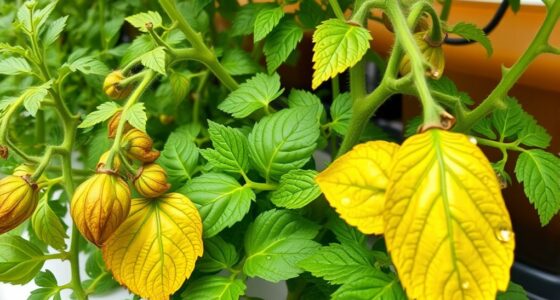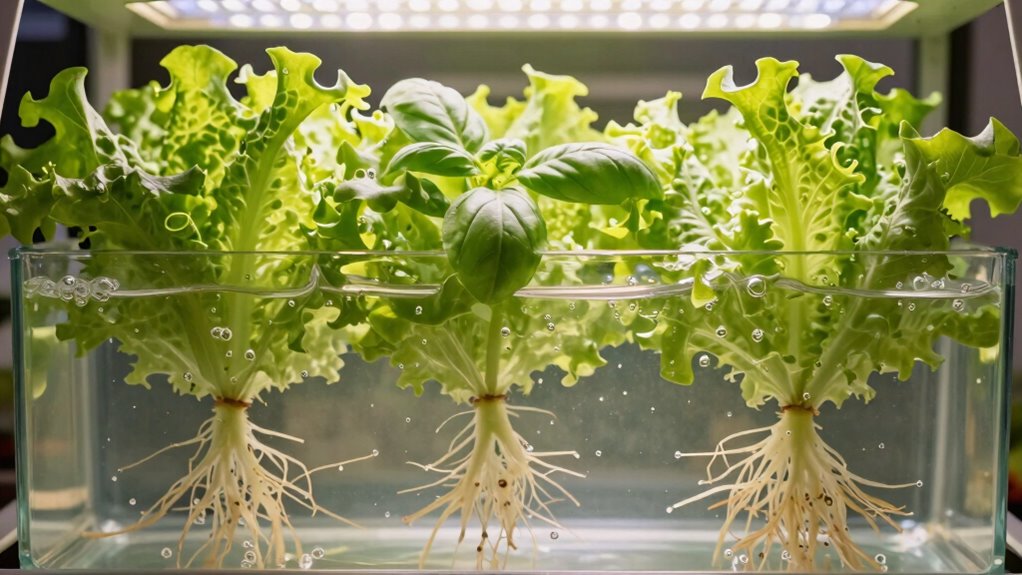
Hydroponic water quality is more important than many beginners realize because even small imbalances or contaminants can quickly harm your plants’ health and growth. If the water’s pH fluctuates or nutrients become imbalanced, your plants may suffer from deficiencies or toxicity, stunting growth or yellowing leaves. Poor water quality can also clog equipment and invite pests or disease. Keep your water clean and stable to guarantee healthy plants—discover how to do that effectively as you continue.
Key Takeaways
- Poor water quality can cause nutrient imbalances, stunting plant growth and leading to deficiencies or toxicities.
- Fluctuations in pH impair nutrient absorption, resulting in weak, yellowing, or stressed plants.
- Contaminants in water introduce pathogens, clog equipment, and increase disease and pest risks.
- Regular testing and adjustments ensure stable nutrient levels and pH, promoting healthy, vigorous plants.
- Beginners often overlook water quality’s impact, but it is critical for consistent hydroponic success.

Maintaining high water quality is essential for successful hydroponic growing, as plants depend entirely on the nutrient solution for their nourishment. When you overlook water quality, you risk disrupting your plants’ health and growth. One of the most common issues you’ll face is nutrient imbalance, which occurs when the nutrients in your solution are either too concentrated or too sparse. An imbalance can stunt plant growth, cause deficiencies, or lead to toxicity. Since plants absorb nutrients directly from the water, even small changes in nutrient levels can have significant effects on their development. Regularly testing and adjusting your nutrient levels helps ensure your plants receive the proper balance needed for robust growth.
Another critical factor to monitor is pH fluctuation. The pH level determines how well plants can absorb nutrients; if it drifts outside the optimal range—usually between 5.5 and 6.5 for most hydroponic setups—your plants won’t be able to take up essential nutrients, even if they’re present in the solution. pH fluctuation can happen quickly, especially if you’re using tap water with variable mineral content or if your system isn’t well-maintained. When pH swings occur, you might notice poor plant health, yellowing leaves, or stunted growth. To prevent this, you need to regularly check your water’s pH and adjust it using pH up or down solutions. Consistency is key, as sudden changes can stress your plants and hinder nutrient uptake.
In addition to nutrient imbalance and pH fluctuation, poor water quality can introduce pathogens, algae, or unwanted minerals that compromise your entire system. Contaminants can clog your equipment, promote disease, or create an environment where pests thrive. Using clean, filtered water minimizes these risks and helps maintain a stable environment for your plants. You should also consider the water source—well water, municipal tap water, or rainwater—and test it periodically for contaminants or excess minerals.

VIVOSUN Digital pH Meter TDS EC Meter for Water 0.01 Accuracy Hydroponics
- Application: Suitable for aquariums, pools, labs
- pH Meter Range: pH 0-14 with quick readings
- 3-in-1 TDS Meter: Measures 0-9990ppm and µs/cm
As an affiliate, we earn on qualifying purchases.
As an affiliate, we earn on qualifying purchases.
Frequently Asked Questions
How Often Should I Test My Hydroponic Water?
You should test your hydroponic water at least once a week to guarantee proper nutrient balance and overall water quality. Regular water testing helps you catch issues early, like pH fluctuations or nutrient deficiencies, so you can make necessary adjustments. Keep an eye on your system, especially during peak growth periods, and test more frequently if you notice any problems. Consistent testing ensures healthy plants and a successful hydroponic setup.
Can Water Temperature Affect Nutrient Uptake?
Think of water temperature as the key to opening your plants’ potential—like a gentle hand guiding root absorption. When temperature is just right, roots efficiently absorb nutrients, fueling healthy growth. Too hot or cold, and this process stalls, like a gate stuck shut. Temperature regulation guarantees your plants get the nutrients they need, fostering vibrant, thriving growth. Keep it steady, and watch your hydroponic garden flourish.
What Are Signs of Poor Water Quality in Hydroponics?
You notice signs of poor water quality in your hydroponic system through unhealthy plant growth, yellowing leaves, or stunted development. Water contamination can lead to mold or algae buildup, while oxygen depletion causes root rot and wilting. If you see foul odors or cloudy water, it’s a clear sign that your water quality is compromised. Regularly check your water’s clarity and oxygen levels to prevent these issues.
How Does Water pH Impact Plant Growth?
Ironically, your plants thrive on pH fluctuations, but only when kept in check. If the water pH is off, nutrient absorption takes a nosedive, causing stunted growth or nutrient deficiencies. Too acidic or alkaline water disrupts this delicate balance, making your plants struggle despite your efforts. Keeping a stable pH ensures your plants absorb nutrients efficiently, promoting healthy growth and maximizing your hydroponic success.
Are Tap Water Treatments Necessary for Hydroponic Systems?
Yes, tap water treatments are necessary for hydroponic systems. You should use water filtration to remove chlorine and chloramine, which can harm your plants. Additionally, monitoring mineral balance guarantees your plants receive essential nutrients without harmful excesses. Proper treatment helps maintain stable pH levels and prevents buildup of unwanted minerals, promoting healthier growth and higher yields in your hydroponic setup.

Liquid Plant Food – Fertilizer for AeroGarden & Hydroponic Systems, 8 oz
- Compatible with AeroGarden: Designed for AeroGarden systems
- Promotes Healthy Growth: Supports plant development and root strength
- Balanced Nutrients: Provides essential nutrients for hydroponic plants
As an affiliate, we earn on qualifying purchases.
As an affiliate, we earn on qualifying purchases.
Conclusion
Remember, your hydroponic system is like a delicate dance—you lead with clean, quality water, and your plants will follow in perfect harmony. Don’t underestimate the power of water quality; it’s the lifeblood that keeps your greens thriving and your efforts paying off. Neglect it, and your garden could wither like a flower without sunlight. Keep your water pristine, and watch your hydroponic journey blossom into a lush, vibrant oasis.

Hydro-Logic Purification Systems HydroLogic Evolution RO High Flow Reverse Osmosis System 1,200 GPD HL 31023 Hydroponic Water Filtration for Gardening
- High Water Production: Up to 1,200 GPD flow rate
- Effective TDS Reduction: Reduces TDS by 95%+
- Water Saving Options: Includes 2:1 and 1:1 waste ratios
As an affiliate, we earn on qualifying purchases.
As an affiliate, we earn on qualifying purchases.
VIVOSUN Digital pH Meter TDS EC Meter for Water 0.01 Accuracy Hydroponics
- Application: Suitable for aquariums, pools, labs
- pH Meter Range: pH 0-14 with quick readings
- 3-in-1 TDS Meter: Measures 0-9990ppm and µs/cm
As an affiliate, we earn on qualifying purchases.
As an affiliate, we earn on qualifying purchases.