
Vertical farming in the USA combines hydroponic systems with urban spaces, allowing you to grow fresh produce year-round right in the city. With minimal water and land use, it reduces environmental impact while providing access to leafy greens, herbs, and strawberries locally. Hydroponics gives you precise control over nutrients, speeding up growth and ensuring crop quality. As you explore further, you’ll discover how this innovative approach is shaping sustainable urban agriculture across the nation.
Key Takeaways
- Hydroponic systems enable precise nutrient delivery, accelerating crop growth and increasing yields in urban vertical farms.
- Vertical farming reduces transportation emissions by producing fresh produce close to urban consumers.
- Hydroponics eliminate soil use, conserving land and allowing food production in limited urban spaces.
- Urban vertical farms support crop diversification, providing year-round access to leafy greens, herbs, and microgreens.
- These systems promote sustainable resource use, significantly reducing water consumption and pesticide reliance.
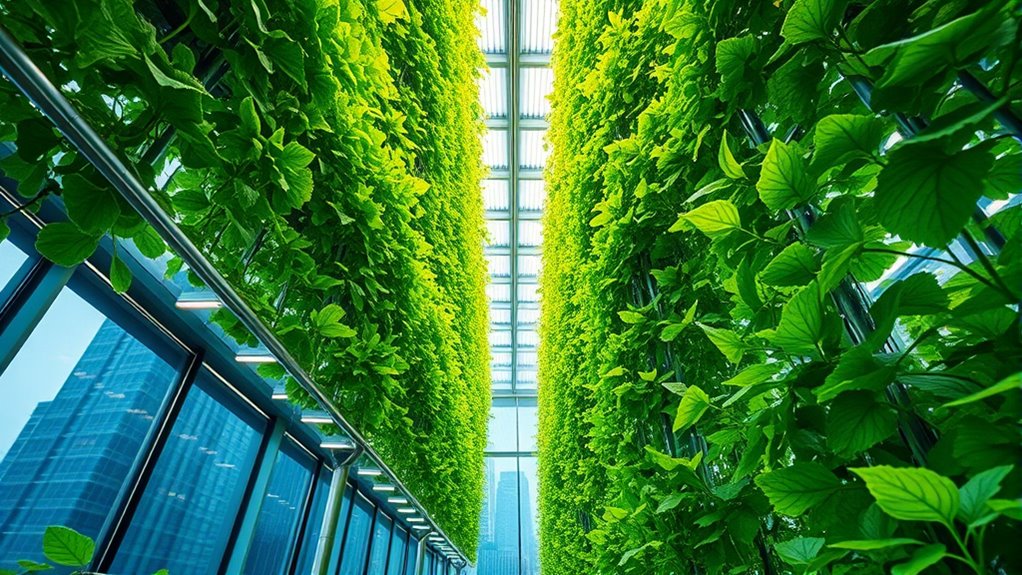
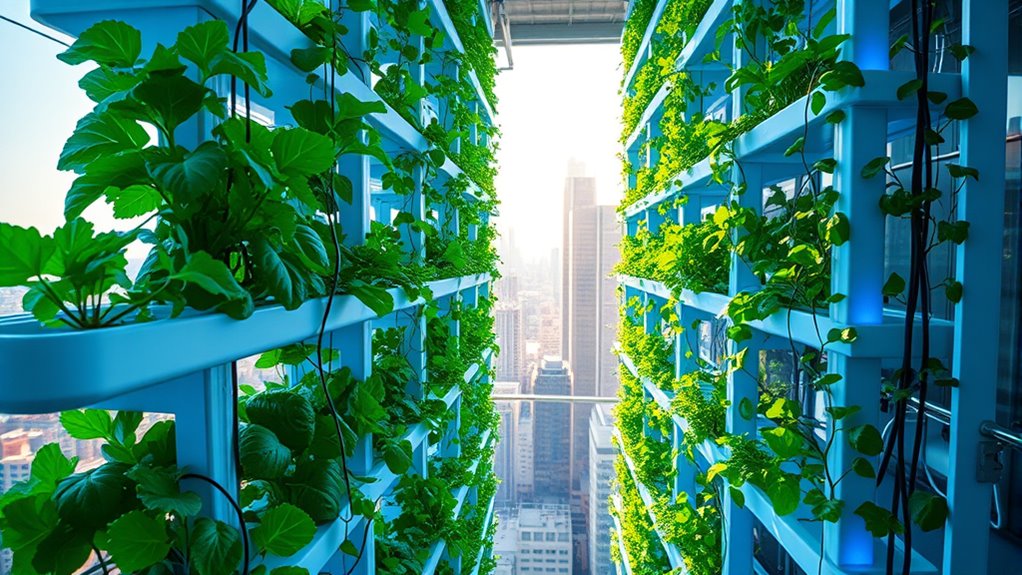
Vertical farming is transforming agriculture across the USA by growing crops indoors in stacked layers, often using hydroponic or aeroponic systems. This innovative approach allows you to produce fresh, healthy food year‑round, regardless of seasonal changes or climate limitations. As a sustainable innovation, vertical farming addresses many environmental concerns by substantially reducing water usage, eliminating the need for soil, and cutting down transportation emissions. Instead of sprawling fields, you can cultivate a wide variety of crops within a compact urban space, making it an efficient solution for cities seeking to boost local food production.
Vertical farming grows fresh, healthy crops year-round indoors, reducing water use, soil needs, and emissions in urban environments.
One of the key advantages you’ll notice with vertical farming is its ability to support crop diversification. Traditional farming often restricts you to a limited range of seasonal crops, but vertical farms open up new possibilities. You can grow leafy greens, herbs, strawberries, and even microgreens all in one facility. This diversification not only ensures a steady supply of different foods but also helps you meet the diverse dietary needs of urban populations. More crop options mean you’re less dependent on imports or seasonal produce, making local food systems more resilient.
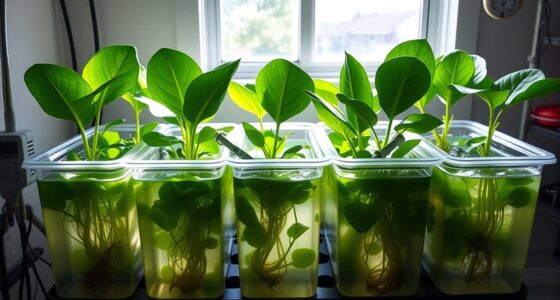
Hydroponic systems, which deliver nutrients directly to plant roots through water, are central to this method. You don’t need soil, which reduces land use and minimizes pesticide requirements. This setup also allows you to precisely control nutrient levels, light, and humidity, optimizing plant growth and yield. By doing so, you can grow crops faster and more efficiently than traditional methods. The use of LED lighting further enhances energy efficiency, ensuring that your farm minimizes its environmental footprint.
With vertical farming, you’re not just growing food; you’re creating a sustainable urban ecosystem. It enables you to produce fresh produce close to consumers, reducing transportation costs and emissions. Plus, because these farms can be built in existing buildings or underutilized spaces, they promote smart land use and urban revitalization. The integration of energy-efficient systems further boosts sustainability and operational cost savings. The combination of sustainable innovation and crop diversification makes vertical farming a compelling solution for future food security in the USA.
Ultimately, this approach empowers you to support local economies, reduce environmental impact, and provide nutritious food to communities. As technology advances, vertical farming will become even more efficient and accessible, helping to reshape the American agricultural landscape. By embracing these systems, you’re part of a movement that prioritizes sustainability, innovation, and resilience—key elements for nourishing a growing population responsibly.
Frequently Asked Questions
What Are the Main Challenges Facing Vertical Farms Today?
You face challenges like maintaining energy efficiency to keep costs low and ensuring urban pest control without harming your crops. High energy use for lighting and climate control can strain your budget, while pests can spread quickly in confined environments. Balancing these factors requires innovative solutions, like energy-efficient LED systems and integrated pest management, so your vertical farm stays productive and sustainable in the city.
How Do Vertical Farms Impact Local Economies?
Vertical farms boost local economies by creating urban jobs—studies show they can generate hundreds of employment opportunities per facility. You benefit from increased local food security, as these farms provide fresh produce right in the city, reducing reliance on distant supplies. By supporting urban agriculture, you help stimulate economic growth, strengthen community resilience, and promote sustainable development, all while enjoying fresher, healthier foods.
What Is the Cost Comparison Between Vertical and Traditional Farming?
You’ll find vertical farming more cost-efficient overall because it maximizes land utilization, allowing you to grow more crops in a smaller space. Although initial setup costs for vertical farms can be higher, they save money long-term through reduced water usage and fewer pesticides. Traditional farming often requires more land and resources, making vertical farms a smarter financial choice for sustainable, urban agriculture.
How Scalable Are Hydroponic Systems for Urban Areas?
Imagine building your own green city like Gotham’s skyline—hydroponic systems are highly scalable for urban areas. Their efficiency allows you to expand quickly, fitting into small rooftops or sprawling warehouses. You can readily adapt and grow your urban farm, making the most of limited space. Hydroponic efficiency guarantees your urban farm expansion remains sustainable, productive, and capable of feeding more people, transforming cityscapes into lush, food-producing hubs.
What Future Innovations Are Expected in Vertical Farming Technology?
You can expect future vertical farming innovations to include AI optimization, which will enhance crop management and resource efficiency. Additionally, you’ll see increased crop diversity, allowing urban farms to grow a wider variety of produce year-round. These advancements will make vertical farms more sustainable, productive, and adaptable to different urban environments, helping you enjoy fresher, local foods while reducing environmental impact.
Conclusion
As you explore vertical farming, it’s clear how hydroponics transforms urban agriculture. Imagine a city rooftop where lettuce and herbs flourish year-round, using minimal space and water. For instance, a Brooklyn-based vertical farm supplies fresh greens to local restaurants, reducing supply chain emissions. This approach not only boosts food security but also showcases sustainable innovation. Embracing vertical farming means you’re supporting smarter, greener cities—making fresh, local produce accessible wherever you are.