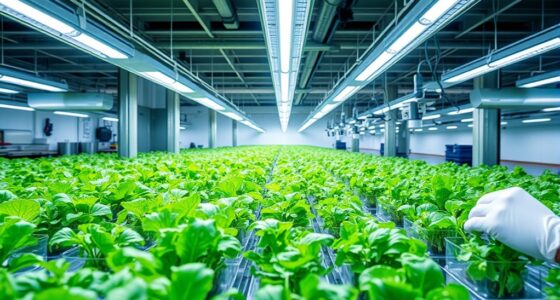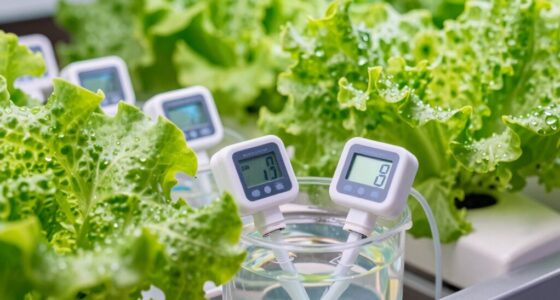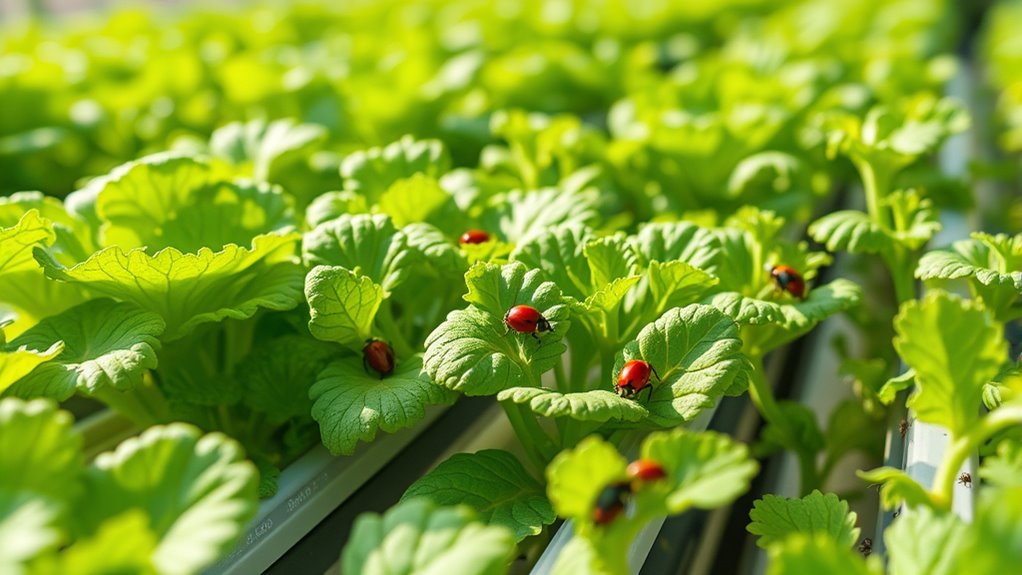

To manage pests in hydroponics organically and chemical-free, use natural predators like ladybugs for aphids or predatory mites for spider mites. Incorporate companion planting with herbs such as basil and marigolds to deter pests and attract beneficial insects. Maintain good hygiene by cleaning systems regularly and removing infected plants promptly. Combining these methods creates a balanced, pest-resistant environment—continue exploring how to fine-tune these strategies for a healthy, organic hydroponic setup.

Get the little things that make your day delivered free with Prime
- Fast, free delivery on millions of items
- Prime Video, Amazon Music and more included
- Member-only deals all year
Key Takeaways
- Implement biological controls like ladybugs and predatory mites to naturally reduce pest populations without chemicals.
- Use companion planting with herbs and flowers such as basil and marigolds to deter pests organically.
- Regularly monitor plants for early pest signs and remove infected material promptly to prevent infestations.
- Maintain system hygiene, proper nutrient levels, and avoid overwatering to minimize pest issues organically.
- Combine biological controls and companion planting with organic practices for an integrated, chemical-free pest management approach.

Have you ever wondered how to keep pests at bay in a hydroponic system? Maintaining a healthy, pest-free environment without resorting to chemicals can be challenging, but it’s entirely possible with the right strategies. One effective approach involves using biological controls and companion planting. Biological controls include introducing natural predators or beneficial organisms that target pests, helping to keep their populations in check without harmful chemicals. For instance, releasing ladybugs can help control aphids, while predatory mites can manage spider mites. These natural enemies work silently and efficiently, reducing pest numbers without disrupting your plants’ growth or compromising your organic goals.
Complementing biological controls, companion planting offers another organic solution. By strategically planting certain herbs, flowers, or other crops alongside your hydroponic system, you can deter pests naturally. For example, planting basil near your vegetables can repel thrips and aphids, while marigolds release compounds that discourage nematodes and whiteflies. Companion planting not only acts as a pest barrier but can also enhance plant health by improving nutrient uptake and attracting beneficial insects. It creates a balanced ecosystem where pests are less likely to become overwhelming, reducing the need for intervention.
Strategic companion planting naturally deters pests and promotes healthier hydroponic crops.
Implementing biological controls and companion planting requires some planning, but it’s worth the effort. Start by identifying common pests in your hydroponic setup and choosing appropriate natural enemies. Regularly monitor your plants to spot early signs of infestation. When introducing biological controls, ensure they are compatible with your environment and won’t harm your plants or other beneficial organisms. For example, selecting beneficial insects that are suited for your specific pest problems can optimize results. For companion planting, select plants that thrive in similar conditions and are known to repel specific pests. Mix and match your planting arrangements thoughtfully to maximize pest deterrence.
It’s important to remember that these organic methods work best as part of an integrated pest management system. Combine biological controls and companion planting with good hygiene practices, such as cleaning your system regularly and removing infected plant material promptly. Maintaining proper nutrient levels and avoiding overwatering also helps keep pests at bay, as healthy plants are less attractive targets. By cultivating a balanced, pest-resistant environment using natural methods, you reduce your reliance on chemicals and support a sustainable, organic hydroponic system. Patience and consistency are key, but over time, you’ll enjoy a thriving, pest-free garden that aligns with your organic gardening principles.
Products Worth Considering
Greenworks 48V (24V x 2) 21-inch Self-Propelled Lawn Mower, Battery Kit

EGO Power+ 16 Cordless Chainsaw (CS1611) with 56V 2.5Ah Battery and Charger

Husqvarna Automower 550 Commercial Robotic Lawn Mower
As an affiliate, we earn on qualifying purchases.
Frequently Asked Questions
Can Beneficial Insects Be Used in Hydroponic Pest Control?
Yes, beneficial insects can be used in hydroponic pest control. They actively hunt and naturally reduce pest populations, making them a great organic solution. You should introduce beneficial insects like ladybugs or predatory mites to target specific pests effectively. This method is chemical-free, eco-friendly, and promotes a healthy growing environment. Just guarantee you select the right beneficial insects for your pest control needs and monitor their activity regularly.
How Do Organic Pest Solutions Affect Hydroponic Nutrient Levels?
You might worry organic pest solutions will disrupt your nutrient balance, but they usually have minimal impact on hydroponic nutrient levels. These solutions target pests without introducing harsh chemicals that could alter your system’s pest impact or nutrient flow. By choosing organic options, you support a balanced environment, keeping your plants healthy and thriving while effectively managing pests. Regular monitoring ensures your nutrient levels stay ideal, even with organic treatments in use.
Are There Specific Pests Unique to Hydroponic Systems?
Yes, hydroponic systems have specific pests like fungus gnats, whiteflies, and spider mites that thrive in the moist environment. These hydroponic-specific pests exhibit unique behaviors, such as rapid reproduction and quick spread through nutrient solutions. You need to monitor your system closely, as these pests can quickly damage your plants. Using organic methods tailored for hydroponics helps manage these pests effectively without harming your nutrient balance.
How Often Should Pest Monitoring Be Conducted in Hydroponics?
Don’t wait until pests have taken over; regular pest monitoring keeps issues at bay. In hydroponics, you should conduct pest detection checks at least once a week, as pests can appear quickly without soil to slow them down. Consistent pest monitoring frequency helps you spot problems early, allowing for timely, chemical-free interventions. Staying vigilant guarantees your hydroponic system remains healthy and pest-free, safeguarding your crops’ success.
Can Homemade Organic Remedies Harm Hydroponic Plants?
Homemade organic remedies can harm your hydroponic plants if they cause soil contamination or plant stress. You might unintentionally introduce pathogens or toxic substances that damage roots or disrupt nutrient uptake. Always test remedies on a small area first, and use gentle, natural ingredients. Proper monitoring guarantees your plants stay healthy, avoiding stress and contamination, and keeping your hydroponic system thriving without risking overall plant health.
Conclusion
By adopting organic and chemical-free pest management in your hydroponic system, you cultivate a thriving garden that’s as resilient as a fortress. Embrace natural predators and companion planting as your trusty allies, shielding your crops without harmful chemicals. With patience and care, you’ll nurture a healthy, sustainable environment where pests have no foothold. Think of your garden as a delicate symphony — each pest-free note harmonizing to produce a bountiful, pure harvest that reflects your commitment to eco-friendly growth.