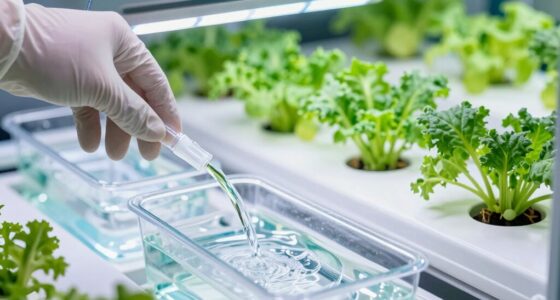
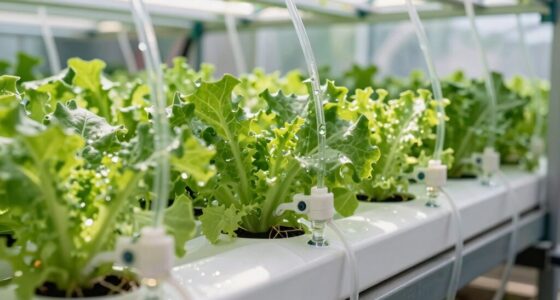
As a home grower, you approach hydroponic tomato systems by choosing suitable mediums like coconut coir or rockwool, and selecting a system such as deep water culture or drip irrigation. You carefully monitor and adjust nutrients, pH, and environmental conditions like light, temperature, and humidity to guarantee healthy growth. Regular pruning and system cleaning help prevent issues and boost yields. If you want to master the details, you’ll find plenty of tips to help you succeed.

Get the little things that make your day delivered free with Prime
- Fast, free delivery on millions of items
- Prime Video, Amazon Music and more included
- Member-only deals all year
Key Takeaways
- Home growers select suitable system types like containers or drip systems for ease and scalability.
- They use soilless mediums such as coconut coir or rockwool to support roots and ensure drainage.
- Regularly monitor and adjust nutrient solutions, pH levels, and environmental conditions for optimal growth.
- Focus on maintaining system cleanliness and consistent operation to prevent pests and diseases.
- Optimize lighting, temperature, and humidity to promote healthy plant development and high yields.

Have you ever wondered how to grow tomatoes efficiently without soil? If so, you’re not alone. Many home growers are turning to hydroponic tomato systems because they promise faster growth, higher yields, and less mess. Instead of planting in traditional soil, you’re working with soil alternatives—materials like coconut coir, perlite, or rockwool—that support plant roots while providing excellent drainage and aeration. These mediums serve as a stable foundation for your tomato plants, but the real magic happens with nutrient solutions. You’ll need to supply a carefully balanced mix of essential nutrients directly to the roots through water, guaranteeing your plants get everything they need to thrive. This approach allows you to control nutrient levels precisely, leading to healthier plants and tastier tomatoes.
Hydroponic tomato growing uses soil alternatives and nutrient solutions for faster, healthier yields without soil mess.
As a home grower, you’ll likely invest in a simple hydroponic system such as deep water culture, nutrient film technique, or drip systems. These setups are designed to keep the roots submerged or regularly fed with nutrient-rich water, minimizing soil-borne diseases and pests. You can start small, using containers or buckets, and scale up as you become more comfortable. Regular monitoring of your nutrient solution is essential; you’ll need to keep pH levels balanced and adjust nutrient concentrations based on plant growth stages. Many growers use commercially available nutrient mixes formulated specifically for tomatoes, which simplifies the process and reduces guesswork. Understanding contrast ratio and its impact on your system’s visual clarity can also help you optimize your indoor setup. Additionally, considering water quality can influence nutrient availability and overall plant health. Incorporating a well-maintained system is key to preventing issues and ensuring consistent growth. Proper nutrient management, including timely adjustments, is critical for achieving optimal yields and flavor.
A thorough understanding of lighting requirements can significantly enhance your plant development, especially when natural sunlight is limited. Maintaining proper environmental conditions, including temperature and humidity, is also vital, as they influence nutrient uptake and plant health. You’ll find that maintaining ideal conditions—around 70-80°F with moderate humidity—helps your tomatoes develop faster and with better flavor.
Finally, many home growers find that maintaining a regular schedule for pruning and monitoring their plants makes a significant difference. Removing unnecessary foliage improves air circulation and directs energy toward fruit production. By keeping a close eye on your system’s nutrient levels, pH balance, and environmental conditions, you can create a thriving hydroponic environment. With patience and attention, you’ll soon enjoy fresh, homegrown tomatoes, all grown without soil but with the same satisfaction that comes from nurturing your own garden.
As an affiliate, we earn on qualifying purchases.
Frequently Asked Questions
What Are the Initial Costs of Setting up a Hydroponic Tomato System?
You’ll likely spend between $200 and $1,000 on setting up your hydroponic tomato system. Initial costs include equipment like grow lights, nutrient solutions, and climate control devices, all tailored to your space and soil compatibility. Investing in quality components helps maintain ideal conditions, ensuring healthy plant growth. Keep in mind, the more automated and controlled your climate, the higher your initial investment, but it pays off with better yields.
How Much Space Is Needed for a Home Hydroponic Tomato Garden?
Ever wondered how much space you need for a thriving home hydroponic tomato garden? Typically, you’ll want about 4 to 8 square feet per plant, depending on your plant training techniques. To maximize your yield, focus on light optimization and strategic plant training, like pruning and trellising. With proper space and care, your garden can flourish even in a small area, producing plenty of delicious tomatoes.
Are There Specific Tomato Varieties Best Suited for Hydroponics?
You should choose tomato varieties optimized for hydroponic systems, focusing on those with strong genetic selection for high crop yield and disease resistance. Indeterminate types like cherry or heirloom tomatoes often perform well because they produce fruit continuously. These varieties adapt better to controlled environments, maximizing your yield. By selecting the right genetic traits, you guarantee healthy growth and a bountiful harvest, making your home hydroponic setup more successful.
How Often Should Nutrient Solutions Be Changed in the System?
You should change your nutrient solutions every 2 to 3 weeks. Studies show that nutrient concentration can drop considerably over this period, affecting plant growth. Regular solution timing guarantees your tomatoes receive the right nutrients without buildup of salts or imbalances. Keep an eye on your system’s health, and don’t wait too long—prompt changes maintain ideal growth conditions, giving you healthier, tastier tomatoes.
What Common Pests or Diseases Affect Hydroponic Tomatoes at Home?
You should watch out for common pests like aphids, whiteflies, and spider mites, which can quickly infest your hydroponic tomatoes. Diseases such as powdery mildew and root rot also pose risks. To prevent pests, practice pest prevention by keeping your system clean and monitoring regularly. For disease management, guarantee proper airflow and nutrient balance, and remove any infected plants promptly to protect your healthy crop.
As an affiliate, we earn on qualifying purchases.
Conclusion
You’re probably surprised to learn that hydroponic tomato systems can yield up to 30% more fruit than traditional methods. As a home grower, embracing this technique means you’re not only growing healthier, pesticide-free tomatoes but also maximizing your space and resources. With the right setup and care, you’ll enjoy fresh, delicious produce year-round. So, why not give hydroponics a try? It’s a smart, sustainable way to boost your garden’s productivity and your enjoyment of homegrown tomatoes.
hydroponic nutrient solution for tomatoes
As an affiliate, we earn on qualifying purchases.
As an affiliate, we earn on qualifying purchases.
As an affiliate, we earn on qualifying purchases.
NFL season / tailgating Picks
team gear
As an affiliate, we earn on qualifying purchases.