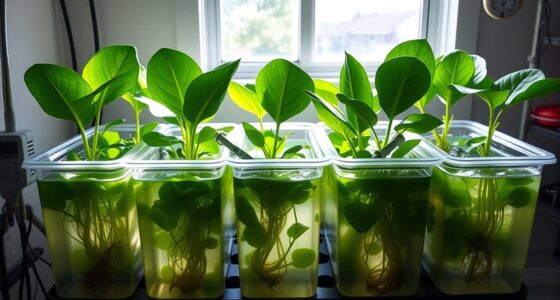
To create your own hydroponic nutrient solution, start with simple recipes using readily available ingredients like calcium nitrate, magnesium sulfate, and potassium phosphate. Mix these in appropriate ratios based on your plants’ needs, then adjust the pH to 5.5-6.5 for ideal absorption. Regularly test and tweak your solution to keep nutrients balanced and pH steady. If you keep at it, you’ll discover effective DIY recipes that boost your hydroponic success.
Key Takeaways
- Use readily available nutrients like calcium nitrate, magnesium sulfate, and potassium phosphate, mixing them in appropriate ratios.
- Adjust pH to 5.5–6.5 after adding nutrients, using pH up or down solutions for optimal absorption.
- Incorporate organic additives such as seaweed extracts or compost teas to boost plant health naturally.
- Regularly test and monitor pH and nutrient levels to prevent deficiencies and imbalances.
- Gradually introduce nutrients and organic additives to avoid shock and promote vigorous growth.

Have you ever wondered how plants thrive in soilless environments? It all comes down to the right balance of nutrients, pH levels, and the quality of your hydroponic solution. When you’re creating your own DIY nutrient mix, understanding pH adjustment is vital. The pH level influences how well plants can absorb nutrients, so maintaining it within an ideal range—typically between 5.5 and 6.5—is essential for healthy growth. To do this, you can use simple pH adjustment tools like pH up or pH down solutions, which help fine-tune the acidity or alkalinity of your mix. Regular testing with a reliable pH meter guarantees that your plants aren’t stressed by imbalanced conditions, leading to better nutrient uptake and vigorous growth.
In addition to pH adjustment, incorporating organic additives can profoundly boost your homemade hydroponic solutions. Organic additives, such as compost teas, seaweed extracts, or fish emulsions, supply natural nutrients and beneficial microorganisms that support plant health. These organic components not only provide a sustainable way to nourish your plants but also improve the overall biological activity in your nutrient solution. When adding organic additives, start with small quantities and observe how your plants respond, adjusting as necessary to avoid nutrient imbalances. The use of organic additives also helps create a more resilient root environment, reducing the risk of disease and promoting healthier, more vigorous plants.
Creating your own nutrient solution requires a careful balance of macro and micronutrients. You can start with simple, readily available fertilizers like calcium nitrate, magnesium sulfate, and potassium phosphate, which supply essential elements. Mix these in appropriate ratios to meet your plants’ needs, and then adjust the pH accordingly. Adding organic additives can complement these nutrients by providing trace elements and natural growth stimulants. Remember that consistency is key; regularly test your solution’s pH and nutrient levels, and make adjustments as your plants grow and their needs change. This proactive approach guarantees your plants have access to all the nutrients they require, fostering healthy development and maximizing yields.
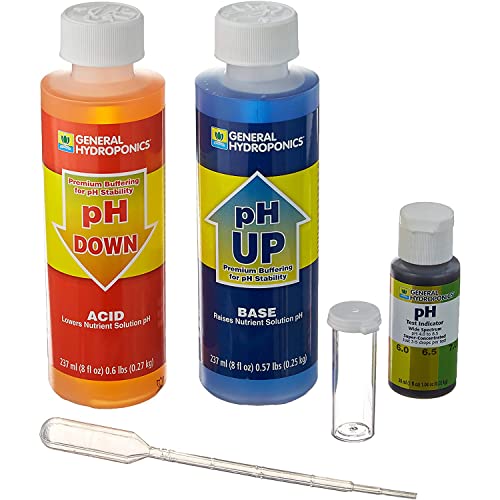
General Hydroponics Ph Control Kit
General Hydroponics pH Control Kit contains everything you need to measure pH levels of your hydroponic grow reservoirs
As an affiliate, we earn on qualifying purchases.
As an affiliate, we earn on qualifying purchases.
Frequently Asked Questions
How Often Should I Change My Hydroponic Nutrient Solution?
You should change your nutrient solution every 1 to 2 weeks to guarantee ideal plant health. Keep in mind, the nutrient solution lifespan varies depending on your plant’s specific adjustments and growth stage. Regularly monitor your plants for signs of nutrient deficiency or buildup, and adjust your feeding schedule accordingly. Doing so helps prevent issues like root rot, ensuring your hydroponic system stays healthy and productive.
Can I Reuse Nutrient Solutions for Multiple Plant Cycles?
Reusing nutrient solutions can save you up to 30% on supplies, but it’s not always ideal. You can reuse solutions for multiple cycles if you monitor and adjust nutrient levels carefully, practicing nutrient recycling. However, over time, the solution may become imbalanced or accumulate harmful substances, so it’s best to change it periodically to guarantee your plants stay healthy and thrive. Regular testing helps you decide when to reuse or replace.
What Are Signs of Nutrient Deficiencies in Hydroponic Plants?
You’ll notice nutrient deficiencies in your hydroponic plants through leaf discoloration, such as yellowing or browning, and stunted growth, where plants don’t develop properly. Keep an eye on uneven color changes or weak stems, which are clear signs your plants lack essential nutrients. Regularly monitor your system and adjust your nutrient solution to prevent deficiencies, ensuring healthy, vibrant growth.
How Do I Adjust Nutrient Levels for Different Plant Types?
To adjust nutrient levels for different plant types, you should first monitor your nutrient concentration and pH levels regularly. Use pH adjustment solutions to keep the pH within the ideal range for your plants, usually between 5.5 and 6.5. Then, modify the nutrient concentration by adding more nutrients or diluting the solution to match each plant’s specific needs, ensuring healthy growth and preventing deficiencies.
Are Organic Nutrients Suitable for Hydroponic Systems?
Organic nutrients are indeed suitable for hydroponic systems, but they can be as tricky as taming a wild beast. You’ll need to pay close attention to organic compatibility and nutrient stability, as organic sources may break down faster or cause imbalances. With careful monitoring, you can successfully grow organic crops hydroponically, but it’s essential to understand these challenges to keep your plants thriving and your system functioning smoothly.

VIVOSUN Digital pH and TDS Meter Kits, 0.01pH High Accuracy Pen Type pH Meter ± 2% Readout Accuracy 3-in-1 TDS EC Temperature Meter for Hydroponics, Pool and Aquarium, Yellow Blue, UL Certified
Application: Great for all home and laboratory TDS & pH testing applications including aquariums, swimming pools
As an affiliate, we earn on qualifying purchases.
As an affiliate, we earn on qualifying purchases.
Conclusion
Remember, Rome wasn’t built in a day, and neither will your perfect hydroponic setup. With these DIY nutrient recipes, you’re well on your way to nourishing healthy, vibrant plants. Keep experimenting, stay patient, and learn from each attempt. As you gain experience, your skills will grow just like your plants. So don’t be afraid to get your hands dirty—great results often come from small, consistent efforts. Happy growing!

Humboldts Secret Plant Enzymes | 7,000 Active Units per mL | Root & Soil Enzyme Additive for Hydroponic and Aeroponic Systems | Boosts Growth and Root Strength for Maximum Nutrient Uptake | 2 Ounce
Packaging Update: You may receive previous or updated packaging during our transition. Same formula, same performance. Contains 7,000…
As an affiliate, we earn on qualifying purchases.
As an affiliate, we earn on qualifying purchases.

Calcium Nitrate 15.5-0-0 Fertilizer – Made in USA – 5LB Greenhouse Grade Plant Food for Hydroponics, Plants & Gardens – Fruit, Vegetables. Blossom End Rot Tomatoes
PREMIUM QUALITY INGREDIENTS – Cz Garden Calcium Nitrate 15.5-0-0 is a water soluble, high purity, premium Nitrogen +…
As an affiliate, we earn on qualifying purchases.
As an affiliate, we earn on qualifying purchases.