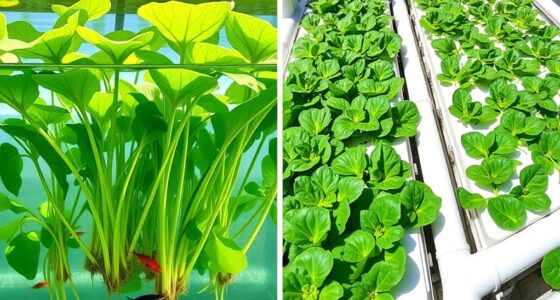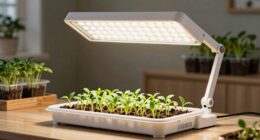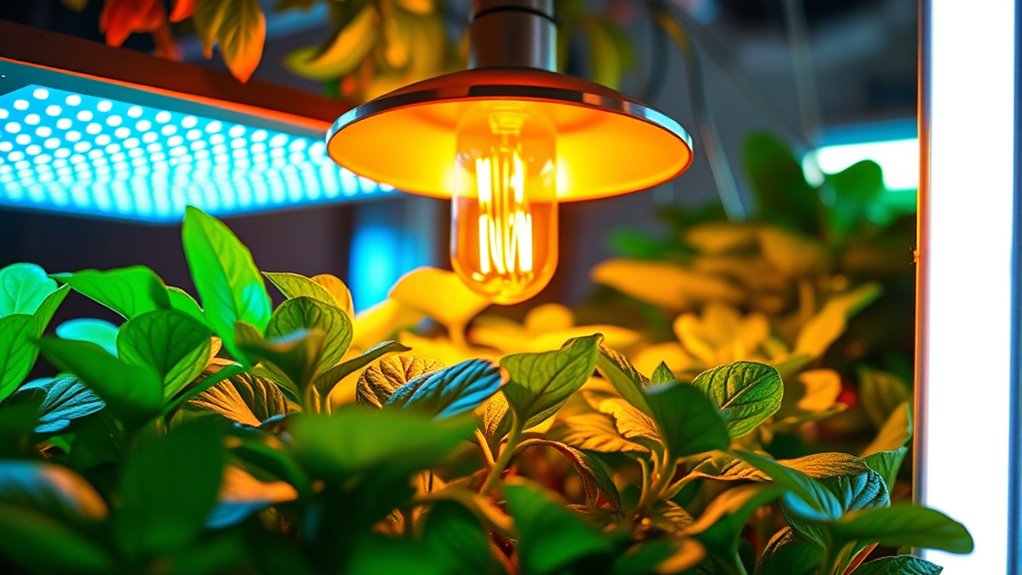

When choosing hydroponic lighting, consider your grow space, budget, and plant needs. LEDs offer energy efficiency and customizable spectra for different growth stages, while HID lights provide intense, broad-spectrum illumination suitable for vigorous growth but use more energy and generate heat. Fluorescent lights work best for seedlings and clones with less heat but limited spectrum flexibility. Exploring each option further helps you optimize your setup for healthy, productive plants.
Key Takeaways
- LEDs offer high energy efficiency, customizable spectrums for different growth stages, and produce less heat, ideal for precise plant management.
- HID lights provide intense, broad-spectrum illumination suitable for vigorous growth but consume more energy and generate more heat.
- Fluorescent lights are energy-efficient and suitable for seedlings or clones but have lower light intensity and limited spectrum flexibility.
- Consider your grow stage, energy costs, and space when choosing between LEDs, HIDs, and fluorescents for optimal hydroponic results.
- LEDs are best for targeted spectrum control, HIDs support high yields, and fluorescents excel in early growth phases.
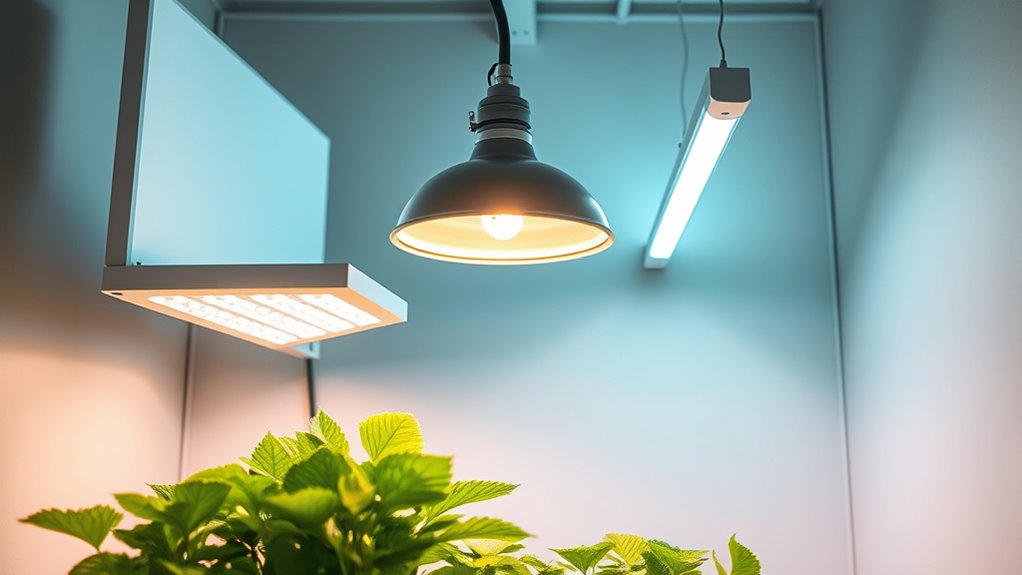
Have you ever wondered how indoor growers guarantee their plants thrive without sunlight? The secret lies in choosing the right hydroponic lighting and understanding how to enhance it for your plants’ needs. Spectrum enhancement plays an essential role here, ensuring your plants receive the specific light wavelengths they require for photosynthesis and healthy growth. Different types of lighting—LED, HID, and fluorescent—offer varying benefits, but understanding how each can contribute to spectrum optimization and energy efficiency can make all the difference in your grow setup.
LED lights are often the top choice for modern hydroponic growers because of their exceptional energy efficiency. They consume less power while delivering targeted light spectrums that promote ideal plant development. With LEDs, you can select fixtures that emit specific wavelengths, such as blue for vegetative growth and red for flowering. This precision allows you to tailor the spectrum to your plants’ growth stages, maximizing photosynthesis and overall health. Plus, LEDs generate less heat, reducing cooling costs and making temperature management easier. Their long lifespan means fewer replacements over time, further enhancing their energy efficiency and cost-effectiveness. Additionally, LED technology benefits from advanced spectrum control, enabling growers to optimize light quality for different growth phases.
HID lights, which include metal halide (MH) and high-pressure sodium (HPS) bulbs, have been popular in hydroponics for years. They produce intense light that covers a broad spectrum, supporting vigorous growth and high yields. However, their broad spectrum isn’t always perfectly aligned with plant needs, and they tend to consume more electricity. While MH bulbs excel during the vegetative stage due to their blue-heavy spectrum, HPS bulbs are favored during flowering for their red-heavy light. Still, their energy consumption and heat output require careful management, often necessitating additional cooling systems, which can impact overall energy efficiency.
Fluorescent lights, such as T5s, are a good option for seedlings and clones or small-scale setups. They’re energy-efficient and produce less heat, but their spectrum isn’t as customizable as LEDs. They tend to be less intense and may require multiple fixtures to provide sufficient coverage. Fluorescents work well for early growth stages, but for larger, more mature plants, they might fall short in providing the intensity and spectrum enhancement needed for robust flowering and fruiting.

Gardyn Studio 1 Vertical Hydroponics Growing System Kit - 16 Non-GMO Plants, Herbs, Vegetables - Tower Garden - Hydroponic Herb Garden Planter Indoor Kit - Indoor Gardening System with LED Grow Lights
COMPACT HYDROPONIC SYSTEM: The Gardyn Studio 1 hydroponics growing system kit grows 16 full-sized indoor plants in only...
As an affiliate, we earn on qualifying purchases.
Frequently Asked Questions
How Do I Calculate the Total Wattage Needed for My Hydroponic System?
To calculate the total wattage needed for your hydroponic system, start with wattage calculation by adding up the power consumption of each light fixture you’re using. Check each bulb or fixture’s wattage label, then sum these values. Remember, higher wattage generally means more light intensity. This helps make sure your plants get enough light without overloading your system, promoting healthy growth and energy efficiency.
Can I Switch Between Different Types of Grow Lights During Plant Growth?
Switching between different grow lights is like changing seasons; you can adapt to your plants’ needs. Yes, you can, but consider the light spectrum and power consumption. Shift gradually to avoid stressing your plants, matching the light spectrum to each growth stage. Keep in mind, different lights have varying efficiencies—LEDs often use less power and offer customizable spectrums, making your plants thrive through every phase.
What Are the Long-Term Cost Differences Between LED, HID, and Fluorescent Lights?
You’ll find that LED lights offer the best long-term savings due to lower electricity costs and minimal bulb replacements. HID lights consume more power and need frequent bulb replacements, increasing maintenance expenses. Fluorescent lights are cheaper upfront but have higher electricity bills and shorter lifespans. Overall, LEDs tend to be more cost-effective over time, saving you money on electricity and replacement costs in the long run.
How Does Light Spectrum Affect Plant Growth Stages in Hydroponics?
Did you know that specific light spectrums can boost plant growth by up to 40%? The light spectrum directly influences plant growth stages; blue light promotes vegetative growth, while red light encourages flowering and fruiting. By adjusting your hydroponic lighting to match these stages, you optimize development and yield. So, choosing the right spectrum is vital for healthy, vigorous plants throughout their entire growth cycle.
Are There Any Safety Concerns When Installing Hydroponic Lighting Systems?
When installing hydroponic lighting systems, you should prioritize electrical safety to prevent shocks and short circuits. Confirm all connections are secure and properly grounded, and use appropriate circuit breakers. Be aware of fire hazards; avoid overloading circuits and keep lights away from flammable materials. Regularly inspect wiring and fixtures for damage, and follow manufacturer instructions to keep your setup safe and efficient.

VEVOR Hydroponic Growing System, 30 Pods Vertical 6 Tiers Hydroponic Tower, Home Hydronic Garden with Water Pump & Timer, Water Circulation Plants Germination Kit for Indoor Herbs Fruits & Vegetables
Space-Saving, Efficient Growing: Featuring a 6-tier vertical design with 30 planting pods, this hydroponic tower measures just 13.78...
As an affiliate, we earn on qualifying purchases.
Conclusion
Choosing the right hydroponic lighting might seem overwhelming, but remember, with the right setup, your plants will thrive. Don’t let concerns about cost or complexity hold you back—imagine lush, vibrant greens flourishing beneath your chosen lights, transforming your space into a thriving indoor garden. Whether you pick LED, HID, or fluorescent, your dedication will turn your hydroponic dreams into a lush, fruitful reality. Just get started, and watch your garden come to life!

DPROOTS Hydroponic Tower Growing System,45 Pods Vertical Garden,Suitable for Indoor and Greenhouse, Grow Herbs and Vegetables,Houseplant Farming with Water Circulation and Automatic Timer
Growing 45 Plants: This hydroponic system is 45" tall and occupies only 1 square foot, but it can...
As an affiliate, we earn on qualifying purchases.

Gardyn Home 4 Vertical Hydroponics Growing System Kit - 30 Non-GMO Plants, Herbs, Vegetables - Smart Tower Garden Hydroponic Herb Garden Planter Indoor Kit - Indoor Gardening System w/LED Grow Lights
NEXT-GENERATION HYDROPONIC SYSTEM: The Gardyn Home 4 is a cutting-edge hydroponics growing system kit designed to grow 30...
As an affiliate, we earn on qualifying purchases.