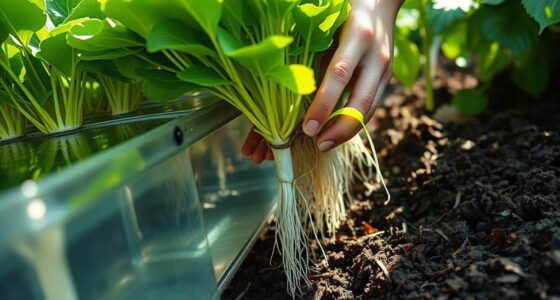
Growing basil, mint, and cilantro hydroponically lets you enjoy fresh herbs year-round in a soil-free setup. By controlling water, nutrients, and environment, you can produce healthier plants with higher yields while avoiding soil pests. Regularly check your pH and nutrient levels to keep plants happy. With proper system maintenance, you’ll have flavorful herbs anytime you want. Keep exploring to discover tips on optimizing your hydroponic herb garden even further.
Key Takeaways
- Hydroponic systems enable continuous year-round cultivation of basil, mint, and cilantro indoors, regardless of outdoor weather.
- Maintaining optimal pH (5.5–6.5) and nutrient levels ensures healthy, flavorful herbs throughout the year.
- Regular system maintenance, including water changes and pest monitoring, promotes consistent herb quality and yield.
- Controlling environmental factors like light, temperature, and humidity supports vigorous herb growth all year.
- Using organic pest management and beneficial insects keeps herbs healthy without chemical residues, suitable for continuous production.
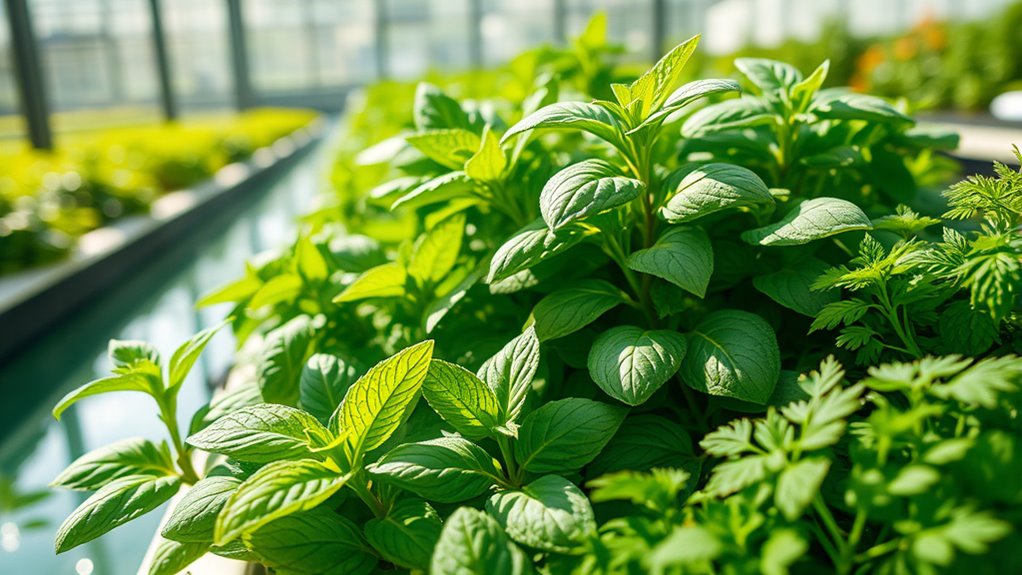
Hydroponic herbs offer a fresh and efficient way to grow your favorite flavors without soil. When cultivating basil, mint, and cilantro indoors or in small spaces, hydroponics provides control over growing conditions, leading to healthier plants and higher yields. One of the key advantages is how easily you can manage pest issues. Unlike traditional soil gardening, where pests can hide in the ground, hydroponic systems minimize soil-borne pests, making pest management simpler. If pests do appear, you can quickly identify and address them without resorting to heavy chemicals that might harm your herbs or compromise their flavor. This controlled environment allows you to implement integrated pest management strategies, such as introducing beneficial insects or using organic sprays, ensuring your herbs stay healthy and pest-free.
Another fundamental aspect of successful hydroponic herb growing is the use of appropriate nutrient solutions. Because these systems rely on delivering nutrients directly to the roots through water, choosing the right nutrient mix is essential. You’ll want to select a balanced solution rich in nitrogen, phosphorus, and potassium, along with trace minerals that promote vigorous growth and flavorful herbs. Regularly monitoring and adjusting your nutrient solutions ensures your plants receive exactly what they need, preventing deficiencies or excesses that could stunt growth or alter taste. Since hydroponic systems often allow for precise control over nutrient levels, you can fine-tune the solution to match the specific needs of basil, mint, or cilantro at different growth stages, leading to ideal flavor and vitality.
Maintaining your hydroponic setup is straightforward once you get the hang of it. You’ll need to keep an eye on the pH balance of your nutrient solution, typically aiming for a slightly acidic range around 5.5 to 6.5, which helps your herbs absorb nutrients efficiently. Regularly changing or replenishing the solution prevents the buildup of salts or pathogens that could harm your plants. When it comes to pest management, staying vigilant is key. Inspect your herbs frequently for signs of trouble, such as discolored leaves or spots, and act swiftly to address issues before they spread. Using clean equipment and maintaining sanitation in your growing area further reduces pest and disease risks.
Frequently Asked Questions
How Do I Prevent Root Diseases in Hydroponic Herb Systems?
To prevent root diseases in your hydroponic herb system, focus on root rot prevention by maintaining proper oxygen levels and avoiding overwatering. Regularly perform system sanitation to keep bacteria and fungi at bay. Clean your system thoroughly between crops, use sterile equipment, and monitor your plants closely for early signs of disease. Consistent sanitation and good oxygen management help keep your herbs healthy and root disease-free.
What Are the Best Lighting Options for Indoor Hydroponic Herbs?
Oh, because natural sunlight isn’t enough, right? You’ll want LED grow lights—they’re perfect for indoor hydroponic herbs. Look for light spectrum options tailored to plant growth, like blue for leafy greens and red for flowering. These lights are energy-efficient and customizable, ensuring your basil, mint, and cilantro thrive year-round. So, forget sunlight; invest in good LED grow lights and watch your herbs flourish indoors.
How Often Should I Change the Nutrient Solution?
You should change your nutrient solution every two to three weeks to guarantee optimal nutrient replenishment and solution maintenance. Regularly check the pH and electrical conductivity (EC) levels, adjusting as needed. If you notice algae growth or a foul smell, it’s a sign you need to replace the solution sooner. Consistent changes help prevent nutrient imbalances, support healthy herb growth, and keep your hydroponic system running smoothly.
Can Hydroponic Herbs Be Grown Outdoors Year-Round?
Sure, you can grow hydroponic herbs outdoors year-round, but don’t forget outdoor seasonal growth and climate considerations. You might think herbs are invincible, but harsh winters or scorching summers could ruin your crop. For consistent success, adapt by protecting plants during extreme weather or consider indoor setups. Otherwise, nature’s whims might turn your green thumb into a lesson in patience—and irony.
What Are Common Pests Specific to Hydroponic Herbs?
You’ll often encounter pests like aphids, spider mites, and whiteflies on your hydroponic herbs. To identify them, check for sticky residue, webbing, or distorted leaves. Use organic pest control methods like neem oil, insecticidal soap, or introducing beneficial insects. Regular pest identification helps you catch problems early, keeping your basil, mint, and cilantro healthy and thriving without harmful chemicals.
Conclusion
Now that you know how to grow basil, mint, and cilantro hydroponically year-round, you’re all set to turn your space into a fresh herb oasis. With just a little effort, you can have herbs at your fingertips whenever you need them—no more running to the store. It’s a win-win situation that proves you don’t have to wait for the seasons to change to enjoy garden-fresh flavors. Happy growing!