Hydroponics is set to play a major role in U.S. food production by providing sustainable, resource-efficient farming options ideal for urban and traditional settings. It uses less water, recycles nutrients, and shortens supply chains, making food more accessible and environmentally friendly. Advances like automation and AI will make it more affordable and scalable. If you want to discover how these innovations are shaping the future of agriculture, keep exploring further.
Key Takeaways
- Technological advancements like automation and AI will enhance efficiency, crop yields, and cost-effectiveness of hydroponic farming.
- Increased policy support, funding, and regulatory incentives will drive wider adoption of hydroponics nationwide.
- Urban agriculture using hydroponics will expand, transforming underutilized spaces into sustainable food sources.
- Consumer demand for fresh, locally-grown, and sustainable produce will boost market growth for hydroponic products.
- Integration with educational tools, like projector technology, will promote awareness, training, and innovation in hydroponic practices.
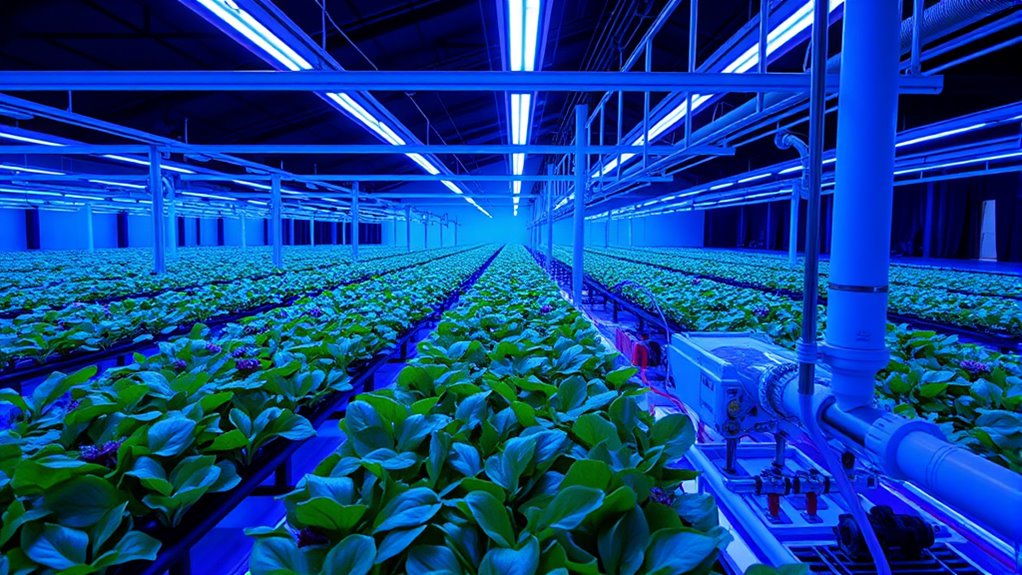
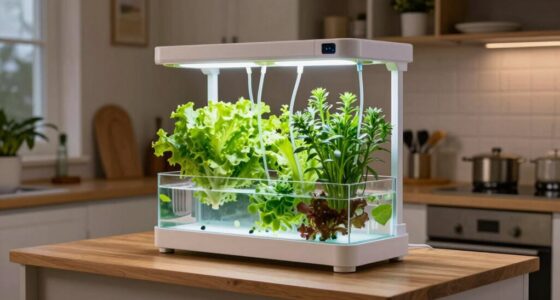
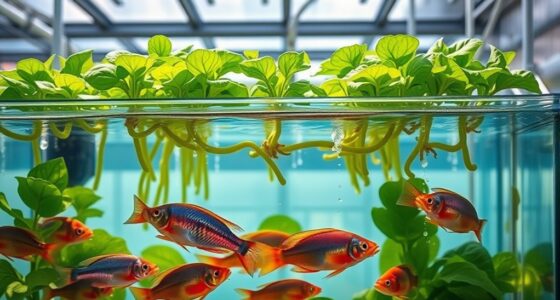
Hydroponics is rapidly transforming how the U.S. produces food, offering a sustainable and efficient alternative to traditional agriculture. This innovative method allows you to grow crops without soil, using nutrient-rich water instead. As awareness of environmental issues grows, hydroponic systems stand out because they promote sustainable farming practices. They use considerably less water than conventional farming, often recycling and conserving water within closed-loop systems. This means you can produce more food with fewer resources, making hydroponics an appealing solution for those committed to reducing their environmental footprint.
Hydroponics offers a sustainable, water-efficient way to grow more food with fewer resources.
In urban settings, hydroponics opens up exciting possibilities for urban agriculture. You can transform underutilized spaces like rooftops, vacant lots, or indoor facilities into productive farms. This proximity to consumers shortens supply chains, reduces transportation emissions, and ensures fresher produce reaches local markets. You’re able to grow a wide variety of crops year-round, regardless of climate or season, which is a game changer for city dwellers seeking fresh, healthy food. Urban agriculture through hydroponics also encourages community involvement, as local residents can learn to grow their own food and take pride in sustainable practices.
Looking ahead, the future of hydroponics in the U.S. hinges on its ability to integrate seamlessly with existing agricultural systems and urban landscapes. As technological advancements continue, you’ll see more automated and scalable solutions that make hydroponic farming easier and more accessible. Artificial intelligence and data analytics will help optimize nutrient delivery, lighting, and climate control, boosting yields and reducing waste. These innovations will make hydroponic farming more cost-effective, encouraging widespread adoption across small farms, large commercial operations, and urban farms alike.
Furthermore, government policies and incentives are likely to support the expansion of hydroponic systems, especially as they align with goals for sustainable development and food security. You may witness increased funding for research, grants for urban farmers, and regulations favoring sustainable farming practices. This support will empower more communities to embrace hydroponic farming as a viable, eco-friendly alternative. As consumers become more conscious of the environmental impacts of food production, demand for locally grown, sustainable produce will continue rising, further solidifying hydroponics as a key player in future U.S. agriculture. Additionally, advancements in projector technology can enhance educational outreach and training programs for new hydroponic farmers, helping to accelerate adoption and innovation in the field.

Ahopegarden Indoor Garden Hydroponics Growing System: 10 Pods Plant Germination Kit Herb Vegetable Growth Lamp Countertop with LED Grow Light – Hydrophonic Planter Grower Harvest Lettuce
High planting efficiency: Start an indoor herb garden with the Ahopegarden hydroponic growing system, which includes a water…
As an affiliate, we earn on qualifying purchases.
As an affiliate, we earn on qualifying purchases.
Frequently Asked Questions
How Does Hydroponics Impact Local Farmers’ Traditional Practices?
Hydroponics impacts your traditional practices by encouraging farmer adaptation to new methods. You might find that it challenges conventional farming techniques, but it also offers opportunities to innovate and increase yields. As you incorporate hydroponics, you’ll need to adjust your routines and embrace technology. This shift can help you stay competitive, reduce resource use, and diversify your crops, ultimately transforming how you approach farming while maintaining core principles.
What Are the Long-Term Environmental Effects of Large-Scale Hydroponic Farms?
You might find that large-scale hydroponic farms can reduce water runoff compared to traditional farming, but they still pose risks to nutrient cycling. Over time, excess nutrients could accumulate or leach into nearby ecosystems, potentially harming local water quality. While these farms use water more efficiently, you should consider how their long-term environmental impacts, like resource use and waste management, could affect ecosystems and sustainability efforts.
How Does Hydroponic Food Quality Compare to Soil-Grown Produce?
You’ll find that hydroponic produce often has higher nutrient density compared to soil-grown options because nutrients are carefully controlled and optimized. Additionally, hydroponic plants tend to have better pest resistance since the environment minimizes pest exposure, reducing the need for pesticides. This combination results in fresh, nutritious, and cleaner produce, making hydroponics a promising method for high-quality food production.
What Are the Main Barriers to Hydroponics Adoption Nationwide?
You face several barriers to adopting hydroponics nationwide. Regulatory hurdles can slow approvals and increase compliance costs, making it challenging to scale operations. Financial barriers also pose a significant obstacle; upfront investments for equipment, infrastructure, and technology are high, and securing funding isn’t always easy. Overcoming these issues requires policy support and innovative financing options, so you can expand hydroponic farming more efficiently across the country.
How Can Hydroponics Be Integrated Into Urban Food Systems?
You can integrate hydroponics into urban food systems by establishing vertical farming setups on rooftops and vacant buildings, maximizing limited space. Partner with community gardens to introduce hydroponic techniques, making fresh produce more accessible. Educate local residents on hydroponic benefits and maintenance, fostering community involvement. This approach boosts local food production, reduces transportation emissions, and revitalizes urban areas, creating sustainable, efficient food sources directly within cities.
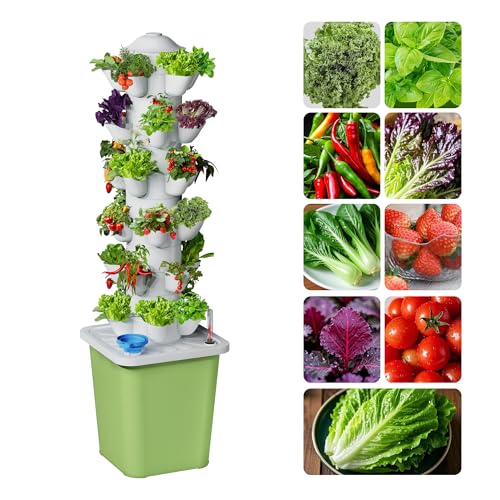
RFnongye Hydroponics Growing System Kit, 30 Pots Vertical Garden Planter with Pump and Timer, Hydropoic Tower for Soilless Cultivation Herbs Fruits Vegetables, Plant Gift for Gardening Lover(No Seed)
【Soilless Cultivation】Hydroponics is used instead of traditional soil cultivation. No soil, no mess. The automatic top-down timed watering…
As an affiliate, we earn on qualifying purchases.
As an affiliate, we earn on qualifying purchases.
Conclusion
Imagine lush green crops thriving under bright LED lights, their roots suspended in nutrient-rich water. As you envision this future, you see cities transformed into vibrant farms, with fresh produce growing year-round indoors. Hydroponics offers a sustainable, efficient way to feed a growing nation, reducing reliance on traditional farming. Embrace this green revolution, where technology and nature unite to nourish communities and protect the planet. The future of food is blooming right before your eyes.

Ahopegarden Hydroponics Growing System Kit Indoor Herb Garden with Grow Light 12 Pods, with LCD Touch Panel Hydroponic Planter, Planting Height Up to 17", Grower Harvest Fresh Veggie Lettuce, Black
Avant-garde and modern design: Our smart hydroponics growing system kit merges urban farming innovation with minimalist aesthetics. Crafted…
As an affiliate, we earn on qualifying purchases.
As an affiliate, we earn on qualifying purchases.

VIVOSUN Hydroponic Grow Kit, 1 Layer 36 Plant Sites 4 Food-Grade PVC-U Pipes Hydroponics Planting System with Water Pump, Pump Timer, Nest Basket and Sponge for Leafy Vegetables
High Yield and Quality: Soilless cultivation with nutrient film can meet the production potential of crops; Compared with…
As an affiliate, we earn on qualifying purchases.
As an affiliate, we earn on qualifying purchases.