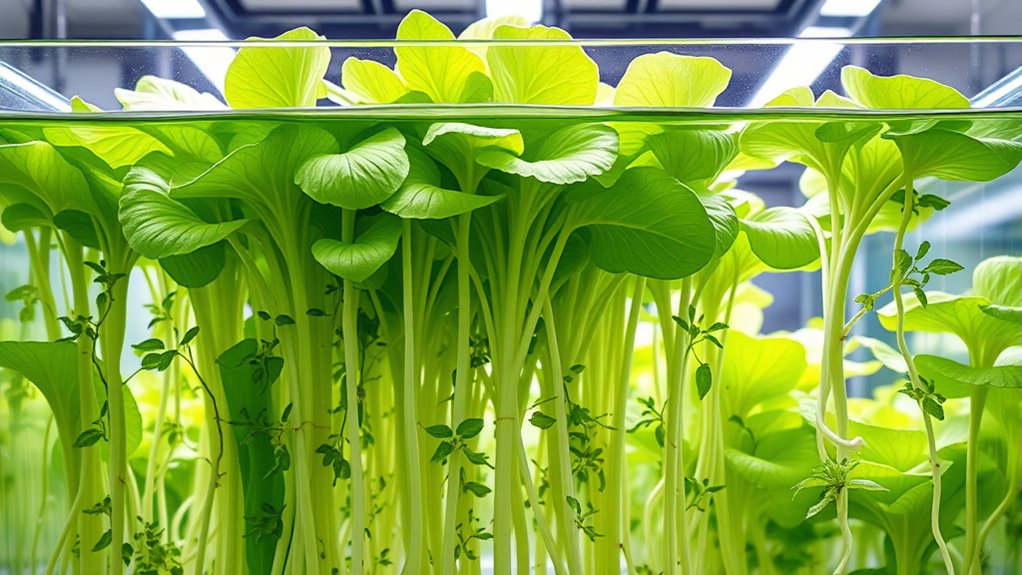

In Deep Water Culture (DWC), you suspend plant roots directly in nutrient-rich water, promoting rapid growth and higher yields. You need to manage the water’s pH, keeping it between 5.5 and 6.5, and monitor nutrient levels to prevent deficiencies or toxicity. Ensuring continuous oxygen supply with air stones helps prevent root rot and supports healthy development. If you keep these principles in mind, you’ll be well on your way to thriving hydroponic plants and more insights to come.
Key Takeaways
- In DWC, plant roots are suspended directly in nutrient-rich water for rapid growth.
- Maintaining proper pH (5.5-6.5) and nutrient levels is essential for healthy root development.
- Oxygenating roots with air stones and pumps prevents root rot and enhances nutrient uptake.
- Regularly monitor and adjust nutrient concentration and dissolved oxygen to ensure system stability.
- Using natural media and proper system management promotes vigorous growth and high yields.

Have you ever wondered how to grow healthy plants quickly without soil? Deep Water Culture (DWC) offers an exciting and efficient way to do just that. In DWC systems, plant roots are suspended directly in nutrient-rich water, allowing for rapid growth and high yields. To succeed, you need to master key concepts like nutrient management and root oxygenation, which are essential for healthy plant development.
Discover how Deep Water Culture accelerates plant growth with nutrient-rich water and vital root oxygenation.
Nutrient management in DWC is all about providing your plants with the right balance of essential elements. Since the roots are constantly submerged, you must carefully formulate and monitor your nutrient solution. This means regularly checking and adjusting the pH to keep it within an ideal range, usually between 5.5 and 6.5. A stable pH ensures that plants can absorb nutrients effectively. You’ll also need to maintain the correct concentration of nutrients—too little, and your plants will struggle to grow; too much, and they risk nutrient toxicity or root damage. Using a reliable nutrient mix designed for hydroponic systems makes this process easier, but always keep an eye on EC (electrical conductivity) levels to gauge the strength of your solution. Consistent nutrient management guarantees your plants receive all the essential elements they need for vigorous growth without the risks associated with nutrient deficiencies or excesses.
Root oxygenation is another critical aspect of DWC. Since your roots are submerged in water, they require a steady supply of oxygen to stay healthy and prevent root rot. To achieve this, you’ll want to incorporate air stones connected to an air pump into your reservoir. These bubbles increase dissolved oxygen levels in the water, mimicking natural soil aeration and promoting healthy root development. Proper oxygenation encourages roots to grow faster and stronger, facilitating better nutrient uptake. Without sufficient root oxygenation, roots can become oxygen-starved, which leads to stagnation, disease, and eventually plant death. Incorporating natural materials, such as ceramic or bio-balls, in your system can also help promote beneficial microbial activity that supports root health. Consequently, regularly checking the oxygen levels and ensuring your air stones are functioning correctly becomes a key part of your routine.
In DWC systems, combining effective nutrient management with adequate root oxygenation creates an ideal environment for rapid and healthy plant growth. You’ll find that plants grow faster, with more vibrant foliage and larger yields, when these factors are well-controlled. Getting these fundamentals right might require some initial effort, but once you establish a stable system, you’ll enjoy the benefits of a clean, efficient, and highly productive method of hydroponic cultivation. Whether you’re growing herbs, vegetables, or exotic plants, understanding and optimizing nutrient management and root oxygenation will set you up for success in your deep water culture journey.
Frequently Asked Questions
How Do I Prevent Root Rot in DWC Systems?
To prevent root rot in your DWC system, you should guarantee proper root zone aeration by using an air stone or pump to keep oxygen levels high. Maintain clean, pathogen-free water by regularly changing the nutrient solution and monitoring for signs of contamination. Avoid overfeeding, which can promote mold growth, and keep the environment clean. Good aeration and pathogen control are key to healthy, rot-free roots.
What Are the Ideal Ph Levels for DWC Plants?
You should maintain your DWC system’s pH levels between 5.5 and 6.5. Regular pH adjustment helps prevent nutrient imbalances and ensures your plants absorb nutrients efficiently. Use pH testing tools daily and adjust with pH up or down solutions as needed. Consistently monitoring and balancing the pH level promotes healthy root growth, prevents problems like root rot, and keeps your plants thriving in your deep water culture system.
Can DWC Be Used for Growing Vegetables Indoors?
Growing vegetables indoors with DWC is like having a mini farm in your home. You can absolutely use DWC for indoor vegetable gardening; just make certain you have proper indoor lighting to keep your plants thriving. Pest control becomes easier since you’re controlling the environment. Regular monitoring, maintaining water pH levels, and good airflow help prevent pests and keep your vegetables healthy and productive.
How Often Should I Change the Nutrient Solution?
You should change the nutrient solution every 2 to 3 weeks to guarantee ideal nutrient replenishment. Regular water testing helps you monitor pH levels and electrical conductivity, so you can adjust nutrient concentrations as needed. Keep an eye on plant health and look for signs of nutrient deficiency or buildup, which may indicate it’s time for a water change. Consistent maintenance keeps your DWC system thriving.
What Are Common Signs of Nutrient Deficiencies in DWC?
Imagine your plants’ roots turning pale and translucent, like glass, signaling a nutrient imbalance. You’ll notice yellowing leaves, curling edges, or stunted growth—classic deficiency symptoms. These signs indicate your plants lack essential nutrients, often due to an imbalance. Keep a close eye on color changes and leaf health; early detection of deficiency symptoms helps you adjust the nutrient solution before serious damage occurs.
Conclusion
Now, imagine your plants basking in a crystal-clear oasis, their roots gently swaying in nutrient-rich water. With deep water culture, you become the gardener of this vibrant underwater world, nurturing lush greenery with ease. As you watch your plants flourish, each leaf reaching toward the light like tiny suns, you’ll realize that growing with roots in water isn’t just simple — it’s a mesmerizing dance of life beneath the surface.