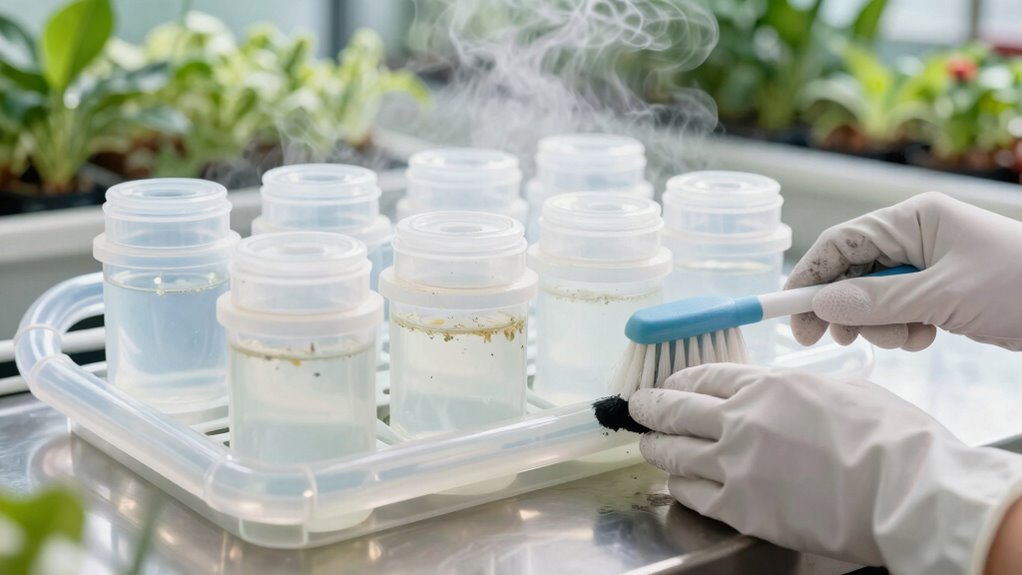

To clean your reused hydroponic equipment safely, start by thoroughly rinsing all parts with warm water after each use to remove nutrient residues. Use a scrub brush to tackle stubborn deposits, and soak components in a vinegar solution or specialized cleaner for mineral and organic buildup. Disassemble hoses and fittings, run cleaning solutions through them, and then scrub and rinse thoroughly. Let everything dry completely before reassembling to prevent microbial growth. Continuing will help you master safe, effective sterilization techniques and maintenance tips.

Get the little things that make your day delivered free with Prime
- Fast, free delivery on millions of items
- Prime Video, Amazon Music and more included
- Member-only deals all year
Key Takeaways
- Rinse all components thoroughly with warm water after each use to remove nutrient residues.
- Disinfect equipment using a diluted bleach solution or hydrogen peroxide, then rinse well.
- Disassemble hoses, pumps, and fittings for detailed cleaning and biofilm removal.
- Allow all parts to dry completely before reassembling to prevent microbial growth.
- Schedule regular cleaning and sterilization to maintain equipment hygiene and prevent disease.
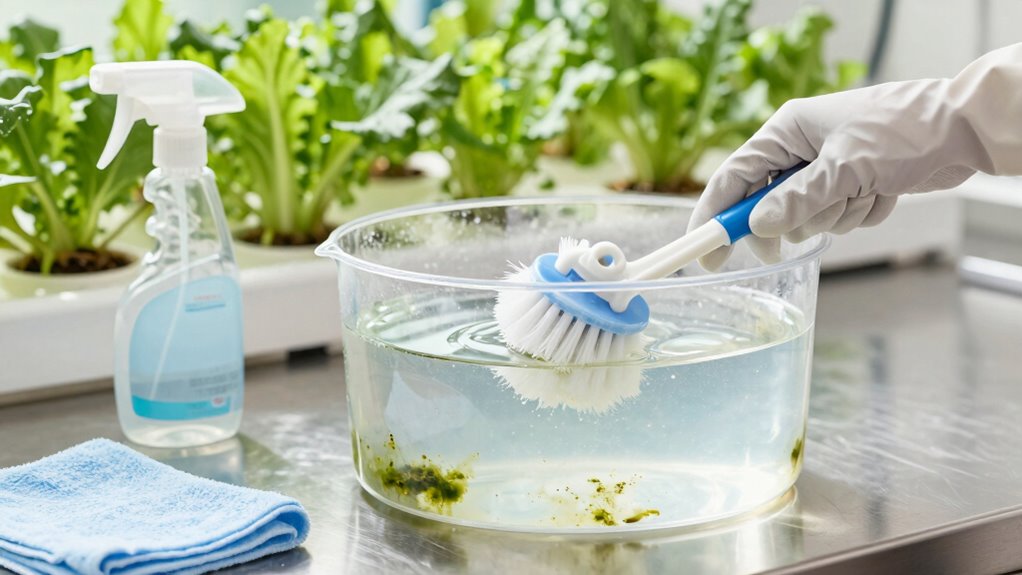
Reusing hydroponic equipment can save money and reduce waste, but it’s vital to clean it properly to prevent disease and guarantee healthy plant growth. One of the most important steps is removing any remaining nutrient residue from previous growing cycles. Nutrient buildup can harbor pathogens and clog your system, so thoroughly rinsing components after each harvest is essential. Use warm water and a scrub brush or cloth to eliminate stubborn deposits. For stubborn residue, consider soaking parts in a mixture of water and a mild cleaning agent, such as vinegar or a specialized hydroponic cleaning solution. This helps loosen mineral deposits and organic matter, making it easier to remove them during rinsing.
Once you’ve cleared away nutrient residue, the next step is equipment sterilization. Proper sterilization kills bacteria, fungi, and viruses that could threaten your next crop. You can achieve this by using a solution of diluted bleach—typically one part bleach to nine parts water—submerging your equipment for at least 10 minutes. Make sure to scrub all surfaces during this process to reach every nook and cranny. After sterilization, rinse all parts thoroughly with clean water to remove any residual bleach, as leftover chemicals could harm your plants. Alternatively, some growers opt for hydrogen peroxide or commercial sterilizers designed specifically for hydroponic systems. These options can be effective and may be less harsh than bleach, but always follow the manufacturer’s instructions.
Pay special attention to hoses, pumps, and fittings, which are often overlooked but can harbor nutrient residue and pathogens. Disassemble these components as much as possible to guarantee a thorough clean. For hoses, run a cleaning solution through them and flush with water multiple times. Pumps and fittings should be soaked and scrubbed to eliminate biofilms or buildup. Regularly inspecting your equipment for pressure washer usage or other cleaning tools can improve the effectiveness of your routines. Additionally, understanding the role of sterilization in preventing disease can help emphasize the importance of this step. Incorporating routine checks for biofilm buildup can further enhance your cleaning effectiveness, as biofilms can be particularly resistant to cleaning if left unchecked.
Finally, before reassembling your system, let all parts dry completely. Moisture can promote microbial growth, so proper drying is vital. Proper drying also helps prevent the reintroduction of pathogens that might linger in damp environments. Once everything is dry, reassemble your hydroponic setup, ensuring all connections are tight and leak-free. Regular cleaning and sterilization routines will keep your equipment in top shape and your plants thriving. By paying close attention to removing nutrient residue and sterilizing equipment, you create a safe, productive environment that maximizes your hydroponic success.
hydroponic equipment cleaning brush
As an affiliate, we earn on qualifying purchases.
As an affiliate, we earn on qualifying purchases.
Frequently Asked Questions
Can I Use Household Bleach to Disinfect Hydroponic Equipment?
You can use household bleach to disinfect hydroponic equipment, but you must prioritize chemical safety. Dilute the bleach properly—usually one part bleach to ten parts water—and guarantee good ventilation. Rinse equipment thoroughly after disinfecting to remove any residual chemicals, which is essential for equipment maintenance and plant safety. Always wear gloves and eye protection, and avoid mixing bleach with other chemicals to prevent dangerous reactions.
How Often Should I Clean Reused Hydroponic Components?
You should clean your reused hydroponic components at least once every two weeks to maintain ideal performance. Regular cleaning guarantees equipment maintenance, prevents the buildup of algae and pathogens, and promotes healthy plant growth. If you notice any signs of mold or residue, increase the cleaning frequency. Consistent maintenance keeps your system running smoothly, reduces the risk of infections, and extends the lifespan of your hydroponic equipment.
Are There Eco-Friendly Cleaning Alternatives for Hydroponic Gear?
Yes, you can use eco-friendly cleaning alternatives like organic solutions and natural disinfectants for your hydroponic gear. Vinegar and baking soda work well as natural disinfectants, helping to eliminate pathogens without harmful chemicals. You might also consider botanical extracts like neem oil or tea tree oil, which are safe and effective. These options keep your equipment clean while supporting a sustainable, eco-conscious approach to hydroponic gardening.
What Are the Signs of Equipment Contamination?
You’ll notice equipment contamination when you see cloudy water, foul odors, or slimy build-up—like algae blooming in a neglected pond. Microbial growth and chemical residues can cause these issues, risking plant health. If your system shows discoloration or persistent algae, it’s a clear sign to clean thoroughly. Regular inspections help catch contamination early, preventing serious problems and ensuring your hydroponic setup stays safe and productive.
How Do I Prevent Algae Buildup During Cleaning?
To prevent algae buildup during cleaning, you should focus on algae prevention and effective cleaning techniques. Regularly scrub and rinse your equipment with clean water, ensuring no residual nutrients feed algae growth. Use a diluted hydrogen peroxide solution or vinegar as a natural disinfectant, and dry your equipment thoroughly afterward. Consistent maintenance and proper sanitation are key to keeping algae at bay and maintaining a healthy hydroponic system.
hydroponic sterilization solution
As an affiliate, we earn on qualifying purchases.
As an affiliate, we earn on qualifying purchases.
Conclusion
By brushing off bacteria and banishing buildup, you’ll boost your hydroponic health and harvests. Keep your equipment clean, consistent, and corrosion-free to cultivate confidence and crops. Remember, routine rinsing and rigorous disinfecting reignite your roots and remove risk. With careful cleaning, you can confidently cultivate a clean, productive, and pest-free hydroponic paradise. So, stay steadfast in sanitation, safeguard your system, and savor the satisfying success of a spotless, sustainable setup.
hydroponic nutrient residue remover
As an affiliate, we earn on qualifying purchases.
As an affiliate, we earn on qualifying purchases.
As an affiliate, we earn on qualifying purchases.
Halloween Picks
halloween
As an affiliate, we earn on qualifying purchases.