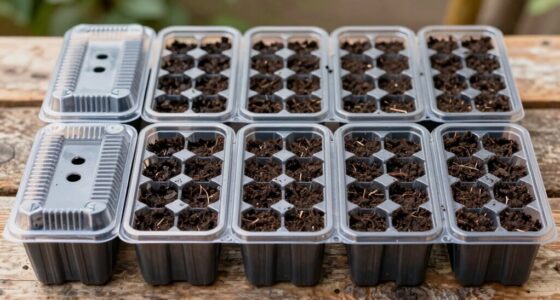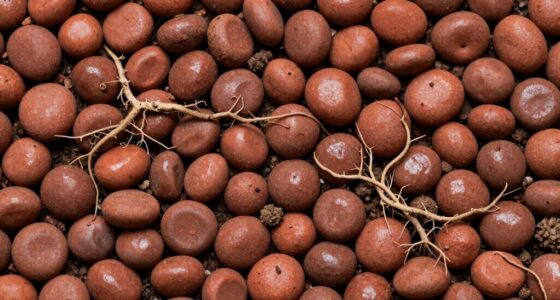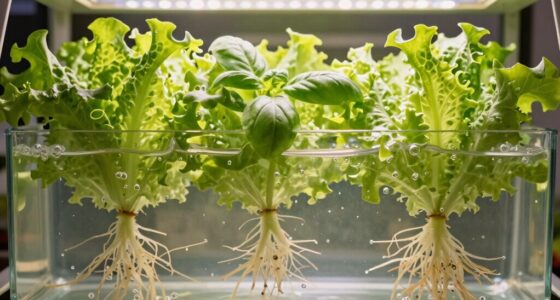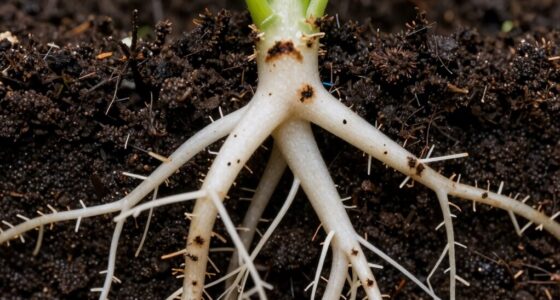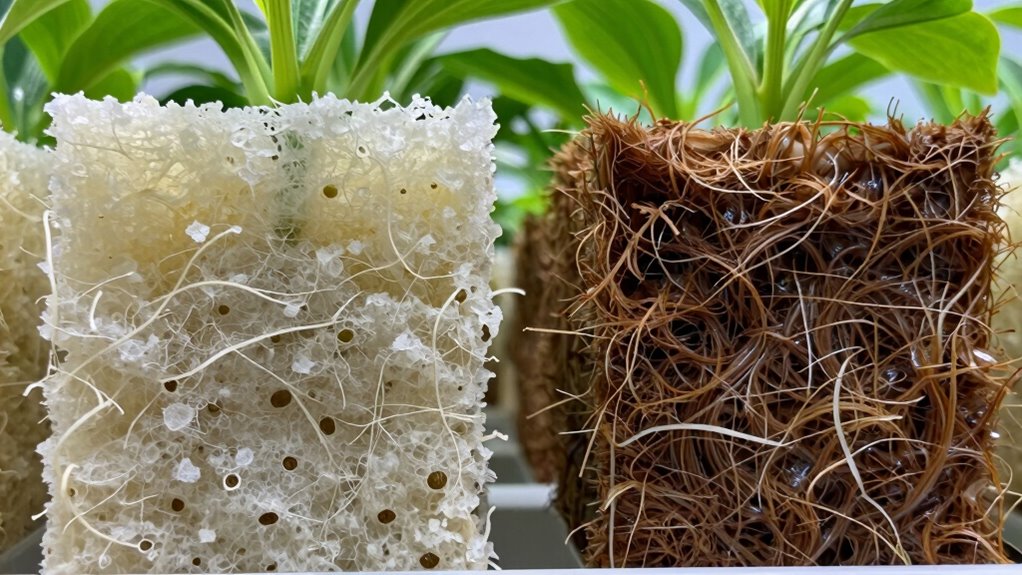

You’ll notice rockwool and coconut coir perform differently in hydroponics because of their unique compositions. Rockwool, being inert and fibrous, offers excellent aeration and high water retention, but needs external nutrients. Coir, as an organic, natural fiber, retains water well and releases nutrients gradually, but can compact if not prepared properly. These differences influence plant growth, so understanding each medium’s properties can help you optimize your hydroponic setup and achieve better results.

Get the little things that make your day delivered free — and shop member deals
- Fast, free delivery on millions of items
- Access to Prime Big Deal Days deals on October 6–7
- Prime Video, Amazon Music and more included
Key Takeaways
- Rockwool’s inert, synthetic nature provides consistent nutrient retention and aeration, while coir’s organic composition offers natural nutrients and microbial activity.
- Rockwool’s high water retention and fibrous structure promote strong root development, whereas coir’s water retention depends on proper preparation to prevent compaction.
- Rockwool requires external nutrient supplementation due to its inertness, unlike coir which contains some natural nutrients and microbes.
- Handling and preparation differ: rockwool needs careful handling due to fibers and health risks, coir benefits from proper washing and conditioning.
- The organic origin of coir can lead to variable performance and microbial interactions, while rockwool’s consistency ensures predictable results.
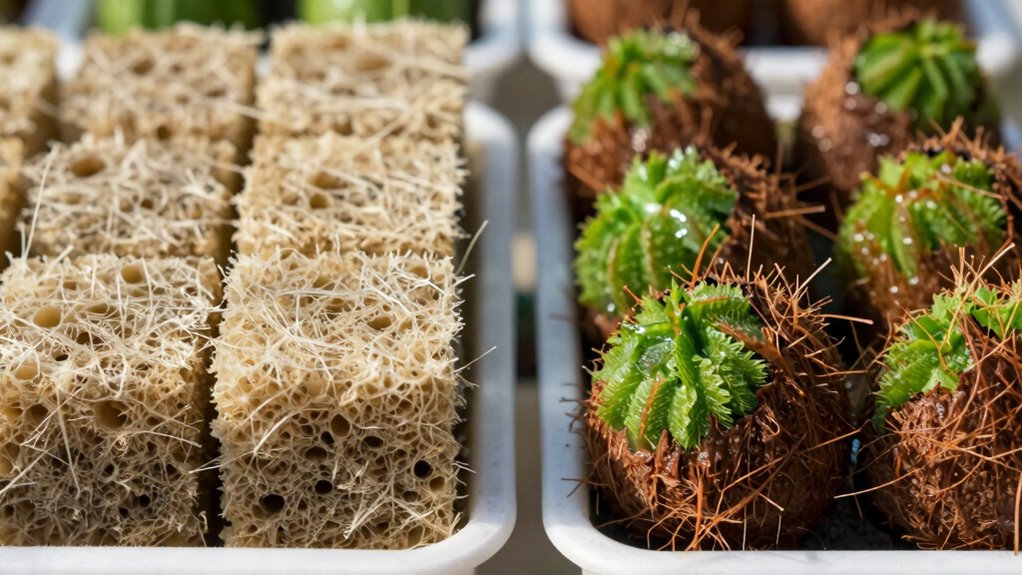
When it comes to hydroponic growing, choosing the right growing medium is essential, and Rockwool and coconut coir are two popular options that can greatly influence your results. These mediums differ markedly in how they support plant roots, particularly in root aeration and nutrient retention. Understanding these differences helps you optimize your system and improve plant health.
Rockwool is a dense, fibrous material made from spun volcanic rock. Its structure provides excellent root aeration because the fibers create plenty of space for oxygen to reach the roots. This high level of aeration promotes healthy root development and prevents problems like root rot, especially in systems with frequent watering or high humidity. Additionally, Rockwool has a high water-holding capacity, which ensures that nutrients stay available for the roots over time. Its porosity allows it to retain moisture without becoming waterlogged, making it an effective medium for nutrient retention. However, because of its inert nature, you need to guarantee proper nutrient supplementation, as Rockwool doesn’t supply nutrients on its own. Proper nutrient management is crucial to ensure healthy plant growth in Rockwool mediums. It’s also important to consider that Rockwool requires proper handling due to its fibrous nature, which can pose health risks if not managed carefully.
Coconut coir, on the other hand, is a natural fiber derived from coconut husks. It offers a different balance between root aeration and nutrient retention. Coir’s structure is less dense than Rockwool, providing decent aeration but generally allowing for more compaction over time, especially if it’s not properly prepared. This can limit oxygen flow to the roots if the medium becomes too compressed. On the upside, coir has excellent water retention capabilities, holding onto nutrients effectively and releasing them gradually. This property supports steady nutrient availability, reducing the frequency of feeding. Since coir is organic and slightly acidic, it naturally contains some nutrients and beneficial microbes, which can enhance nutrient uptake and promote healthier root systems. Well-prepared coir helps prevent compaction and maintains good aeration, ensuring optimal root health. Using proper preparation techniques can significantly improve coir’s performance as a hydroponic medium.
Frequently Asked Questions
How Does pH Stability Differ Between Rockwool and Coco?
You’ll notice that pH stability differs between Rockwool and coco because of their buffering capacities. Rockwool has a low buffering capacity, which means it’s more prone to pH fluctuations, requiring frequent adjustments. In contrast, coco has a higher buffering capacity, helping it resist pH swings and maintain a more stable environment. This difference impacts your nutrient uptake, making managing pH easier with coco than Rockwool.
What Are the Environmental Impacts of Using Rockwool Versus Coco?
Like Icarus flying too close to the sun, your choice impacts the environment. Rockwool’s recycling challenges pose sustainability concerns, often ending up as waste. In contrast, coco coir is biodegradable, making it a greener option. By choosing coco, you reduce landfill waste and lower your environmental footprint. Rockwool’s durability can be a double-edged sword, but its disposal remains problematic, emphasizing the importance of considering eco-friendliness in hydroponic systems.
How Does Nutrient Retention Vary Between These Substrates?
Nutrient retention varies considerably between Rockwool and coco, directly impacting plant growth. Rockwool retains nutrients well initially but can leach them over time, which may require frequent fertilization. Coco, on the other hand, holds nutrients more effectively due to its organic nature, offering better water retention. This stability supports consistent plant growth, while also requiring less frequent feeding. Your choice depends on your watering practices and nutrient management goals.
Are There Specific Plant Types That Prefer One Medium Over the Other?
Certain plants, like orchids and epiphytes, prefer Rockwool because of its excellent aeration and stability, making it ideal for delicate roots. Conversely, plants with high water needs, such as leafy greens, often do better in coco because of its superior water retention. Your medium selection depends on plant compatibility; choose Rockwool for stability and oxygen, or coco for moisture retention, based on what your plants require.
What Are the Cost Differences for Long-Term Hydroponic Setups?
In long-term hydroponic setups, you’ll find that Rockwool has higher initial setup expenses due to its manufacturing and disposal costs, while coco offers a more affordable, sustainable alternative. The cost analysis shows coco’s lower ongoing expenses, as it’s reusable and requires less treatment. Over time, your total costs favor coco, making it a budget-friendly choice for continuous cultivation, especially if you prioritize cost savings and eco-friendliness.
Conclusion
Ultimately, choosing between rockwool and coco depends on your goals, your setup, and your preferences. Both offer unique benefits, both demand specific care, and both require your attention and understanding. By recognizing their differences, embracing their strengths, and addressing their challenges, you can optimize your hydroponic success. Whether you favor the inert stability of rockwool or the natural versatility of coco, your knowledge empowers your cultivation, your patience nurtures your plants, and your effort guarantees your growth.
Fall Picks
fall essentials
As an affiliate, we earn on qualifying purchases.