
Your system’s health hinges on understanding pH and EC levels. pH influences nutrient availability and prevents issues like nutrient lockout, while EC measures how many nutrients are dissolved. If either value is off, your plants or biological processes can suffer, leading to poor growth or system damage. Keeping these numbers in check is essential, and learning how they interact can help you optimize conditions for long-term success. Keep going to uncover how to master these key readings.
Key Takeaways
- pH controls nutrient availability, while EC indicates nutrient concentration; both must be balanced for optimal system health.
- Maintaining proper pH prevents nutrient lockout, whereas managing EC avoids toxicity or deficiencies.
- Regular testing of both parameters helps detect system imbalances early for timely adjustments.
- High EC can mask nutrient deficiencies if pH is off, impacting plant growth and system performance.
- Correct pH and EC levels together ensure efficient nutrient uptake and stable system operation.
Understanding the balance between pH and electrical conductivity (EC) is essential for maintaining a healthy and efficient system. These two measurements directly influence how well your system functions, affecting everything from nutrient uptake to plant health or water quality. If either one falls outside ideal ranges, you risk disrupting the delicate processes that keep your system running smoothly. That’s why monitoring and adjusting pH and EC should be a routine part of your maintenance.
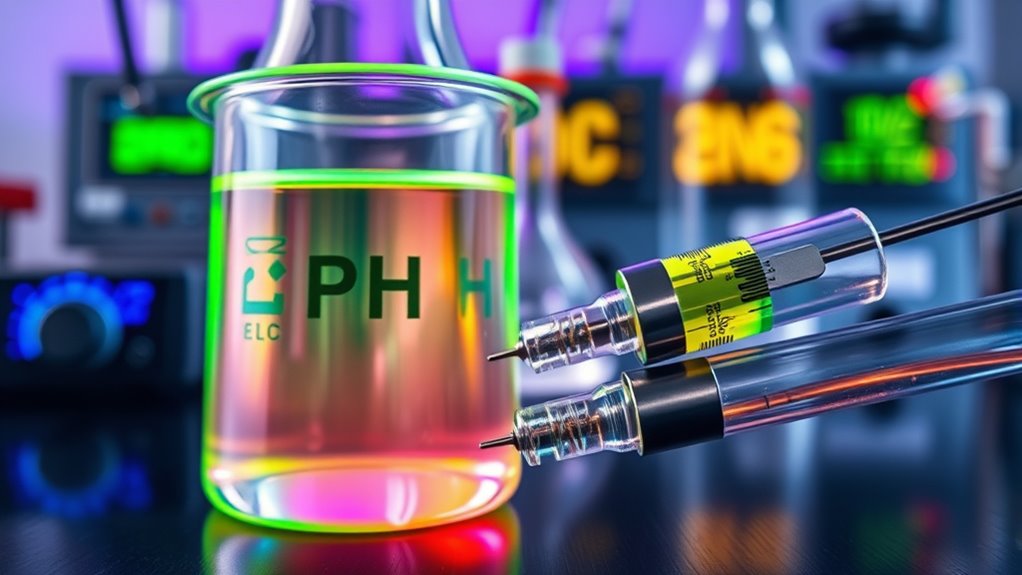
pH measures the acidity or alkalinity of your water or solution, with a scale from 0 to 14. A pH of 7 is neutral, below that indicates acidity, and above signals alkalinity. When pH levels are too low or too high, your system can encounter problems. For example, in hydroponics or aquaponics, a pH that’s too acidic can hinder nutrient availability, causing deficiencies. Conversely, an overly alkaline environment can lock out essential nutrients, leading to poor growth or health issues. In water treatment, incorrect pH can cause scaling, corrosion, or ineffective filtration. Maintaining the correct pH guarantees your system’s components function at their best and that nutrients or chemicals are absorbed as intended. Regular testing and adjustments are crucial because measurement accuracy can vary with factors like temperature or contamination.
Electrical conductivity (EC), on the other hand, measures the water’s ability to conduct electricity, which correlates with the amount of dissolved salts or nutrients. If EC is too high, it indicates excess salts, which can lead to osmotic stress, dehydration, or nutrient imbalances in plants or aquatic life. If EC is too low, it suggests a lack of essential nutrients, impairing growth or biological processes. Adjusting EC involves adding or diluting nutrients, fertilizers, or salts, depending on your system’s needs. Keeping EC within the recommended range ensures your plants or aquatic organisms receive the right amount of nutrients without risking toxicity or deficiency.
While pH and EC are independent measurements, they’re interconnected in practice. For example, certain nutrients become unavailable at specific pH levels regardless of EC. Conversely, high EC values can mask deficiencies or toxicities that only show up when pH is off. Regular testing helps you identify shifts early, so you can make precise adjustments. It’s not enough to simply measure these numbers; you need to understand their implications and take action accordingly. Small changes in pH or EC can have significant impacts on your system’s overall health, productivity, and longevity. By keeping a close eye on both, you’re better equipped to optimize conditions, prevent problems, and ensure your system thrives over time.

Ahopegarden Hydroponics Growing System Herb Garden: 10 Pods Indoor Garden Kit with LED Grow Light and Smart Temp & Humidity Display - Plant Germination Kit for Home Kitchen
Smart Monitoring Screen & Low Water Alarm: Ahopegarden hydroponics growing system kit features an LCD screen displaying real-time...
As an affiliate, we earn on qualifying purchases.
Frequently Asked Questions
How Do Ph and EC Affect Plant Nutrient Uptake?
You need to pay attention to pH and EC because they directly influence how well your plants absorb nutrients. If pH is off, certain nutrients become unavailable, leading to deficiencies. High or low EC levels can either hinder nutrient uptake or cause toxicity. By keeping both within ideal ranges, you guarantee your plants efficiently absorb essential nutrients, promoting healthy growth and maximizing yields.
What Are Common Mistakes in Measuring Ph and EC?
You often make mistakes by not calibrating your pH meter regularly, which skews your readings. Also, you might skip rinsing your EC meter properly between samples, leading to inaccurate results. Using tap water instead of distilled water for calibration or measurement can introduce contaminants. Don’t forget to measure samples at the same temperature, as temperature fluctuations affect pH and EC readings, giving you unreliable data.
Which Tools Are Best for Accurate Ph and EC Readings?
Think of your tools as the compass guiding your plant’s health journey. For accurate pH and EC readings, you want a reliable digital meter that’s quick to respond and easy to calibrate—think of it as your trustworthy lighthouse in a foggy night. Brands like Bluelab, Hanna, or Milwaukee provide sturdy, precise meters. Keep the probes clean and calibrated regularly, and you’ll navigate your system’s needs with confidence.
How Often Should Ph and EC Levels Be Checked?
You should check your pH and EC levels daily, especially during active growth phases, to guarantee ideal conditions. If you’re growing in hydroponics or sensitive environments, consider testing multiple times a day. Regular monitoring helps you catch imbalances early, allowing you to make quick adjustments. Consistency is key to maintaining healthy plants and preventing issues like nutrient deficiencies or toxic buildup.
Can Ph and EC Levels Vary With Different Water Sources?
Think of water sources as different musical instruments, each producing unique notes. Your pH and EC levels can vary widely depending on where your water comes from—be it city tap, well, or rainwater. These sources influence your system’s harmony, so you must regularly test and adjust. Embrace the variability, because understanding these differences helps you fine-tune your system for ideal growth and health.

LETPOT LPH-SE Hydroponics Growing System, 12 Pods Smart Herb Garden Kit Indoor, Indoor Garden, APP & WiFi Controlled, with 24W Growing LED, 5.5L Water Tank, Pump System, Automatic Timer
PATENTED SMART HYDROPONIC SYSTEM: Take your indoor gardening to the next level with our patented smart hydroponic system,...
As an affiliate, we earn on qualifying purchases.
Conclusion
Remember, knowing your pH and EC levels isn’t just about numbers—it’s about giving your system what it needs to thrive. When you keep these in check, you’re setting yourself up for success. Don’t forget, “A stitch in time saves nine,” so regularly monitor and adjust. Stay proactive, trust the process, and your system will flourish. After all, proper balance is the key to growth—keep these numbers in harmony, and you’ll see the best results.

JPWDDWYT Hydroponics Tower Indoor Growing System Vertical Garden Planter Indoor Smart Garden Kit with Pump and Movable Water Tank Vegetable Plant Gift for Gardening Lover (35-Plants)
SOILLESS CULTIVATION: Hydroponics is used instead of traditional soil cultivation, so the automatic top-down timed watering cycle makes...
As an affiliate, we earn on qualifying purchases.

Ahopegarden Indoor Garden Hydroponics Growing System: 10 Pods Plant Germination Kit Herb Vegetable Growth Lamp Countertop with LED Grow Light - Hydrophonic Planter Grower Harvest Lettuce
High planting efficiency: Start an indoor herb garden with the Ahopegarden hydroponic growing system, which includes a water...
As an affiliate, we earn on qualifying purchases.