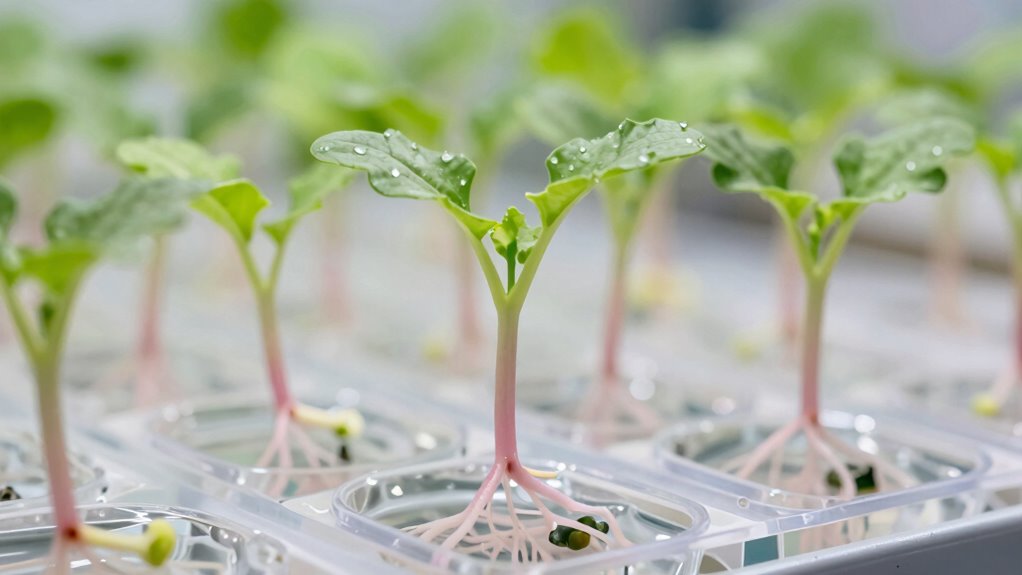

Hydroponic propagation systems help sensitive cuttings by providing a controlled, sterile environment that minimizes pests, diseases, and environmental stress. You can precisely manage nutrients, pH levels, and moisture, ensuring your cuttings get gentle, balanced nourishment. With ideal light, humidity, and oxygen levels, roots develop faster and healthier. This setup reduces transplant shock and boosts success rates. If you want to discover more about how these systems boost plant health, keep exploring the details.
Key Takeaways
- Provides a controlled environment that reduces stress and environmental variability for delicate cuttings.
- Delivers nutrients directly to roots, promoting faster and healthier root development.
- Eliminates soil-borne pests and diseases, minimizing infection risks.
- Allows precise adjustment of light, humidity, and temperature for optimal growth conditions.
- Accelerates rooting and plant establishment compared to traditional soil propagation methods.
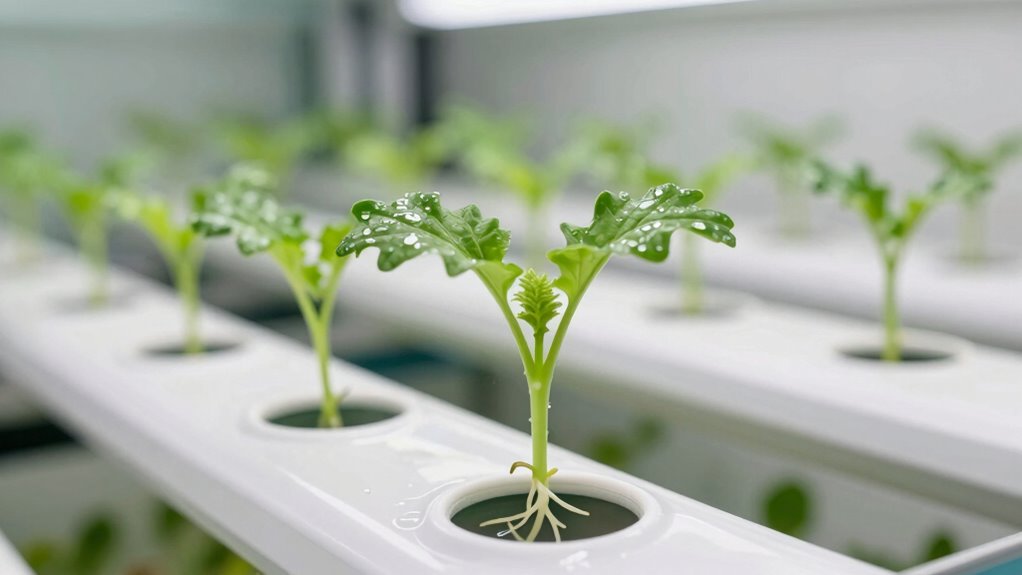
Have you ever wondered how to efficiently start plants without soil? Hydroponic propagation systems make it possible by providing a controlled environment that’s perfect for sensitive cuttings. Unlike traditional soil-based techniques, hydroponics eliminates the variability and unpredictability often found in soil, such as pests, diseases, or nutrient imbalances. This means you can focus on nurturing your cuttings without the worry of soil-borne issues. When you use hydroponic systems, you’re creating an ideal medium for root development, as the nutrients are delivered directly to the plants’ roots through water. This direct approach accelerates growth and enhances the chances of successful propagation, especially for delicate cuttings that struggle with soil conditions. Additionally, the controlled environment of hydroponics allows for consistent monitoring and adjustment of factors like light, humidity, and temperature, further supporting the health of sensitive cuttings. Using precise nutrient control is essential in hydroponics, as it ensures your plants receive the right balance for optimal growth. Moreover, the ability to manage environmental variables precisely reduces the chances of stress and failure during early development stages. Maintaining optimal oxygen levels in the water also plays a crucial role in root health and development, making hydroponic systems even more effective. For added success, incorporating aeration techniques can significantly improve oxygen availability and promote healthier root systems.
Hydroponic systems provide a controlled, soil-free environment that boosts root growth and improves propagation success for delicate cuttings.
In traditional soil-based techniques, organic fertilizers are a common choice for nourishing plants, but they can be tricky to manage. Organic fertilizers often introduce organic matter and nutrients into the soil, which can sometimes lead to inconsistent nutrient availability or microbial imbalances. In hydroponic systems, however, you have precise control over the nutrient solution. You can tailor the concentration and composition to meet the specific needs of your cuttings, ensuring they receive an ideal balance of nutrients. This level of control is critical for sensitive cuttings that need a gentle, consistent supply of nutrients to establish strong roots without stress.
Hydroponic propagation also reduces the risk of transplant shock, which can be a major obstacle when starting plants in soil. Since the roots are already in a nutrient-rich water medium, they can develop more quickly once transplanted into soil later on. Plus, the sterile environment of hydroponics minimizes exposure to pathogens that might otherwise attack fragile cuttings. With fewer variables, you can monitor and adjust factors such as pH, temperature, and nutrient levels with ease, creating the perfect environment for root formation. This precision can also help prevent common issues like nutrient deficiencies or toxicities that can hinder growth.
Furthermore, hydroponic systems are space-efficient and scalable, making them ideal whether you’re propagating a few cuttings or managing a larger operation. They also allow you to control moisture levels precisely, avoiding common issues like overwatering or dehydration. For sensitive cuttings, this means less stress and a higher success rate. Overall, hydroponic propagation offers a clean, controlled, and efficient way to start plants, especially when traditional soil-based techniques might pose challenges. With the ability to customize nutrient delivery and maintain ideal conditions, it’s an excellent method for ensuring your delicate cuttings thrive from the very beginning.

Psycloner Clone Machine, Hydroponics System, Cloner for Plant Cuttings, Propagation, 2 Gallon, Deep Water Culture, DWC (24 Site)
DWC PSYCLONER – Plant cutting and rooting germination kit. Features 24 neoprene inserts to hold your plant clones…
As an affiliate, we earn on qualifying purchases.
As an affiliate, we earn on qualifying purchases.
Frequently Asked Questions
Can Hydroponic Systems Be Used for All Plant Types?
Hydroponic systems can be used for many plant types, but their suitability depends on plant compatibility and system versatility. Some plants, like leafy greens and herbs, thrive in hydroponics due to their fast growth and adaptability. However, certain plants with extensive root systems or specific soil needs might not do well. You should consider the plant’s requirements and choose a versatile system that can accommodate different species for best results.
What Are the Initial Setup Costs for Hydroponic Propagation?
Did you know hydroponic systems can reduce water use by up to 90%? Your initial setup costs depend on equipment investments, like grow lights, reservoirs, and nutrient delivery systems. Compared to soil gardening, hydroponic propagation often has a higher upfront cost, but it offers faster growth and better control. Expect to spend a few hundred to a couple of thousand dollars initially, with ongoing savings on water and nutrients.
How Often Should Nutrient Solutions Be Replaced?
You should replace nutrient solutions every two to three weeks to maintain ideal nutrient balance and solution stability. Regular replacement prevents the buildup of salts and imbalances that can stress sensitive cuttings. Keep an eye on pH levels and overall solution clarity, and top off the reservoir with water as needed. This routine helps guarantee your hydroponic system provides consistent, nourishing conditions for your cuttings to thrive.
Are There Specific Lighting Requirements for Hydroponic Propagation?
Think of your hydroponic setup as a sunbeam nurturing delicate seedlings. You need bright, diffused light with the right spectrum balance to mimic natural sunlight. Aim for moderate light intensity to prevent stress, and use full-spectrum LED lights that provide a balanced blend of blue and red wavelengths. This guarantees your cuttings receive the ideal conditions for healthy growth, encouraging strong root development and vibrant leaves.
What Are Common Challenges Faced With Hydroponic Propagation Systems?
You might face challenges like maintaining proper water pH adjustments and ensuring adequate root oxygenation techniques. If pH levels are off, nutrient uptake suffers, causing slow growth or failure. Additionally, poor oxygenation can lead to root rot or stagnation. Regularly monitor pH and use aeration methods like air stones or gentle water circulation to keep roots healthy. Addressing these issues helps improve success rates in hydroponic propagation systems.

Renmxj Plant Propagation Station, Plant Terrarium with Wooden Stand
Effortless Propagation and Maintenance: Our Plant Propagation Station simplifies growing and rooting plant cuttings. With no assembly required,…
As an affiliate, we earn on qualifying purchases.
As an affiliate, we earn on qualifying purchases.
Conclusion
By choosing hydroponic propagation systems, you give your sensitive cuttings a fighting chance to thrive. These systems provide a stable environment, reducing stress and boosting root development. Think of it as giving your plants a head start in life, like a bird pushing its chick out of the nest with confidence. With the right setup, you’ll find your cuttings grow stronger and healthier, proving that sometimes, a little extra help can make all the difference in nurturing new life.

Dosatron Nutrient Delivery System – Mixing Chamber Kit
A Well Blended Solution Is Key To A Successful Dosing System
As an affiliate, we earn on qualifying purchases.
As an affiliate, we earn on qualifying purchases.
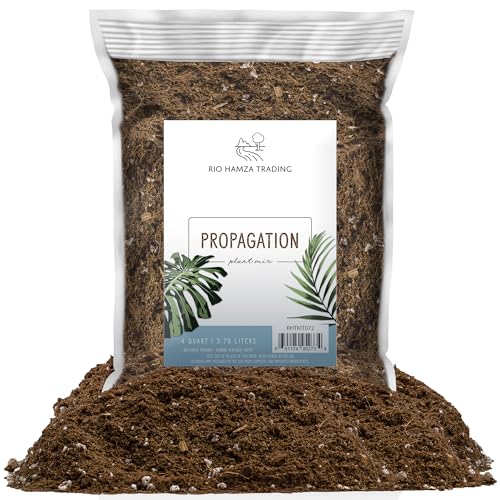
Planting Mix for Plant Propagation (4 Quarts), Hand Blended Soilless Mix for Propagating Plants, House Plants, and More
Lightweight Composition: The blend's lightweight nature ensures ease of use and handling during the delicate stages of plant…
As an affiliate, we earn on qualifying purchases.
As an affiliate, we earn on qualifying purchases.