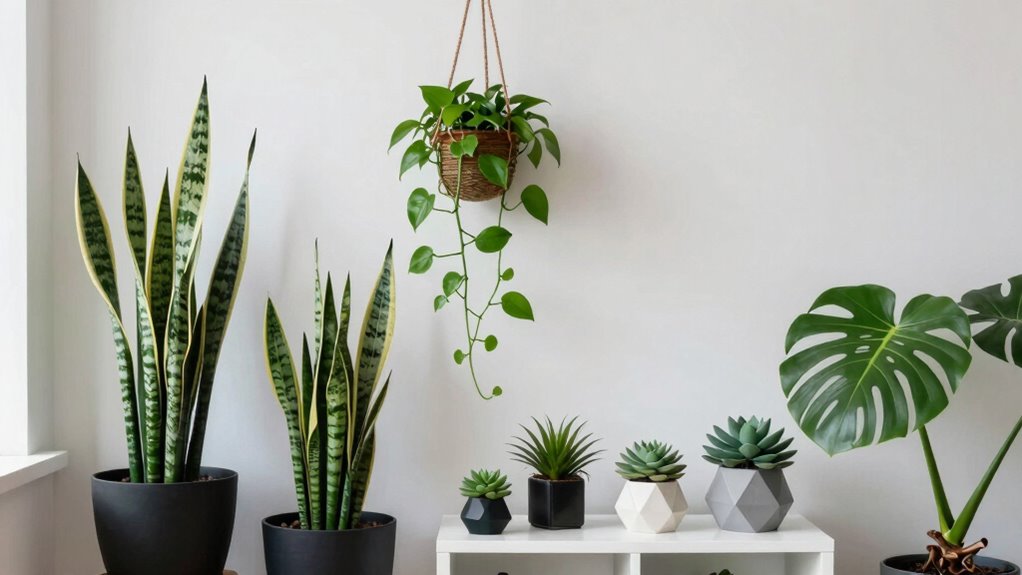

To create a low-maintenance indoor plant collection, choose resilient species like succulents, snake plants, pothos, and ZZ plants that tolerate irregular watering and light conditions. Group plants with similar needs and use stylish, varied planters to enhance your space. Water only when soil is dry, and clean leaves regularly to keep your plants healthy. If you want to discover more tips, you’ll find simple ways to simplify your plant care for lasting beauty and ease.
Key Takeaways
- Select resilient, low-maintenance plants like succulents, snake plants, and pothos that tolerate inconsistent conditions.
- Group plants with similar care needs and use stylish, matching pots to simplify maintenance and enhance decor.
- Use self-watering planters or moisture meters to monitor soil moisture and prevent overwatering.
- Position plants according to their light requirements and keep leaves clean to maintain health and appearance.
- Fertilize minimally, only once or twice a year during the growing season, to sustain plant vitality with minimal effort.
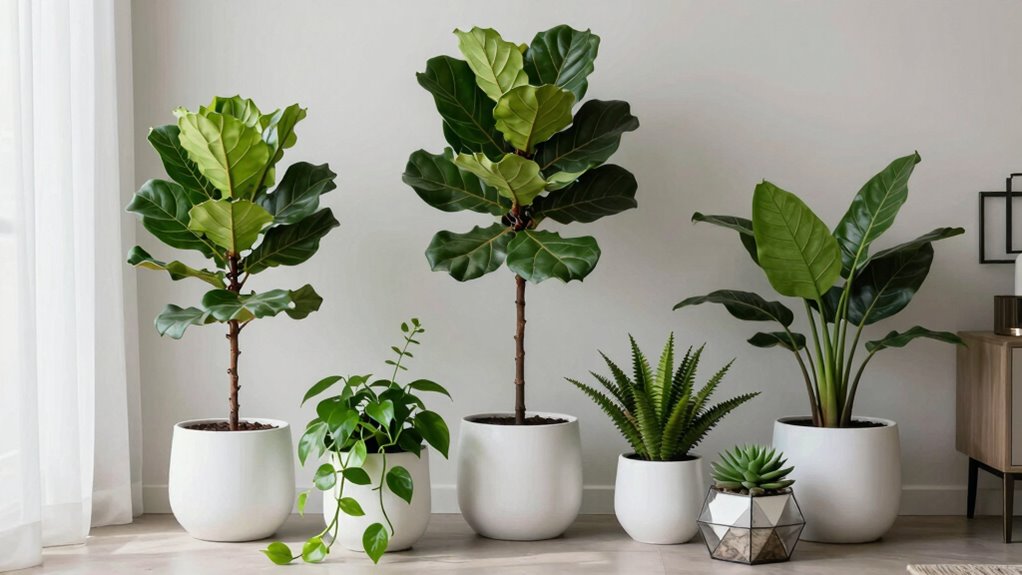
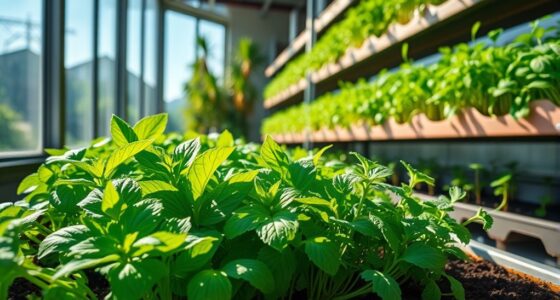
Creating an indoor plant collection is a rewarding way to bring life and greenery into your home. When aiming for a low-maintenance setup, you’ll want to focus on plant care routines that are simple and effective. Choose plants that thrive on minimal attention, such as succulents, snake plants, pothos, or ZZ plants. These varieties are known for their resilience and ability to withstand forgetful watering or inconsistent light. To keep your collection healthy, establish a routine that involves watering only when the soil is dry, and place your plants in spots that match their light needs. This approach minimizes stress on the plants and reduces your workload.
Choose resilient plants like succulents and snake plants for easy, low-maintenance indoor greenery.
Aesthetic arrangements are just as important as plant selection when creating a low-maintenance indoor garden. You should aim for a cohesive look that complements your home decor, whether you prefer a modern, bohemian, or minimalist vibe. Group plants with similar care requirements together, so you don’t have to juggle different watering schedules or light conditions. Use stylish pots and planters that reflect your personality, and consider varying heights and textures to add visual interest. Even with low-maintenance plants, a well-thought-out arrangement can make your space feel vibrant and intentional. Incorporating professional services can also help in designing a sustainable and visually appealing setup.
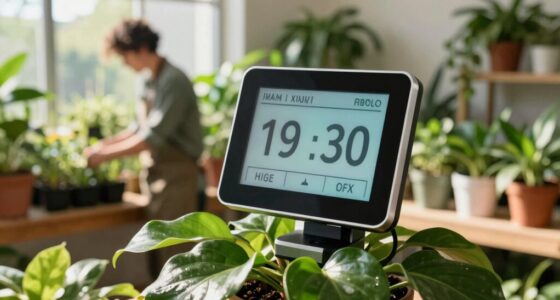
To simplify your plant care routines further, consider setting up a watering schedule based on the specific needs of your plants. For example, succulents may only need watering once every few weeks, while pothos can tolerate more frequent watering. Use self-watering planters or moisture meters to help you monitor soil moisture levels, reducing guesswork and preventing overwatering. Regularly dusting the leaves and cleaning the pots ensures your plants breathe properly and stay healthy, but these tasks can be incorporated into your weekly cleaning routine. Additionally, choosing plants with high contrast ratios can enhance their visual appeal without demanding extra care, as they tend to show less dust and imperfections. Being aware of plant resilience can help you select species that are naturally better suited for low-maintenance setups, ensuring longevity and health. Furthermore, understanding the adaptability of different plants can guide you in creating a more successful indoor garden.
In addition, selecting plants with vetted characteristics can increase the likelihood of success in your collection, making maintenance even easier. Incorporating plants that require minimal fertilization also helps maintain a low-maintenance collection. Many hardy plants, like snake plants and ZZ plants, don’t need frequent feeding. When you do fertilize, use a diluted, balanced liquid fertilizer during the growing season, but only once or twice a year. This reduces the need for constant attention while still supporting healthy growth. By choosing the right plants, establishing consistent plant care routines, and designing aesthetic arrangements, you create a lush indoor environment that’s beautiful but easy to manage. Your low-maintenance indoor plant collection will bring joy and greenery to your home without adding stress or extra chores.

Melphoe Self Watering Pots for Indoor Plants Planter, 4.3 Inch 2 Pack Planters Self Watering Plant Pots for Flower, Houseplants, Succulent, African Violets and Cactus with Drainage
- Self-Watering Design: Double-layer with cotton rope for moisture
- Visible Water Level: Transparent resin for easy monitoring
- Easy to Clean: Smooth surface for simple maintenance
As an affiliate, we earn on qualifying purchases.
As an affiliate, we earn on qualifying purchases.
Frequently Asked Questions
Which Indoor Plants Are Best for Low Humidity Environments?
You should choose humidity-tolerant plants like snake plants, pothos, and ZZ plants for low humidity environments. These low-maintenance greenery options thrive without high moisture levels, making them perfect for your space. They require minimal care, adapt well to various lighting conditions, and don’t need frequent watering. Incorporating these hardy plants guarantees your indoor garden stays lush and vibrant, even in drier air.
How Often Should I Rotate My Indoor Plants for Even Growth?
You should rotate your indoor plants every few months to promote even growth. During rotation, perform plant pruning to remove dead leaves and encourage healthy development. Additionally, gently aerate the soil to improve soil aeration, which helps roots breathe and prevents compacting. This practice guarantees all sides receive adequate light, reduces pests, and maintains overall plant health, keeping your collection thriving with minimal effort.
Are There Specific Plants That Repel Indoor Pests Naturally?
You’ll find that some pest-resistant plant varieties are like tiny armies against indoor pests. Plants like lavender, mint, and basil act as natural pest repellents, keeping bugs at bay effortlessly. Incorporate these into your collection for a pest-free haven. These natural pest repellents don’t just protect your plants—they create a peaceful, bug-free zone, making your indoor garden a thriving oasis with minimal fuss.
What Are the Signs of Overwatering in Indoor Plants?
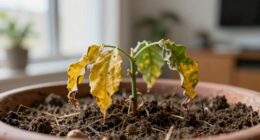
You’ll notice overwatering through symptoms like yellowing leaves, wilting, or a soggy soil texture. Watering issues often lead to root rot, which causes roots to decay and lose their ability to absorb nutrients. To prevent this, check the soil moisture before watering, guarantee proper drainage, and let the top inch dry out between waterings. Recognizing these signs early helps keep your indoor plants healthy and thriving.
Can I Mix Different Plant Species in the Same Container?
Yes, you can mix different plant species in the same container if you consider plant pairing and soil compatibility. Choose plants with similar water, light, and humidity needs to prevent overwatering or underwatering. Make certain their soil requirements match, using well-draining soil for succulents and moisture-retentive soil for ferns. Proper plant pairing creates a harmonious look and keeps your indoor garden healthy with minimal maintenance.
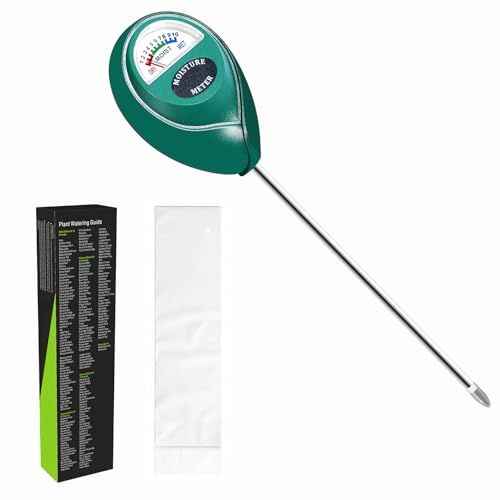
XLUX Plant Soil Moisture Meter, for Indoor and Outdoor use, Battery-Free
- Trusted Since 2015: Reliable and accurate soil moisture readings
- Battery-Free Operation: No batteries or charging needed
- Deep Root Zone Measurement: Probes soil at root level for accuracy
As an affiliate, we earn on qualifying purchases.
As an affiliate, we earn on qualifying purchases.
Conclusion
With your low-maintenance indoor plants thriving, you might think you’ve got it all figured out. But the real magic begins when you start discovering which plants surprise you the most—those unexpected favorites that require just a little extra care. Keep an eye out for new additions and watch your collection grow in ways you never imagined. After all, the journey of nurturing your indoor oasis is full of surprises—are you ready to see what’s next?

Plant Pots Indoor with Drainage, 5 Pack Multi-Size Planters Set, White
- Set of 5 White Plastic Pots: Indoor and outdoor use
- Multiple Sizes Included: 5 different sizes for versatility
- Drainage Holes and Saucers: Prevents overwatering and spills
As an affiliate, we earn on qualifying purchases.
As an affiliate, we earn on qualifying purchases.

Costa Farms Money Tree, Live Indoor Plant, Braided Trunk, Easy Care
- Farm-Direct Packaging: Secure, breathable transit for freshness
- Tabletop Size: 12-16 inch braided trunk plant
- Decorative Potted Plant: Pre-potted in stylish container
As an affiliate, we earn on qualifying purchases.
As an affiliate, we earn on qualifying purchases.