To banish fungus gnats from your houseplants, reduce excess moisture by allowing the soil to dry out between waterings and avoid overwatering. Use sticky yellow traps to catch the adults, and sprinkle diatomaceous earth or sand on the soil surface to block larvae. Applying beneficial nematodes or organic insecticidal soaps can target the larvae directly. Consistent maintenance and combining these methods will help eliminate the pests and protect your plants. Keep exploring to discover more effective strategies.

Get the little things that make your day delivered free with Prime
- Fast, free delivery on millions of items
- Prime Video, Amazon Music and more included
- Member-only deals all year
Key Takeaways
- Reduce soil moisture and allow surface to dry to disrupt gnat larvae development.
- Apply beneficial nematodes or Bti bacteria to target and eliminate larvae effectively.
- Use yellow sticky traps to catch adult gnats and prevent egg-laying.
- Cover soil with sand or diatomaceous earth to block larvae from burrowing.
- Maintain good plant hygiene by removing debris and avoiding overwatering for long-term control.
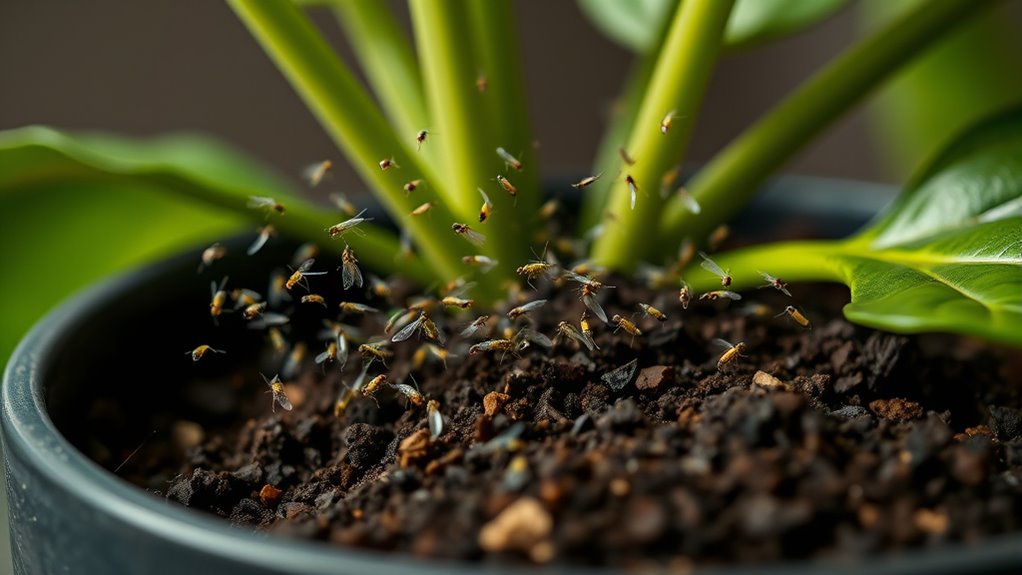
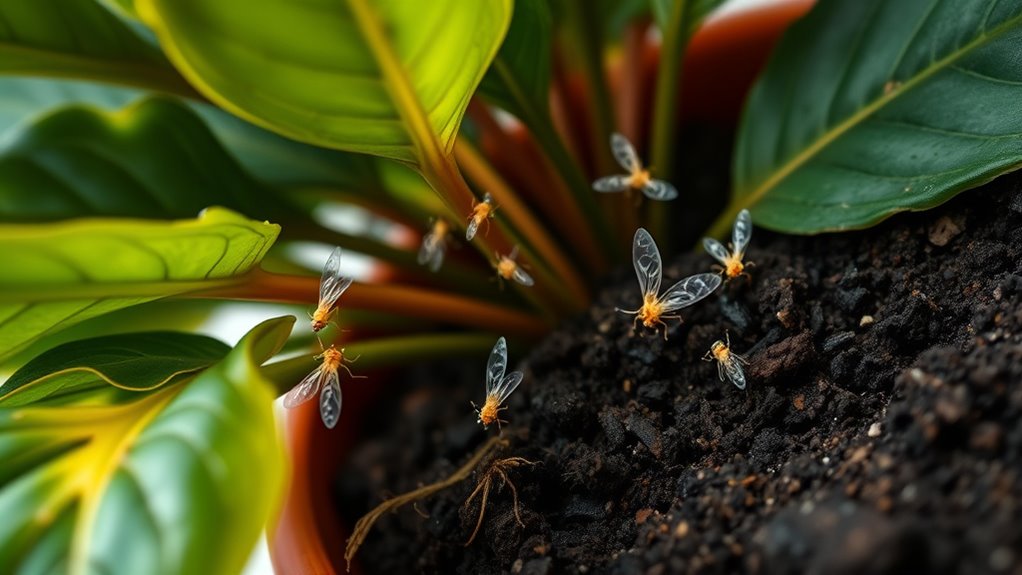
If you’ve noticed tiny flying insects buzzing around your houseplants, chances are you’re dealing with fungus gnats, also known as soil flies. These small, dark insects are a common nuisance that can quickly become a bigger problem if left unaddressed. The good news is that you can manage an infestation using a combination of biological control methods and organic remedies. Understanding how these approaches work will help you restore your plants’ health and keep those pesky flies at bay.
Biological control is an effective, eco-friendly way to combat fungus gnats. You can introduce natural predators like beneficial nematodes, which are microscopic worms that hunt down and kill the larvae living in the soil. Applying nematodes is straightforward—simply mix them with water and pour the solution onto your soil. They work silently beneath the surface, reducing the gnat population without the need for chemical pesticides. Another biological option is using predatory mites or certain species of bacteria like Bacillus thuringiensis israelensis (Bti). These biological agents target the larvae specifically, disrupting their development and preventing adults from emerging. Incorporating biological control methods into your routine creates a sustainable, non-toxic environment that benefits your plants and the surrounding ecosystem.
Alongside biological controls, organic remedies also play a essential role in managing fungus gnats. One simple step is to let the top layer of soil dry out between waterings, as the larvae thrive in moist environments. You can also sprinkle a layer of sand or diatomaceous earth on the soil surface to physically block larvae from burrowing and emerging. Another popular organic remedy is applying a sticky trap near your plants. The yellow adhesive traps attract adult gnats, reducing their numbers and preventing them from laying eggs. To further disrupt their lifecycle, consider using organic insecticidal soaps or neem oil. These treatments can be sprayed on the soil and plant foliage, acting as repellents and killing larvae upon contact. Remember, maintaining good watering habits and soil hygiene—removing dead plant material and avoiding overwatering—are crucial in preventing future infestations.
Frequently Asked Questions
Are Fungus Gnats Harmful to Plants or Humans?
Fungus gnats aren’t harmful to humans, so they pose no direct threat to your health. However, they can harm your plants by damaging roots and spreading diseases, which affects plant safety. While the gnats themselves are mostly a nuisance, their presence indicates overly moist soil, so improving drainage helps both your plants and keeps the environment less inviting for these pests. Keep your soil dry and monitor plant health to prevent infestations.
How Long Do Fungus Gnats Typically Live?
Fungus gnats usually live about a week to ten days, but their soil fly longevity can vary depending on environmental conditions. During their gnat lifespan, adult gnats are active for roughly five to seven days, laying eggs in moist soil. To control them effectively, focus on reducing soil moisture and breaking their life cycle, which can help minimize their presence and prevent future infestations.
Can Fungus Gnats Spread Plant Diseases?
While fungus gnats are primarily a nuisance, they can occasionally be gnat identification that hints at underlying issues. Though they rarely transmit plant diseases directly, their presence indicates overly moist soil, which fosters harmful pathogens. By controlling gnat populations and maintaining proper watering habits, you reduce the risk of disease transmission. So, keeping an eye on these tiny pests helps protect your plants’ health and keeps your garden thriving.
What Are Natural Predators of Fungus Gnats?
You can control fungus gnats naturally by encouraging beneficial insects like predatory nematodes, Hypoaspis mites, and Steinernema feltiae. These organic controls prey on gnat larvae, reducing their population without chemicals. Introducing these beneficial insects into your soil creates a natural pest management system, making your environment healthier for your plants. Regularly monitor soil moisture, and use organic controls alongside beneficial insects for the most effective fungus gnat management.
How Can I Prevent Fungus Gnat Infestations?
Think of your plant’s soil as a delicate dance floor; keep it well-drained and avoid overwatering to prevent fungus gnat invasions. Maintain proper soil moisture by watering only when the top inch feels dry. Use sand or gravel on the surface to create a barrier, and consider natural repellents. By managing watering habits and moisture levels, you can keep soil pests at bay and ensure your plants thrive.
Conclusion
Dealing with fungus gnats can feel like fighting a never-ending battle, but don’t lose hope. With consistent watering habits, proper soil drying, and natural remedies, you can reclaim your plants and peace of mind. Think of it like tending a garden—patience and care will gradually push those pesky flies away. Keep up your efforts, stay vigilant, and soon your indoor oasis will be gnat-free, flourishing like a vibrant, healthy garden in full bloom.
NFL season / tailgating Picks
team gear
As an affiliate, we earn on qualifying purchases.