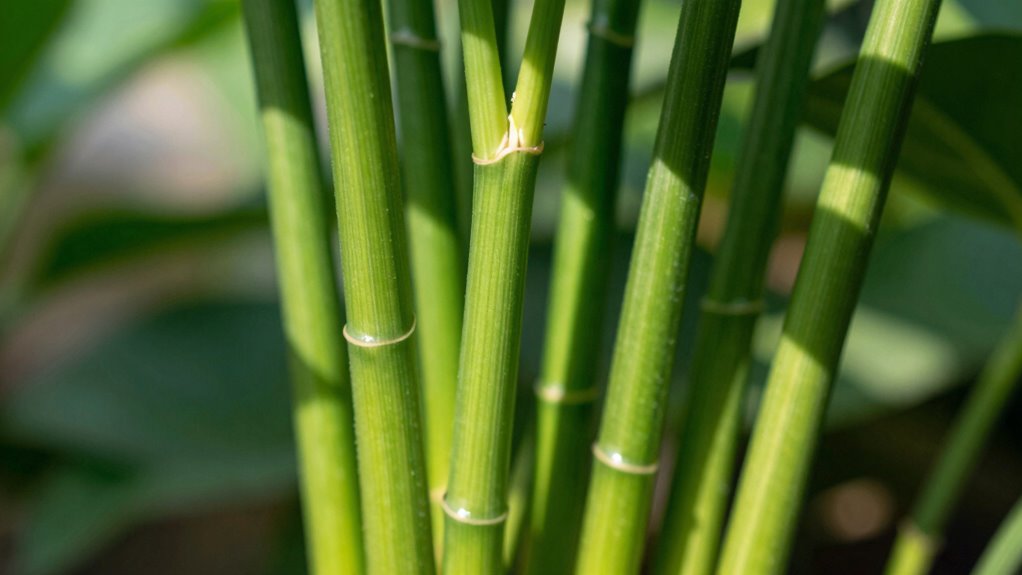
If your plant has long, stretched-out internodes, it’s a sign it’s struggling to find enough light. This elongation happens as the plant tries to elevate its leaves to reach better light sources, often leading to weaker, fragile stems. Too little light triggers hormonal changes that promote stem growth at the expense of strength. Understanding these cues can help you adjust your grow conditions, and if you keep observing, you’ll uncover more ways to support healthy plant growth.
Key Takeaways
- Elongated internodes indicate low light conditions, as plants stretch to reach better-lit areas.
- Short, compact internodes suggest optimal or high light levels, promoting sturdy growth.
- Excessive internode length can weaken stems, signaling insufficient light and potential stress.
- Internode length variations reflect the plant’s hormonal response to light perception, primarily auxin levels.
- Monitoring internode length helps diagnose light deficiencies and guides environmental adjustments for healthier growth.
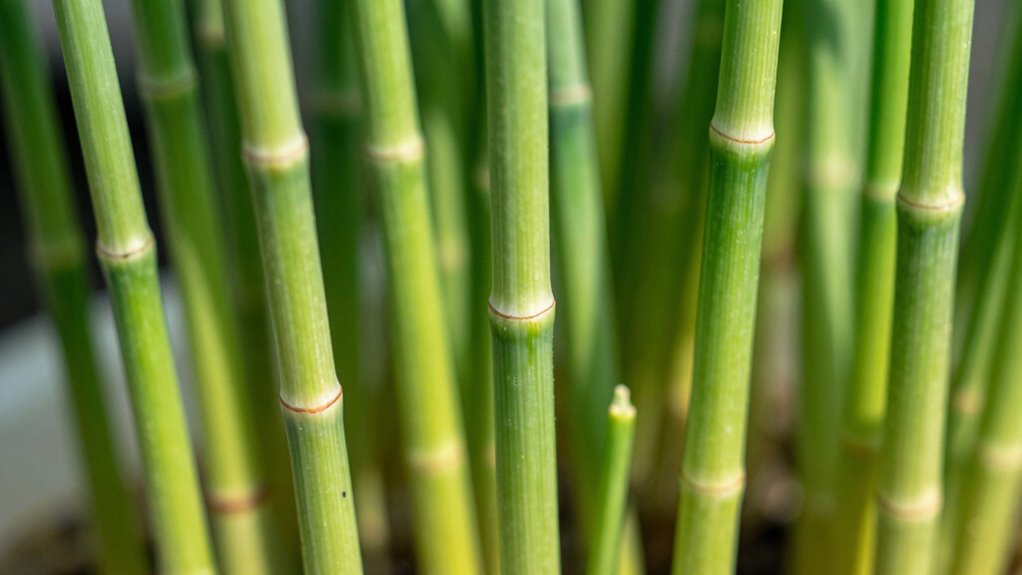
Light conditions play a crucial role in determining the length and growth of plant internodes, which are the segments between nodes on a stem. When you observe a plant with elongated internodes, it often signals that the plant is stretching in search of better light sources. This stretch is a direct response to insufficient light, prompting the plant to allocate resources toward internode elongation to maximize light absorption. The plant’s ability to detect and respond to light intensity influences how it grows, with longer internodes indicating a struggle to gather enough energy from its environment. Additionally, understanding plant responses to light can help you optimize growth conditions for healthier plants. In environments with low light, plants tend to elongate their internodes as a survival strategy. You’ll notice this in plants that appear spindly or stretched out, with leaves spaced far apart. The reason lies in how light affects cellular processes: as light diminishes, the plant signals cells in the stem to grow longer, attempting to elevate leaves into better-lit areas. This process, driven by hormonal changes like increased auxin production, enhances internode elongation. Basically, the plant is trying to optimize light absorption by increasing the distance between leaves and the ground, but this often comes at the cost of weaker, more fragile stems. Moreover, the plant’s ability to detect light intensity is crucial for its adaptive growth responses. Recognizing plant light perception mechanisms can further inform how best to manage their growth environment. Developing an understanding of light-driven growth responses allows growers to manipulate conditions for more desirable plant architecture.
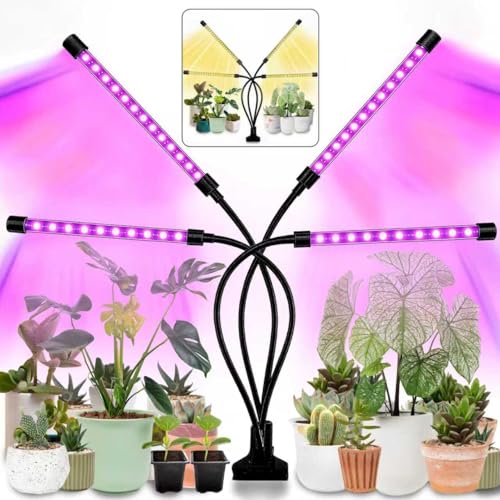
LEOTER Grow Light for Indoor Plants – Upgraded Version 80 LED Lamps with Full Spectrum & Red Blue Spectrum, 3/9/12H Timer, 10 Dimmable Level, Adjustable Gooseneck,3 Switch Modes
🌻Efficient LED Combination: This LED lamp has grow lights made up of 80 efficient growing LEDs ( 32…
As an affiliate, we earn on qualifying purchases.
As an affiliate, we earn on qualifying purchases.
Frequently Asked Questions
How Quickly Do Internodes Change in Response to Light?
Internodes respond to changes in light intensity quite quickly, often within days. When light is low, you’ll notice internode elongation increases as the plant stretches to find more light. Conversely, with ample light, internodes shorten, making the plant more compact. This rapid response helps you gauge light conditions, as observing internode length gives clues about whether your plant is getting enough or too little light, adjusting accordingly.
Do Different Plant Species Show Similar Internode Responses?
Have you ever wondered if different plant species respond similarly? While internode responses to light vary, genetic variability influences these reactions, and environmental adaptation plays a significant role. Some species show pronounced changes like elongation under low light, while others remain relatively stable. This diversity highlights how plants adapt to their specific environments, allowing you to predict light conditions by observing internode length across various species.
Can Internode Length Indicate Nutrient Deficiencies?
Yes, internode length can indicate nutrient deficiencies. When nutrients are lacking, your plant’s photosynthesis efficiency drops, leading to hormonal regulation changes that influence growth. Shortened internodes might signal deficiencies in essential nutrients like nitrogen or potassium, which affect cell expansion. By observing internode length, you can identify potential nutrient issues early, helping you adjust fertilization to promote healthy growth and ideal plant development.
How Do Indoor and Outdoor Light Differences Affect Internodes?
Indoor and outdoor light differences directly influence internode length. In shaded indoor settings, plants adapt by elongating internodes to reach more light, driven by shade adaptation and photoperiod influence. Outdoors, abundant sunlight keeps internodes shorter and more uniform. You notice these variations as plants stretch or stay compact, revealing how light intensity and duration shape growth. Understanding this helps you optimize conditions for healthier, better-growing plants.
Are Internodes Affected by Artificial Versus Natural Light?
Yes, internodes are affected by artificial versus natural light. Lower light intensity from artificial sources often causes your plant to elongate its stems, resulting in longer internodes as it searches for more light. Natural sunlight generally provides higher intensity, promoting compact growth with shorter internodes. So, if your plant’s internodes are unusually long, it might be a sign it’s not receiving enough natural or bright artificial light.

Yeomant 4PCS Green Iron Monstera Support, Uniquely Designed Plant Support Stakes for Indoor Plants, Stable Plant Stakes and Supports, Turtle Shell Bamboo Clamp Set for Thriving Growth
Stablizing Plant Support: Our plant supports for indoor plants provide great stability for plants, ensuring that your Monstera…
As an affiliate, we earn on qualifying purchases.
As an affiliate, we earn on qualifying purchases.
Conclusion
Just as a storyteller reveals secrets through subtle cues, your plant’s internodes whisper about the light they receive. By paying attention to their length and spacing, you can uncover whether they’re basking in abundant sunlight or struggling in the shadows. So, next time you observe your plant, listen closely to its silent language—like a wise old sage, it guides you toward ideal light conditions, helping your green friends thrive in their natural story.

LBW Plant Grow Light, 540 LEDs Full Spectrum Plant Lights for Indoor Growing, Under Cabinet Grow Lamp with 4/8/12H Timer, 3 Lighting Modes, 10 Dimmable Levels, 4 Pack
【Wide Flat Panels — Designed for Shelves & Cabinets】These low-profile grow light panels mount neatly under cabinets, shelves,…
As an affiliate, we earn on qualifying purchases.
As an affiliate, we earn on qualifying purchases.
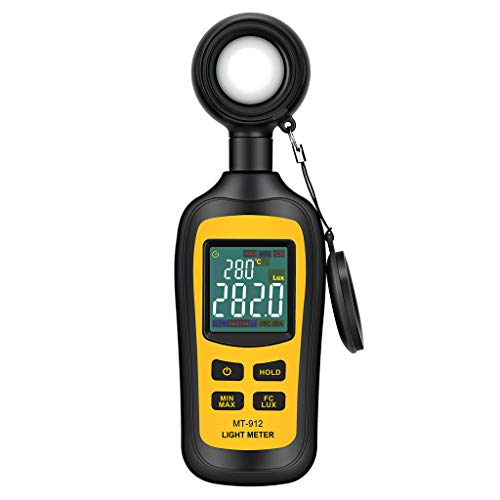
Light Meter Digital Illuminance Meter Handheld Ambient Temperature Measurer, Range up to 200,000 Lux, Luxmeter with 4 Digit Color LCD Screen
Measures luminosity from 0 to 200,000 Lux and ambient temperature
As an affiliate, we earn on qualifying purchases.
As an affiliate, we earn on qualifying purchases.