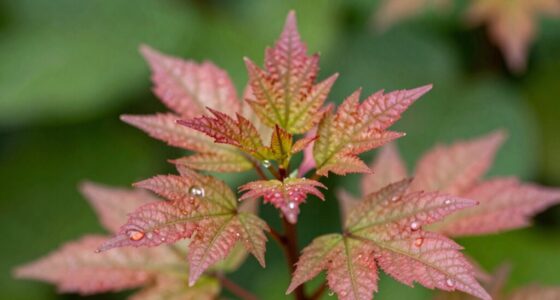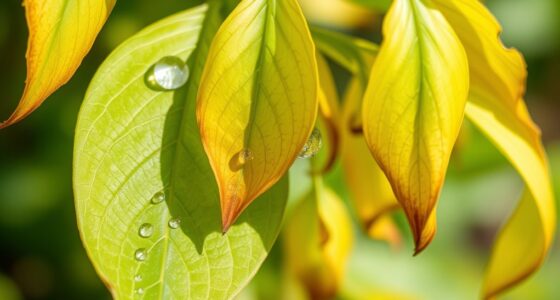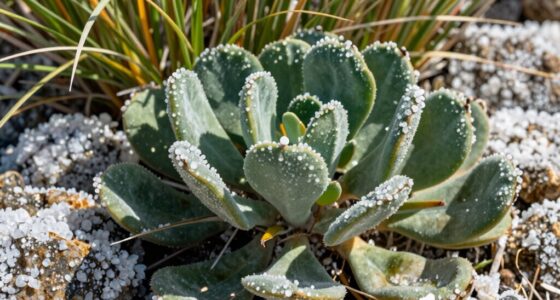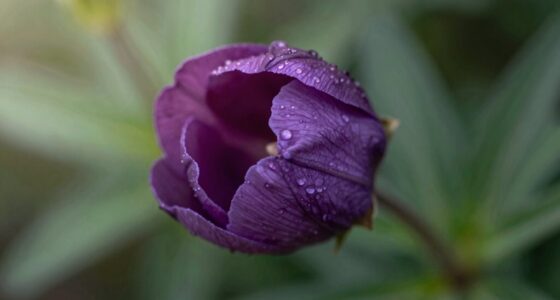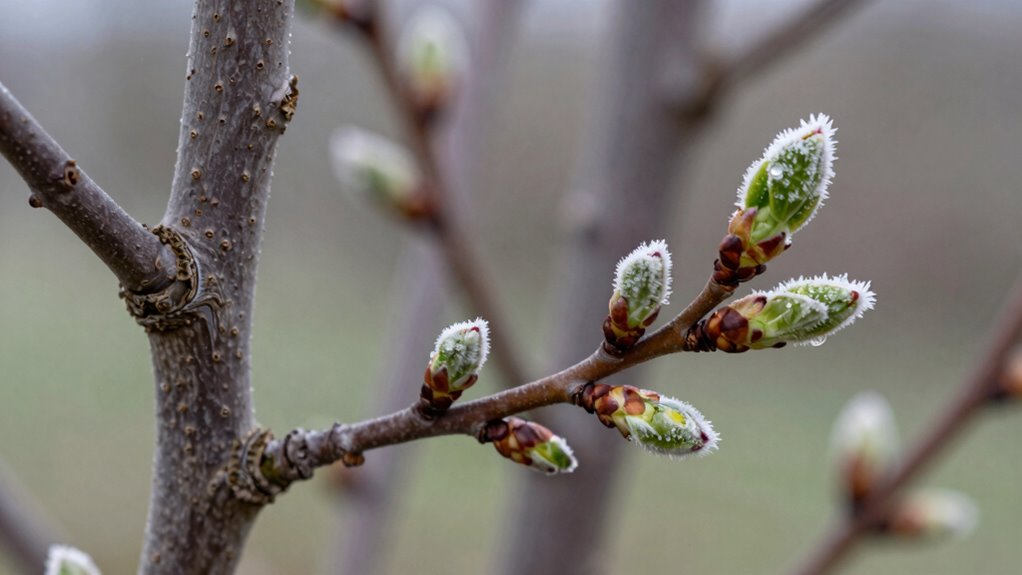

You can think of dormancy triggers as environmental signals that tell your plant to prepare for winter. As daylight decreases and temperatures drop, hormonal changes occur—abscisic acid levels rise and gibberellins fall—prompting the plant to slow growth and conserve energy. These cues coordinate internal processes to help your plant survive harsh conditions. If you’re curious about how these signals work together, you’ll find more detailed information ahead.
Key Takeaways
- Decline in daylight and temperature signals the start of dormancy in plants.
- Increased levels of abscisic acid (ABA) promote dormancy initiation.
- Decreased gibberellin levels contribute to halting growth and leaf development.
- External environmental cues synchronize internal hormonal changes to trigger dormancy.
- Hormonal shifts prepare plants physiologically for winter survival.
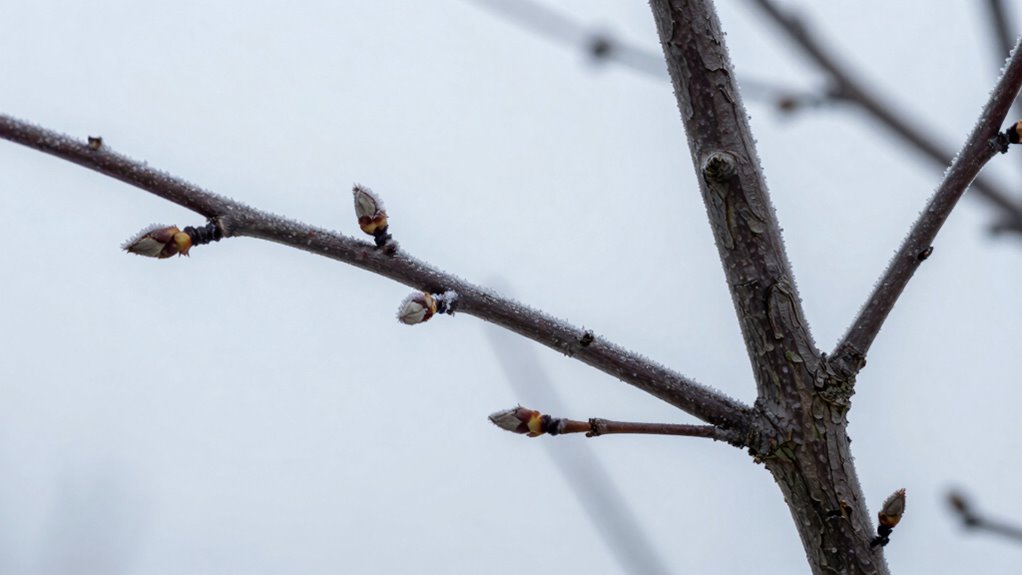
Hormonal regulation plays a pivotal role in initiating and maintaining dormancy. When seasonal cues are detected, plants adjust their internal hormone levels accordingly. For instance, a decline in daylight and temperature often results in an increase in abscisic acid (ABA), a hormone that promotes dormancy by slowing down growth processes and inducing protective measures like thickening cell walls or producing storage compounds. Conversely, hormones like gibberellins, which usually promote growth, decrease during dormancy periods. This hormonal shift effectively signals the plant to halt growth, stop leaf development, and undertake other physiological changes necessary for survival in winter or dry seasons. The delicate balance of these hormones ensures the plant remains in a dormant state until favorable conditions return. Understanding hormonal balance is essential for comprehending how plants adapt to seasonal changes and optimize their growth cycles. Additionally, research into hormonal interactions can reveal new ways to enhance plant resilience during adverse conditions. Moreover, advancements in plant hormone research are helping scientists develop methods to manipulate dormancy for agricultural benefits. You might notice that some plants require specific cues to break dormancy, often involving a combination of environmental signals and hormonal changes. For example, after a cold winter, a rise in temperature and increased daylight can trigger a reduction in ABA levels while boosting gibberellins, prompting the plant to resume growth. This process ensures that the plant doesn’t prematurely break dormancy during brief warm spells in winter. Instead, it waits for consistent environmental signals, confirming that conditions are suitable for active growth again. Environmental cues play a crucial role in this process, working in tandem with hormonal signals to ensure proper timing. Recognizing these environmental signals can help in understanding how plants synchronize their growth with seasonal patterns. It’s a finely tuned system that relies on an interplay between external cues and internal hormonal regulation, ensuring the plant’s survival through unpredictable seasonal changes. This synchronization allows plants to optimize their growth and reproductive cycles, enhancing their chances of successful development.
plant dormancy induction tools
As an affiliate, we earn on qualifying purchases.
As an affiliate, we earn on qualifying purchases.
Frequently Asked Questions
Can Dormancy Be Reversed Prematurely in Plants?
Yes, dormancy in plants can be reversed prematurely, especially in seed dormancy and root dormancy. You might break seed dormancy through scarification or stratification, stimulating germination before natural cues. Similarly, root dormancy can be overcome by environmental changes like increased moisture or temperature. These methods fundamentally signal to the plant that conditions are suitable, prompting it to exit dormancy earlier than usual.
How Do Different Climates Affect Plant Dormancy Triggers?
In different climates, plant dormancy responds unpredictably. You might notice a plant delaying dormancy in a milder climate, or entering it earlier due to sudden cold snaps. Climate adaptation influences seasonal responses, making some plants more resilient or vulnerable. These environmental cues keep you guessing, as temperature fluctuations, daylight hours, and moisture levels all collaborate to trigger or break dormancy, revealing nature’s delicate balance in each unique climate zone.
Are There Specific Hormones That Control Dormancy?
Yes, specific hormones control dormancy through hormonal regulation and dormancy signaling. Abscisic acid (ABA) plays a key role by promoting dormancy, while gibberellins (GAs) help break it by encouraging growth. You can see how these hormones work together to signal when a plant should enter or exit dormancy. Understanding this hormonal balance helps explain how plants respond to environmental cues and manage their growth cycles effectively.
Can Dormancy Be Artificially Broken in Plants?
Yes, you can artificially break dormancy in plants through hormonal regulation. By applying treatments like gibberellins or other growth regulators, you override the plant’s natural signals that keep it dormant. This process, known as artificial dormancy breaking, is common in horticulture to promote early flowering or fruiting. So, with the right hormonal control, you can effectively wake up a dormant plant and encourage growth when needed.
Do All Plant Species Undergo Dormancy at Some Stage?
Not all plant species undergo dormancy at some stage, but many do, especially annuals and perennials. Dormancy often occurs to protect seeds from harsh conditions, affecting seed germination and root growth. When conditions improve, dormancy breaks, allowing seeds to germinate and roots to grow. Some plants, like desert species, have adapted to skip dormancy, ensuring continuous growth or germination when the environment is favorable.
plant hormonal regulation kit
As an affiliate, we earn on qualifying purchases.
As an affiliate, we earn on qualifying purchases.
Conclusion
So, next time you’re enthusiastic for spring’s bloom, remember that plants secretly enjoy their long nap, waiting patiently for the perfect signals. Ironically, it’s often the harshest cold or driest spells that trigger their dormancy, sparking a beautiful pause in nature’s rhythm. While we rush through seasons, plants embrace their dormant phase, proving sometimes the best move is to simply hold still and wait for the right moment to bloom again.

KVITER 150 Chaters Hollyhock Seeds for Planting (Alcea rosea) – Heirloom | Tall Blooms | Pollinator Magnet – Double Hollyhocks Flower Seeds to Plant Outside in Garden, Cottage Borders, Containers
High Germination Rate: Chaters hollyhock heirloom seeds reach 90% sprout success. Hollyhock plants are Ideal for USDA zones…
As an affiliate, we earn on qualifying purchases.
As an affiliate, we earn on qualifying purchases.
plant dormancy break techniques
As an affiliate, we earn on qualifying purchases.
As an affiliate, we earn on qualifying purchases.