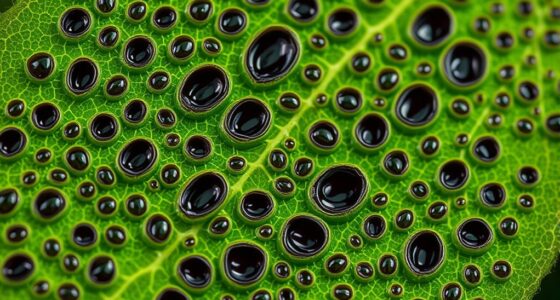
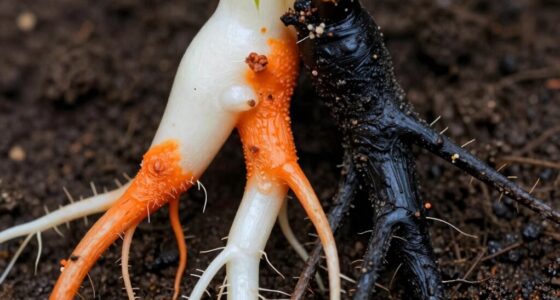
When new leaves start red, bronze, or pink, it’s because of pigments called anthocyanins that protect delicate tissues during growth and stress. These colors act like a natural shield against sunlight, cold, or drought, helping the leaf survive early vulnerability. As the leaf matures, chlorophyll production increases, turning the leaf green and allowing it to carry out photosynthesis. Continuing deeper will reveal more about how environmental and genetic factors influence these vibrant shifts.

Get the little things that make your day delivered free with Prime
- Fast, free delivery on millions of items
- Prime Video, Amazon Music and more included
- Member-only deals all year
Key Takeaways
- New leaves produce anthocyanins, giving them red, bronze, or pink hues for protection during early growth.
- Genetic traits influence the amount and intensity of anthocyanin production in new leaves.
- Environmental stressors like sunlight, drought, or cold trigger increased anthocyanin synthesis.
- Pigments shield delicate tissues from UV damage and oxidative stress during leaf development.
- The transition to green occurs as chlorophyll production increases, signaling leaf maturation.
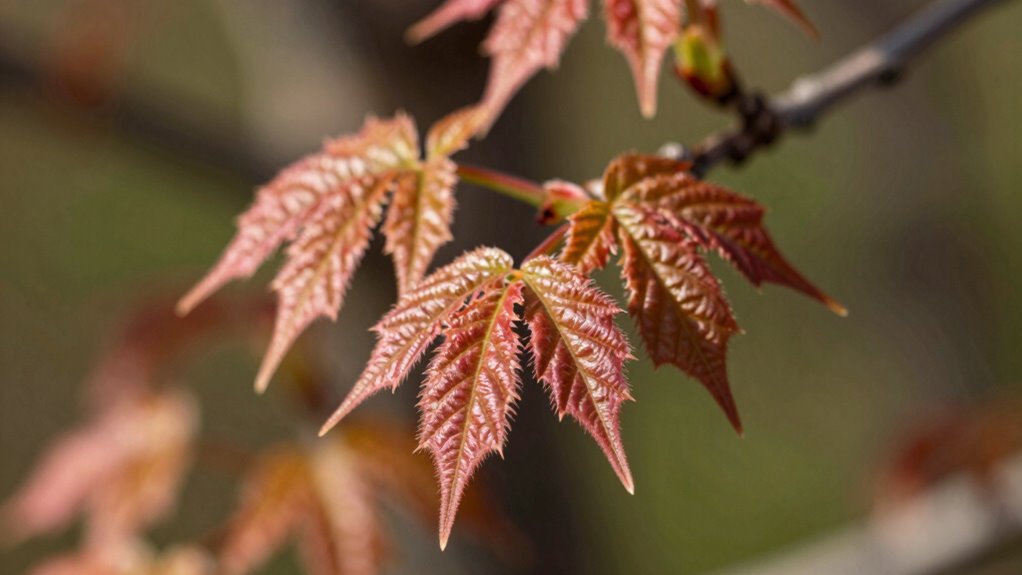
Have you ever wondered why new leaves often appear in shades of red, bronze, or pink before turning green? It’s a striking sight, and the reason behind it lies in a combination of genetic variation and environmental stress. When a plant begins to grow new leaves, it’s actively producing pigments that serve specific functions. The initial red, bronze, or pink coloration is mainly due to anthocyanins, a type of pigment that offers protection during this vulnerable stage of development.
Genetic variation plays an essential role here. Different plant species—and even individual plants within a species—have unique genetic codes that influence how much anthocyanin they produce. Some plants are naturally predisposed to display more vibrant reds or pinks in their new leaves because their genes encode for higher anthocyanin synthesis. This variation allows plants to adapt to their environments in diverse ways, shaping their growth patterns and pigmentation. For example, certain ornamental plants are bred specifically for their colorful new leaves, highlighting how genetic variation is leveraged to enhance visual appeal.
Genetic differences influence anthocyanin production, shaping leaf color and aiding plant adaptation to various environments.
Environmental stress also markedly impacts leaf coloration. When a plant encounters stressors such as intense sunlight, drought, or cold temperatures, it often ramps up anthocyanin production as a defense mechanism. These pigments act like a sunscreen, shielding delicate leaf tissues from harmful ultraviolet radiation and oxidative damage caused by environmental extremes. Interestingly, some studies suggest that environmental stress can also influence flowering and fruiting patterns, further demonstrating its broad impact on plant development. Additionally, stress responses are a vital part of how plants adapt and survive in changing conditions, which can impact pigmentation. The production of protective pigments is also linked to plant resilience, helping species endure adverse environmental factors. Essentially, the reddish or pinkish hues are a plant’s way of protecting itself during its most fragile phase of growth. The stress doesn’t have to be severe; even slight environmental pressures can trigger increased pigmentation as a protective response.
As the new leaves mature, they usually turn green because chlorophyll production intensifies. Chlorophyll is fundamental for photosynthesis, allowing the plant to convert sunlight into energy. The shift from red or pink to green signals that the leaf is stabilizing and ready to perform its primary function—photosynthesis. This change also indicates that the plant has either adapted to or overcome initial environmental stress, with the protective pigments giving way to the more efficient green chlorophyll.
ornamental plant leaf color enhancer
As an affiliate, we earn on qualifying purchases.
As an affiliate, we earn on qualifying purchases.
Frequently Asked Questions
Do All Plant Species Produce Colored New Leaves?
Not all plant species produce colored new leaves. Genetic variations among plants influence whether new leaves emerge in red, bronze, or pink. These colors often serve evolutionary advantages, like protecting young leaves from sun damage or deterring herbivores. You’ll notice that species in different environments adapt uniquely, with some developing vibrant hues as a survival strategy, while others produce green leaves right from the start.
How Long Do New Leaves Stay Their Vibrant Color?
New leaves typically stay their vibrant color for a few weeks to a couple of months, depending on leaf pigmentation and seasonal variations. As the chlorophyll develops and takes over, the bright reds, bronzes, or pinks fade. You’ll notice the shift more rapidly in cooler temperatures and shorter days, where seasonal changes influence pigmentation. Once chlorophyll fully forms, the leaves turn green, signaling the end of their colorful display.
Can Environmental Stress Cause Leaves to Turn Red or Pink?
Yes, environmental stress can cause leaves to turn red or pink. You see, genetic variations influence how plants respond to stress, triggering pigment changes. Seasonal influences also play a role, as cooler temperatures and shorter days signal trees to produce anthocyanins, which give leaves their red or pink hues. When stressed, plants ramp up these pigments as a defense mechanism, resulting in those vibrant colors you notice during challenging conditions.
Are There Specific Nutrients That Influence Leaf Color Changes?
Did you know that nutrient deficiencies can cause dramatic color changes in leaves? Specific nutrients like phosphorus, nitrogen, and magnesium influence pigment synthesis, which affects leaf hues. When these nutrients are lacking, leaves may turn red, bronze, or pink as the plant reallocates resources. This color shift signals your plant’s response to nutrient stress, making it essential to monitor and maintain balanced nutrition for healthy, vibrant foliage.
Do Colored New Leaves Indicate Plant Health or Stress?
Colored new leaves often signal stress or genetic variations, but they can also offer evolutionary advantages. You might notice red, bronze, or pink hues when plants face environmental pressures like drought or pests, which trigger protective pigments. These colors can deter herbivores or reduce UV damage. While sometimes a sign of stress, in other cases, vibrant hues result from genetic traits that improve plant survival, giving them an adaptive edge in their environment.
plant stress protection supplements
As an affiliate, we earn on qualifying purchases.
As an affiliate, we earn on qualifying purchases.
Conclusion
So, next time you see new leaves bursting with vibrant reds, bronzes, or pinks, remember it’s all about protecting themselves and attracting your eye. You might think these colors fade quickly, but they actually set the stage for healthy growth and survival. Imagine walking through a garden where each leaf’s hue is like a splash of art—alive, bold, and full of purpose. Nature’s palette isn’t just beautiful; it’s a clever survival strategy.
As an affiliate, we earn on qualifying purchases.
plant growth stress protection products
As an affiliate, we earn on qualifying purchases.
As an affiliate, we earn on qualifying purchases.
NFL season / tailgating Picks
team gear
As an affiliate, we earn on qualifying purchases.