Smart self-watering pots are transforming home gardening by using sensors and automated systems to keep plants consistently hydrated. They monitor soil moisture levels and adjust watering automatically, so you don’t have to guess or worry about over- or underwatering. Many feature app integration for remote control and notifications, making plant care easier and more efficient. Keep exploring to discover how these innovations can help you grow healthier, happier plants with less effort.
Key Takeaways
- Automated sensors and indicators enable precise moisture monitoring, reducing manual watering efforts.
- Remote app integration allows gardeners to manage watering schedules from anywhere.
- Consistent moisture regulation promotes healthier plant growth and prevents overwatering or underwatering.
- Water-saving features and targeted delivery improve environmental sustainability and reduce waste.
- User-friendly designs make advanced gardening technology accessible to both beginners and experienced gardeners.
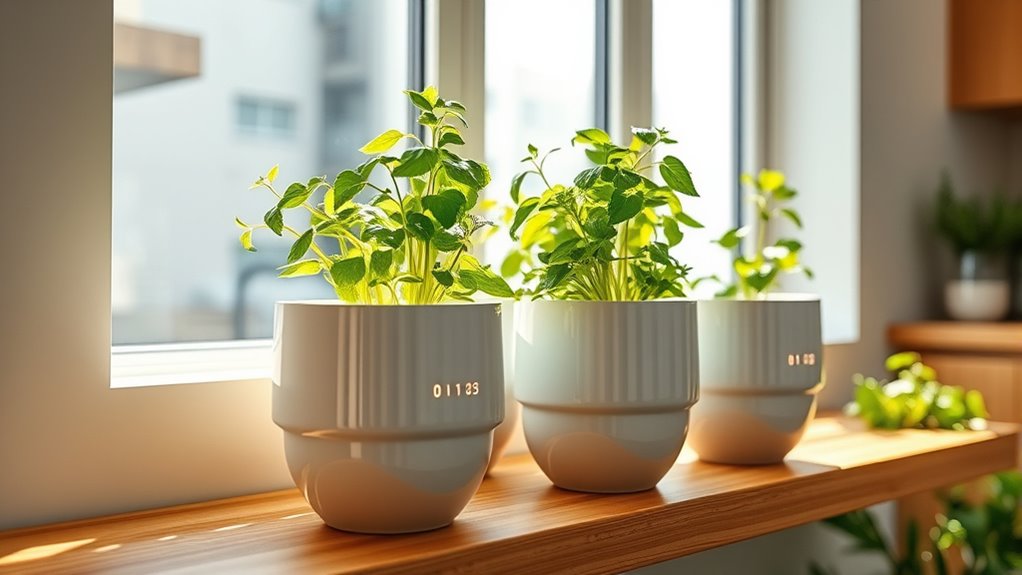
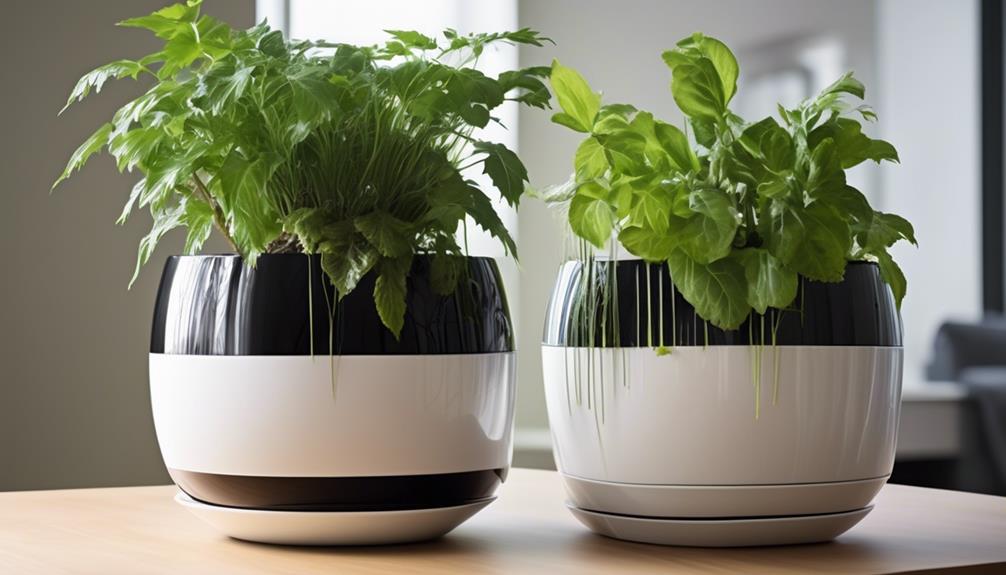
Self-watering pots are a convenient solution for maintaining healthy plants without constant attention. They take the guesswork out of watering by providing a steady supply of moisture directly to the roots. When you use these containers, you won’t need to worry about how often to water your plants, because the system automatically adjusts to their needs. This is especially helpful if you have a busy schedule or tend to forget regular watering. Instead of sticking to a fixed watering schedule, these pots respond to the plant’s actual needs by monitoring soil moisture levels. As a result, your plants stay consistently hydrated, preventing both underwatering and overwatering.
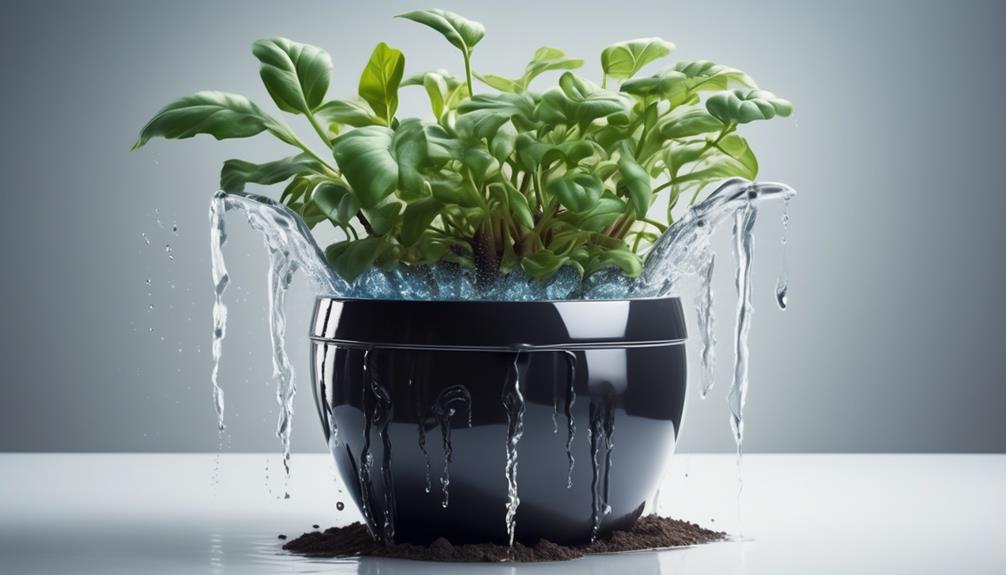
Self-watering pots automatically adjust moisture, keeping plants healthy without constant attention.
Understanding how watering frequency affects your plants is essential, and self-watering pots make this easier. Traditional watering can lead to uneven moisture distribution, which stresses plants and hampers growth. But with a smart self-watering system, soil moisture stays within an ideal range. The built-in reservoirs and moisture sensors work together to keep the soil consistently moist, ensuring your plants receive the right amount of water at the right time. You won’t need to check the soil daily or worry about watering too much or too little; the system takes care of it for you. This not only saves you time but also helps develop healthier, more resilient plants.
Many of these pots utilize innovative technology, such as automated sensors and water level indicators, that constantly monitor soil conditions. When the soil begins to dry out, the system signals or automatically refills, maintaining perfect moisture levels. This constant regulation prevents the soil from becoming too dry or waterlogged, both of which can harm your plants. With improved soil moisture management, you can grow a wider variety of plants—especially those sensitive to inconsistent watering, like herbs and delicate flowers. Plus, the consistent moisture helps promote better nutrient absorption, resulting in lush, vibrant growth.
Another advantage is that these pots reduce water waste. Since the system only supplies water when needed, you avoid overwatering and runoff. This is not only environmentally friendly but also cost-effective. With less maintenance required, you can enjoy your garden without constantly worrying about watering schedules. As technology advances, self-watering pots are becoming more intuitive and user-friendly. Some come with app integration, allowing you to check soil moisture levels remotely or receive notifications when the reservoir needs refilling. This seamless integration makes home gardening more accessible, even for beginners.
In addition, advanced moisture sensors used in many models can help optimize watering routines based on plant type and environmental conditions, leading to healthier growth.
Frequently Asked Questions
How Long Do Smart Self-Watering Pots Typically Last?
Smart self-watering pots typically last around 1 to 3 years, depending on their pot lifespan and durability factors. You can extend their longevity by choosing high-quality materials like ceramic or sturdy plastics, and by maintaining the internal components regularly. Proper care, such as cleaning the water reservoir and avoiding extreme temperatures, helps guarantee your smart pot remains functional for as long as possible, maximizing your investment and gardening success.
Can These Pots Be Used Outdoors in All Weather Conditions?
You might think smart self-watering pots are perfect for outdoor use, but their weather resistance varies. Many are designed with outdoor durability in mind, yet extreme weather like heavy rain, snow, or intense sun can damage electronics or compromise functionality. It’s best to verify each pot’s specifications for outdoor durability, and consider protective covers or placement in sheltered areas to ensure longevity and consistent performance in all weather conditions.
Are Smart Self-Watering Pots Suitable for All Types of Plants?
Yes, smart self-watering pots are suitable for many plant types, but you need to verify plant compatibility and soil requirements first. Some plants thrive in specific soil conditions, so make certain the pot’s soil mix matches your plant’s needs. For example, succulents need well-draining soil, while leafy greens prefer moisture-retentive soil. Adjust watering schedules accordingly to keep all your plants healthy and thriving.
Do They Require Wi-Fi or Bluetooth Connection to Function?
No, smart self-watering pots don’t necessarily need Wi-Fi or Bluetooth to work. Many models use wireless connectivity for app integration, which allows you to monitor water levels and control settings remotely. However, some simpler versions may operate without any wireless connection, relying instead on automatic features. Check the product specifications to see if you need a stable wireless connection for app access or if the pot functions independently.
What Is the Maintenance Process for Smart Self-Watering Systems?
Think of your smart self-watering system as a loyal garden butler. You’ll check its watering schedule to guarantee it’s on track, refill the reservoir when it runs low, and keep an eye on any alerts. Regularly clean the water reservoir and sensors to prevent clogs. These simple tasks keep your system humming smoothly, making plant care effortless while you enjoy a lush, thriving garden without constant fuss.
Conclusion
Smart self-watering pots are transforming home gardening, making it easier and more rewarding. With technology tending to your plants like a gentle hand, you can enjoy lush, healthy greenery without constant effort. These pots act like your garden’s best friends, ensuring plants get just the right amount of water every time. Embrace this innovation, and watch your garden flourish as effortlessly as a breeze dances through leaves. It’s gardening made smarter, and your plants will thank you.