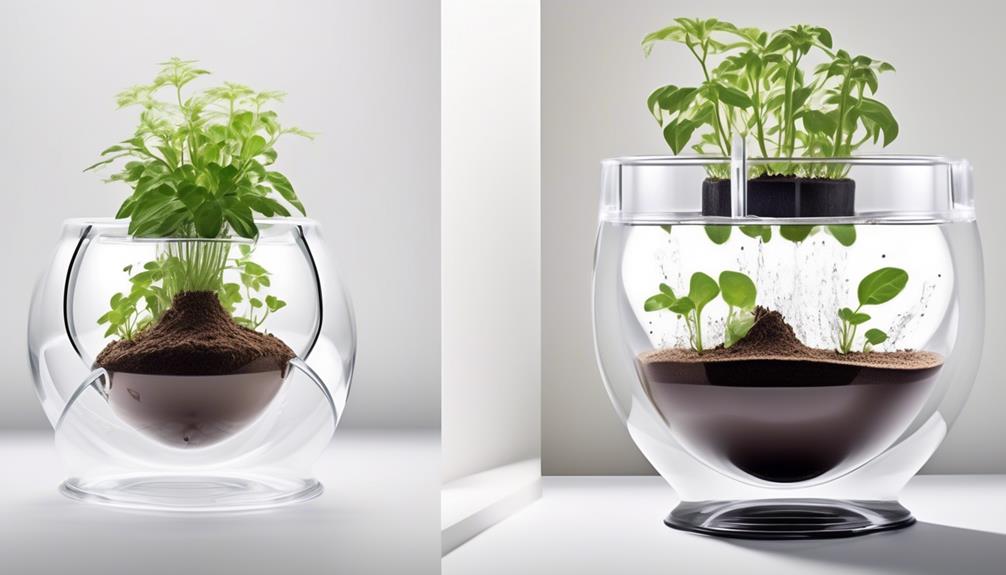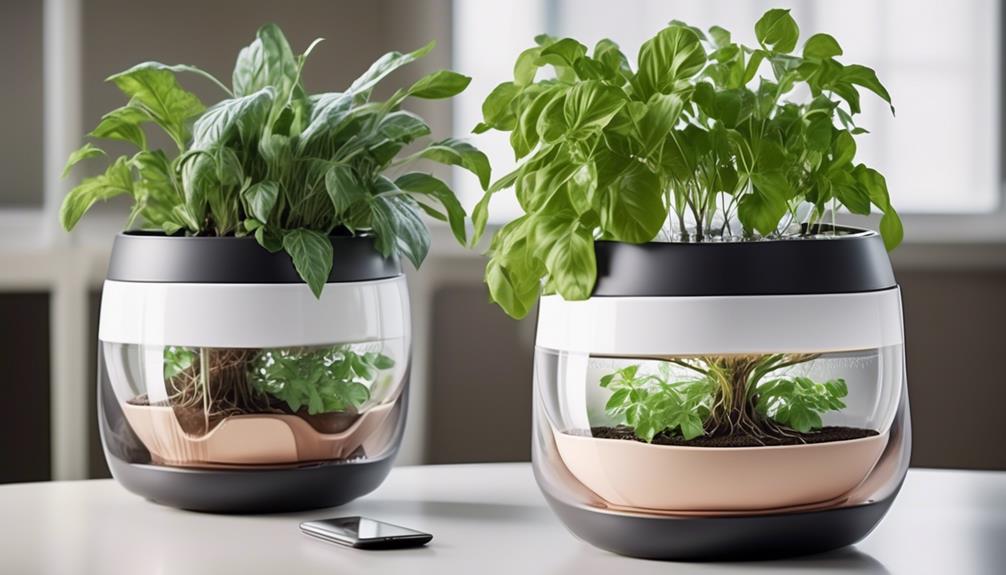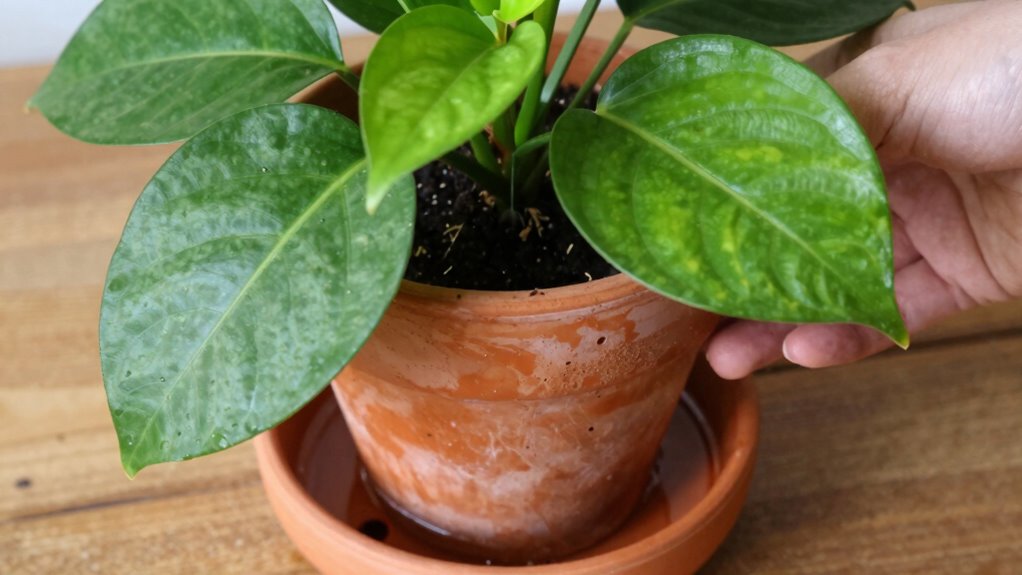

To switch your plant from top watering to bottom watering, start by choosing a tray slightly larger than your pot and fill it with about an inch of water. Submerge the pot’s drainage holes, keeping the plant crown dry, and let it soak for 15-30 minutes until the soil is evenly moist. Monitor soil moisture regularly and adjust watering frequency as needed. Keep going, and you’ll discover how to make this change successfully for healthier, stronger plants.

Get the little things that make your day delivered free with Prime
- Fast, free delivery on millions of items
- Prime Video, Amazon Music and more included
- Member-only deals all year
Key Takeaways
- Gradually reduce top watering frequency while increasing bottom watering sessions to allow the plant to adjust.
- Ensure the pot has proper drainage holes and use a shallow tray with water for bottom watering.
- Monitor soil moisture regularly, soaking until the soil is evenly moist without becoming soggy.
- Keep the plant crown dry during watering to prevent rot and fungal issues.
- Observe plant response and adjust watering frequency based on soil moisture and plant needs.
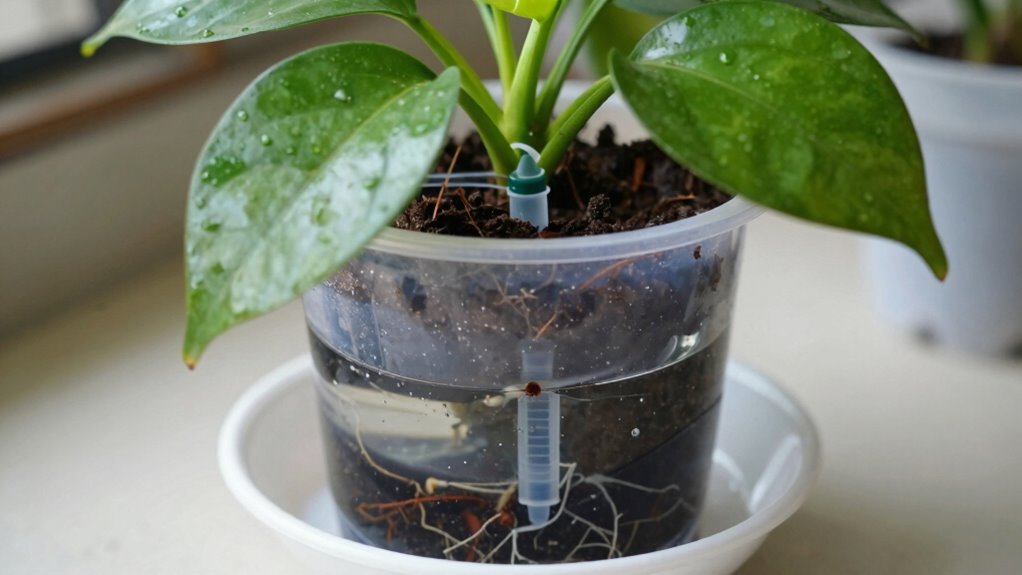
Switching your plant from top watering to bottom watering can improve its health by encouraging deeper root growth and preventing overwatering. When you water from below, you allow the plant to take up moisture as needed, which helps maintain consistent soil moisture levels. This method reduces the risk of overwatering that often occurs with top watering, where excess water can sit on the surface, leading to root rot or fungal issues. Additionally, miscommunication between family members can sometimes cause overwatering if different caretakers have varying watering habits. Adjusting your watering technique also impacts the watering frequency, as bottom watering typically requires less frequent sessions once you establish the right routine for your plant.
Switching to bottom watering promotes healthier roots and reduces overwatering risks.
To start, choose a tray or container slightly larger than your pot and fill it with water about an inch deep. Place your potted plant in the tray, ensuring that the drainage holes are submerged but that the plant’s crown remains dry. Over the next 15 to 30 minutes, the soil will soak up water through the drainage holes, and the plant’s roots will draw what they need. You’ll notice the soil becomes evenly moist, which promotes healthy root development. Using appropriate pot materials like ceramic or terracotta can help regulate moisture levels better and prevent overwatering. Keep an eye on the moisture level, as soil moisture should be be consistently maintained without becoming soggy. When the top inch of soil feels dry, it’s time to repeat the process.
As you transition to bottom watering, you’ll find that the watering frequency changes. Instead of watering on a set schedule, you’ll rely more on the soil’s moisture level. This approach prevents overwatering, especially during cooler months or in environments with high humidity, where plants tend to need less water. You may find that your plant only needs watering every few days or even once a week, depending on its size, pot material, and environment. Always check the soil moisture before watering again; if it’s still moist, wait longer before rehydrating. Incorporating proper watering techniques can help ensure your plant’s roots grow downward in search of water, making the plant more resilient overall. Developing an understanding of soil moisture levels is essential for maintaining healthy watering habits.
Incorporating bottom watering into your routine takes a little patience at first, but it offers precise control over soil moisture and watering frequency. Over time, you’ll notice your plant’s roots become denser and healthier, and the risk of common watering issues diminishes. Remember, the key is observing the soil and adjusting your watering schedule accordingly. Developing a consistent watering routine can help prevent overwatering and underwatering, supporting your plant’s overall health. With consistent practice, you’ll develop a more natural and beneficial watering habit that supports your plant’s growth from the roots up.
As an affiliate, we earn on qualifying purchases.
Frequently Asked Questions
Can I Switch Watering Methods for All Plant Types?
Yes, you can switch watering methods for most plant types, but it’s essential to take into account their specific needs. Adjust your watering frequency based on soil moisture; some plants prefer consistently moist soil, while others need to dry out between waterings. When switching to bottom watering, monitor soil moisture closely to avoid over- or under-watering, and gradually introduce the new method to ensure your plant adapts comfortably.
How Long Should I Wait Before Fully Switching to Bottom Watering?
You should wait about one to two weeks before fully switching to bottom watering. During this period, observe your plant’s hydration response and adjust your watering schedule accordingly. It’s essential to guarantee the plant adapts well without over- or under-watering. By monitoring its health, you’ll establish a reliable watering routine that keeps your plant properly hydrated, promoting healthy growth and avoiding issues like root rot or dehydration.
Is Bottom Watering Suitable for Root Rot-Prone Plants?
Bottom watering isn’t ideal for root rot-prone plants because it can lead to over-saturation, increasing the risk of root rot. To prevent this, focus on root rot prevention by ensuring proper drainage and avoiding water stagnation. While bottom watering can improve water absorption efficiency, it’s best to use it cautiously with sensitive plants. Regularly check soil moisture levels to keep conditions healthy and avoid overwatering.
What Signs Indicate My Plant Prefers One Watering Method Over the Other?
You’ll notice your plant prefers one watering method if you see overwatering symptoms like yellowing leaves, wilting, or root rot signs. Conversely, if leaves turn crispy or show nutrient deficiencies, it might be craving more consistent moisture from bottom watering. Pay attention to how your plant responds—if it recovers quickly with bottom watering, that’s your clue. Adjust your watering method accordingly to keep your plant healthy and thriving.
Are There Specific Containers Better for Bottom Watering?
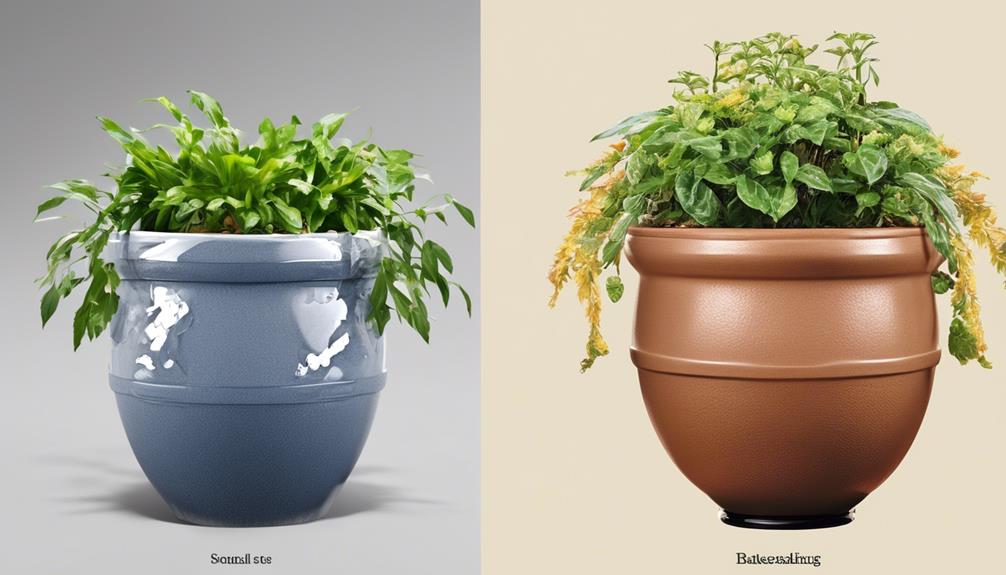
You’ll find that containers made from porous materials like terracotta or clay are ideal for bottom watering because they promote excellent drainage and airflow, preventing overwatering. Look for containers with good drainage features, such as multiple drainage holes or a saucer to catch excess water. These features help your plant absorb moisture gradually, reducing root rot risks. Avoid containers that retain too much water, like glazed ceramic or plastic, unless they have proper drainage.
As an affiliate, we earn on qualifying purchases.
Conclusion
Switching from top to bottom watering might seem like a small change, but it can transform your plant’s health and your watering routine. It’s like trading a quick splash for a slow, mindful sip—more nourishing, less wasteful. Embrace the patience, and watch your plant thrive quietly, just like a well-brewed cup of tea. Sometimes, the simplest shift makes the biggest difference, turning a routine chore into a nurturing ritual.
As an affiliate, we earn on qualifying purchases.
As an affiliate, we earn on qualifying purchases.
NFL season / tailgating Picks
team gear
As an affiliate, we earn on qualifying purchases.