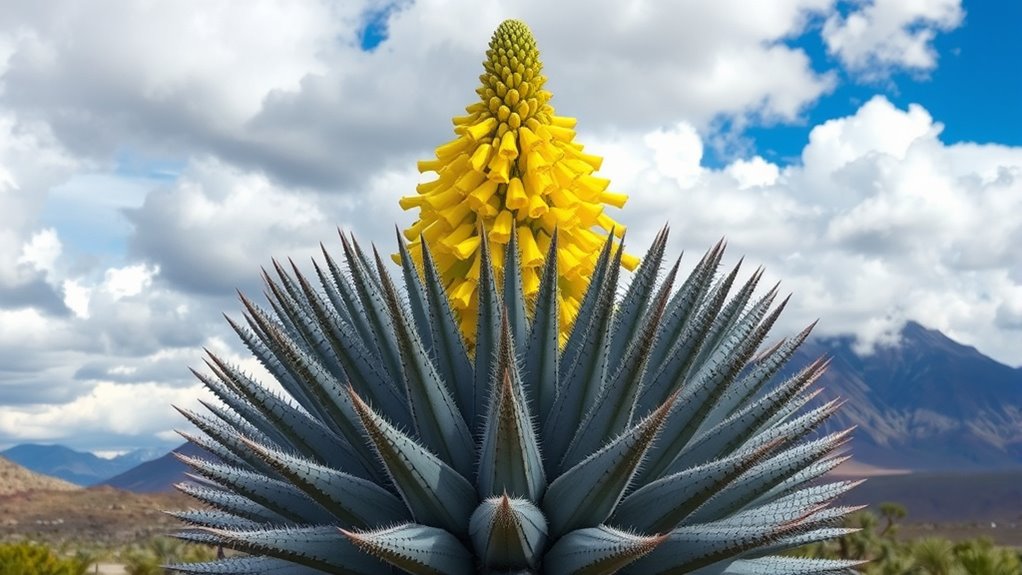

The Puya raimondii, known as the “Giant of the Andes,” is a rare plant that reaches up to 10 meters tall and blooms only once every 100 years or more. It has evolved unique adaptations, like thick silvery leaves to reflect sunlight and trap moisture, allowing it to survive in high-altitude, nutrient-poor soils. Its towering flower stalk attracts pollinators from afar, ensuring cross-pollination. Discover how this incredible plant’s survival strategies keep it thriving in harsh environments.
Key Takeaways
- Puya raimondii, known as the “Giant of the Andes,” can grow up to 10 meters tall and blooms once every 100 years or more.
- Its extraordinary size and adaptations, like reflective leaves and moisture-trapping rosettes, help it survive harsh high-altitude environments.
- The plant produces a towering flowering stalk with vibrant, bell-shaped flowers that attract hummingbirds and large insects for pollination.
- Its tall stature enables long-distance pollen dispersal, promoting genetic diversity despite infrequent flowering cycles.
- Puya raimondii’s rare, once-in-a-century blooming cycle underscores its remarkable survival strategy in the rugged Andes terrain.

Have you ever wondered what it takes for a plant to reach such extraordinary proportions? The Puya raimondii, often called the Giant of the Andes, is a perfect example of nature’s incredible engineering. Growing up to 10 meters tall and producing a flowering stalk that can extend even further, this plant’s impressive size is a result of unique adaptation strategies and specialized pollination mechanisms. Its survival in the harsh environments of high-altitude South America demands more than just resilience; it requires clever adaptations that make every aspect of its life cycle efficient and effective.
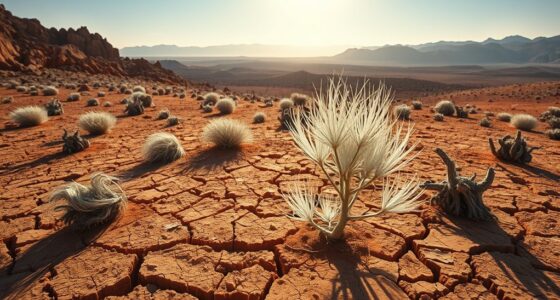
To thrive in the extreme conditions of the Andes, Puya raimondii employs adaptation strategies that allow it to conserve water, withstand intense sunlight, and survive cold temperatures. Its thick, silvery leaves reflect sunlight and reduce water loss through transpiration. The plant’s rosette shape helps trap moisture from fog and dew, which are common in its habitat. These adaptations are essential for its survival in nutrient-poor, rocky soils where growth is slow, and resources are scarce. Because it grows so slowly—sometimes taking decades to bloom—these strategies make certain it can persist through years of challenging conditions, waiting for the right moment to reproduce.
Puya raimondii conserves water with silvery leaves and traps moisture in its rosette shape to survive harsh mountain conditions.
When it finally blooms, Puya raimondii relies on specialized pollination mechanisms that maximize its chances of successful reproduction. Its tall flowering stalk is not just a spectacle; it’s a strategic design to attract pollinators from a distance. The plant produces clusters of vibrant, bell-shaped flowers that appeal to specific pollinators like hummingbirds and large insects. These pollinators are drawn by the flowers’ bright colors and nectar. The plant’s structure guarantees that as pollinators visit, they come into contact with the reproductive organs, facilitating cross-pollination over long distances. This is essential because the plant’s infrequent flowering cycle—sometimes only once every 100 years—means it must make every effort count when the time comes.
Interestingly, the plant’s pollination mechanisms also involve adaptations to guarantee that pollen reaches other Puya raimondii plants, promoting genetic diversity. Its towering height means pollen can travel farther, increasing the chance of reaching distant plants. This strategy is especially important given the plant’s rarity and the long intervals between flowering events. The combination of these adaptation strategies and specialized pollination mechanisms allows Puya raimondii to survive the test of time and environment, standing as a proof to nature’s ingenuity. Its extraordinary size isn’t just a matter of growth; it’s a carefully crafted survival strategy that guarantees this remarkable plant continues to thrive in the rugged Andes, blooming once in a century.
The Rocky Mountain Native Plant Primer: 225 Plants for an Earth-Friendly Garden
As an affiliate, we earn on qualifying purchases.
As an affiliate, we earn on qualifying purchases.
Frequently Asked Questions
How Long Does Puya Raimondii Take to Fully Mature?
You’ll find that the growth cycle of Puya Raimondii spans about 80 to 100 years, making its maturation period incredibly long. During this time, it slowly develops its massive rosette and sturdy stalks. When it finally blooms, it does so only once in its lifetime, producing a spectacular flower spike that lasts for a short period. Patience is key with this extraordinary plant, as its full maturation is a slow, rewarding process.
What Are the Main Threats to Its Survival?
Like a fragile beacon in the wind, Puya Raimondii faces threats that threaten its existence. Habitat destruction from agriculture and infrastructure development whittles away its mountain home, while climate change alters the delicate balance of its environment. These forces threaten its rare bloom and survival, leaving you to wonder how much longer this majestic giant can withstand the relentless march of human impact and changing climates.
Can Puya Raimondii Be Cultivated Outside Its Native Habitat?
You can try cultivating Puya Raimondii outside its native habitat, but it’s challenging due to cultivation challenges and climate adaptability issues. This plant needs specific high-altitude, cool, and dry conditions similar to the Andes. If you attempt to grow it elsewhere, you must carefully mimic its natural environment, providing well-drained soil and ample sunlight. Without these conditions, the plant may struggle to survive or thrive.
How Does Its Flowering Impact Local Ecosystems?
Imagine a silent giant awakening—when Puya Raimondii blooms, it transforms local ecosystems. Its flowering alters pollination dynamics, attracting specific pollinators like hummingbirds and insects, which then aid in seed dispersal mechanisms. This event boosts biodiversity, providing food and habitat. You see, its rare bloom can ripple through the environment, shaping plant and animal interactions, ultimately enriching the ecological tapestry of the Andes.
Are There Any Conservation Programs Dedicated to Puya Raimondii?
Yes, there are conservation efforts focused on puya raimondii. You can support habitat protection programs that aim to preserve its natural environment, ensuring this rare plant survives. These initiatives often involve local communities and organizations working together to prevent habitat destruction caused by agriculture or development. By raising awareness and promoting sustainable practices, you help secure the future of this unique species and maintain the biodiversity of the Andes.

Kew – Rare Plants: The world's unusual and endangered plants (Royal Botanic Gardens, Kew)
As an affiliate, we earn on qualifying purchases.
As an affiliate, we earn on qualifying purchases.
Conclusion
You’ve seen how the Puya raimondii stands tall and blooms just once in a lifetime, reminding us that patience and perseverance often yield the most extraordinary rewards. Like the old saying goes, “Good things come to those who wait.” This giant of the Andes teaches us that nature’s rarest marvels require time and respect. Cherish these moments of wonder, for they’re brief but leave a lasting impression on those willing to wait.

SQOWL 7 Inch Round Ceramic Succulent Planter Pot Drip Glazed Shallow Planter with Drainage Bamboo Tray for Indoor Plants
High quality materials and Easy to Care. Ceramic planter is made of high quality ceramics forged at high…
As an affiliate, we earn on qualifying purchases.
As an affiliate, we earn on qualifying purchases.

Burst of Bloom Wildflower Seeds Mix – 2500+ Non-GMO & Heirloom Seeds, Attracts Butterflies & Hummingbirds, Annual & Perennial Blend for Pollinator Gardens, by Isla’s Garden Seeds
Bring vibrant color and pollinator activity to your garden with the Burst of Bloom Wildflower Seeds Mix, a…
As an affiliate, we earn on qualifying purchases.
As an affiliate, we earn on qualifying purchases.