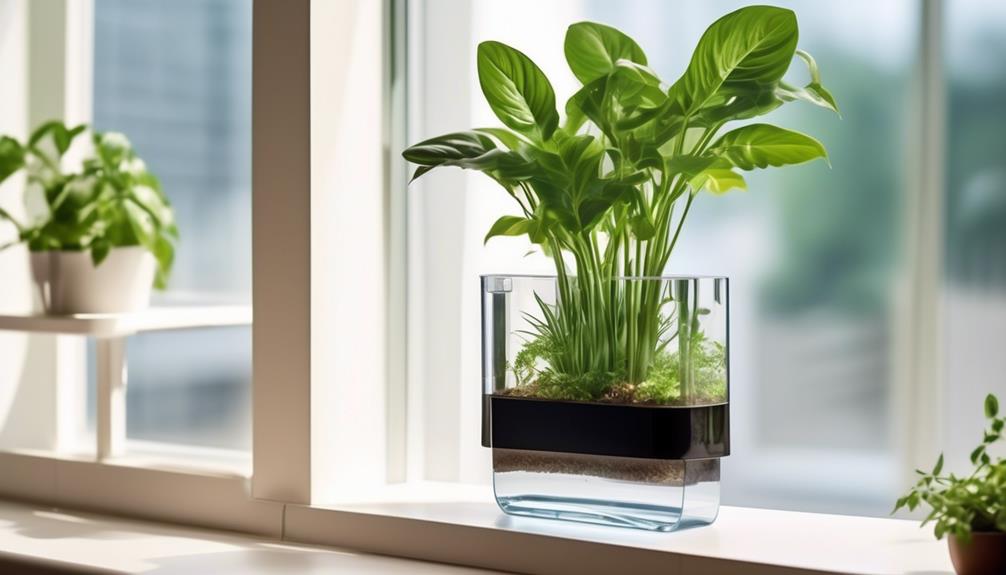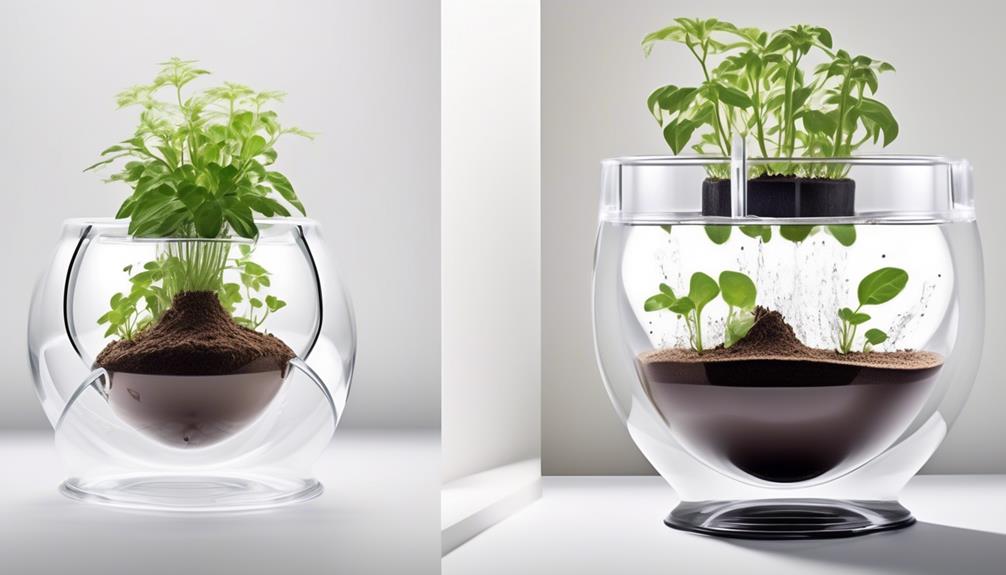
Wicking systems keep your plants hydrated by using capillary action, which pulls water from a reservoir directly to the roots through porous materials like cotton wicks or fabrics. As the wick stays submerged, it continuously draws water upward, maintaining consistent soil moisture without needing pumps or electricity. This energy-efficient method is simple to set up and requires minimal maintenance. If you’re curious about how this natural process can boost your plant care, there’s plenty more to discover.
Key Takeaways
- Wicking systems use capillary action to draw water from a reservoir directly to plant roots without external energy.
- Porous materials like cotton wicks facilitate continuous water movement through adhesive and cohesive forces.
- Proper contact between the wick and water ensures a steady supply, maintaining optimal soil moisture.
- They prevent overwatering and water waste by delivering small, consistent amounts of water as plants need.
- These systems require minimal setup and maintenance, functioning automatically through natural capillary processes.
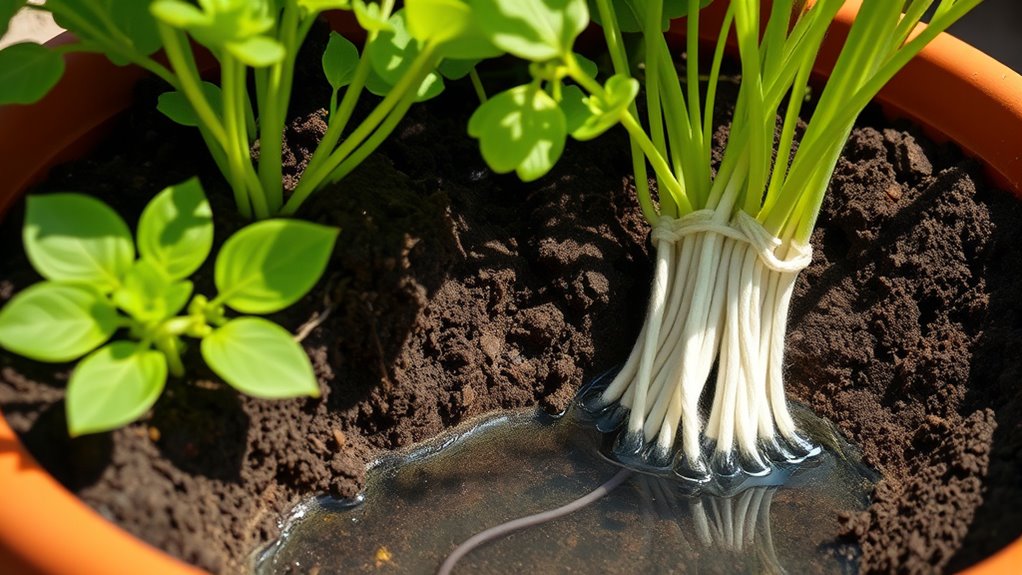
Have you ever wondered how certain systems efficiently move liquids without the need for pumps or external force? Wicking systems do just that, harnessing natural processes to keep plants consistently hydrated. At the core of their operation lies the principle of capillary action, which is responsible for drawing water through tiny channels and materials. When you set up a wicking system, you essentially create a pathway that allows water to travel from a reservoir directly to your plant’s roots, relying solely on the properties of materials and soil moisture. This method ensures a steady supply of water without the need for electricity or mechanical pumps, making it an energy-efficient and low-maintenance solution for gardening or agriculture.
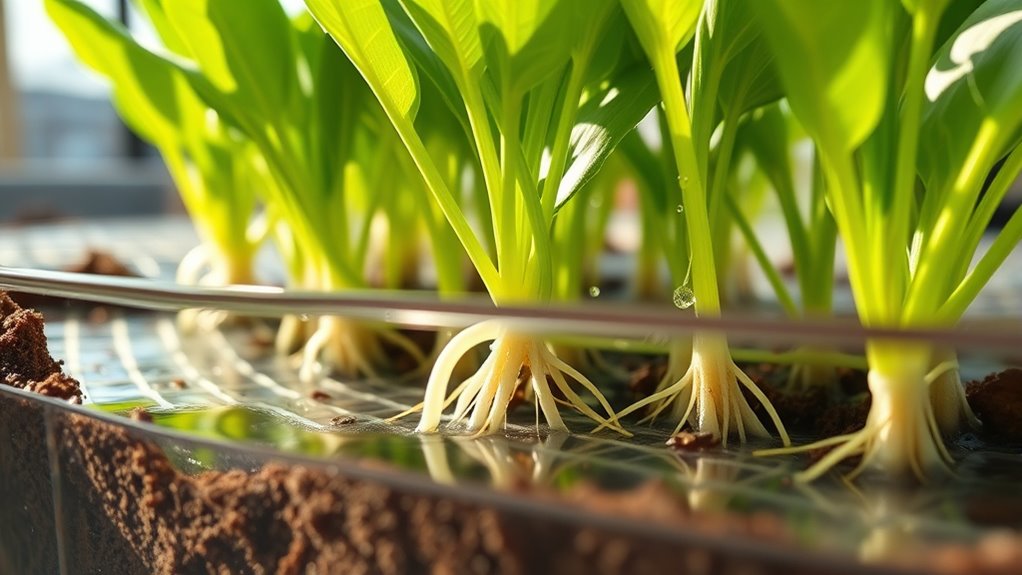
Capillary action occurs because of the adhesive and cohesive forces between water molecules and the material they contact. In a typical wicking system, a porous material like a cotton wick or a specialized fabric acts as the conduit. When the bottom end of the wick is submerged in water, capillary forces pull the liquid upward against gravity, creating a continuous flow. This process is driven by the desire of water molecules to adhere to the surfaces of the wick, pulling more water along as they move. As water rises through the wick, it reaches the soil moisture around the plant roots, gradually increasing the humidity and ensuring the roots stay moist. This passive movement of water is highly efficient because it relies on the natural tendency of liquids to move through narrow spaces.
Additionally, choosing the right preppy dog names can reflect your pet’s personality and your own style, adding a touch of sophistication to their identity. In a well-designed wicking system, the soil moisture level is kept ideal because the water is supplied directly to the roots in small, consistent amounts. This prevents overwatering and reduces water waste, which is especially useful in drought-prone areas or for container gardening. The system’s success depends on selecting the right materials and ensuring the wick remains in contact with the water reservoir at all times. As the plant consumes water, the capillary action continues to draw more from the reservoir, maintaining a stable environment for growth. You don’t need to worry about complicated timers or pumps—just set up your wick, fill the reservoir, and watch your plants thrive with minimal effort.
Frequently Asked Questions
Can Wicking Systems Be Used for Outdoor Gardens?
Yes, you can use wicking systems for outdoor gardens, especially if you want climate adaptation and pest control. They help maintain consistent moisture levels, reducing the need for frequent watering and resisting drought conditions. Plus, since the water is contained within the system, pests like slugs and beetles are less likely to reach your plants. This makes wicking systems a smart, efficient choice for outdoor gardening.
What Types of Plants Benefit Most From Wicking Systems?
Think of wicking systems as a gentle rain that never stops. You’ll find indoor herbs and potted plants thrive best, soaking up consistent moisture. These systems are perfect for delicate or water-loving plants, ensuring they stay hydrated without overwatering. If you want healthy, lush plants with minimal fuss, using a wicking system can be like giving them a steady, natural supply of water—just what they need to flourish.
How Often Should the Water Reservoir Be Refilled?
You should refill the reservoir as needed, typically every few days, depending on your plant’s water consumption and the system’s size. Regular reservoir maintenance is essential to prevent algae growth and guarantee proper hydration. Keep an eye on the water level, and if it drops considerably, do a quick refill. Adjust your refill frequency based on weather conditions, plant size, and overall health to keep your plants consistently well-watered.
Are Wicking Systems Suitable for Large-Scale Farming?
Wicking systems aren’t ideal for large-scale farming because scaling challenges can arise, making them less efficient and harder to manage over vast areas. Plus, cost considerations come into play, since setting up multiple wicking units can become expensive and labor-intensive. For large operations, you might want to explore more advanced irrigation methods that handle bigger areas more effectively and cost-efficiently, ensuring your crops stay well-watered without excessive effort.
What Materials Are Best for Constructing Wicking Systems?
You might worry about durability, but choosing the right materials makes a difference. For construction techniques, opt for permeable fabrics like cotton or burlap for the wick, and use sturdy containers like plastic bottles or wood for the reservoir. Materials selection is vital—you want non-toxic, water-retentive options that won’t break down easily. Properly assembled, your wicking system will efficiently hydrate plants and last through many growing seasons.
Conclusion
By now, you can see how wicking systems effortlessly keep plants hydrated, even during hot days. Imagine a single wick providing water to multiple plants, like a tiny underground pipeline. Did you know that a well-designed wicking system can deliver up to 99% efficiency? That means almost all the water you supply reaches your plants’ roots, reducing waste and ensuring healthy growth. With wicking systems, you’ll enjoy lush, thriving plants with less effort.