Self-watering pots save more water than traditional pots because they deliver moisture only when your plants need it, reducing waste and overwatering. With a reservoir system, you don’t need to check soil moisture constantly, and water is used efficiently, preventing runoff and evaporation. This steady supply helps prevent drought stress and root problems. If you keep exploring, you’ll discover how these systems can benefit your plants and save water in the long run.
Key Takeaways
- Self-watering pots deliver water gradually from a reservoir, reducing overwatering and water waste compared to traditional pots.
- They require less frequent watering, minimizing runoff and evaporation, thus conserving more water overall.
- Traditional pots often lead to overwatering or drought stress, causing inefficient water use and higher waste.
- Reservoir systems in self-watering pots ensure plants receive only the necessary moisture, promoting water efficiency.
- Overall, self-watering pots typically save more water by providing consistent moisture and preventing excess runoff.
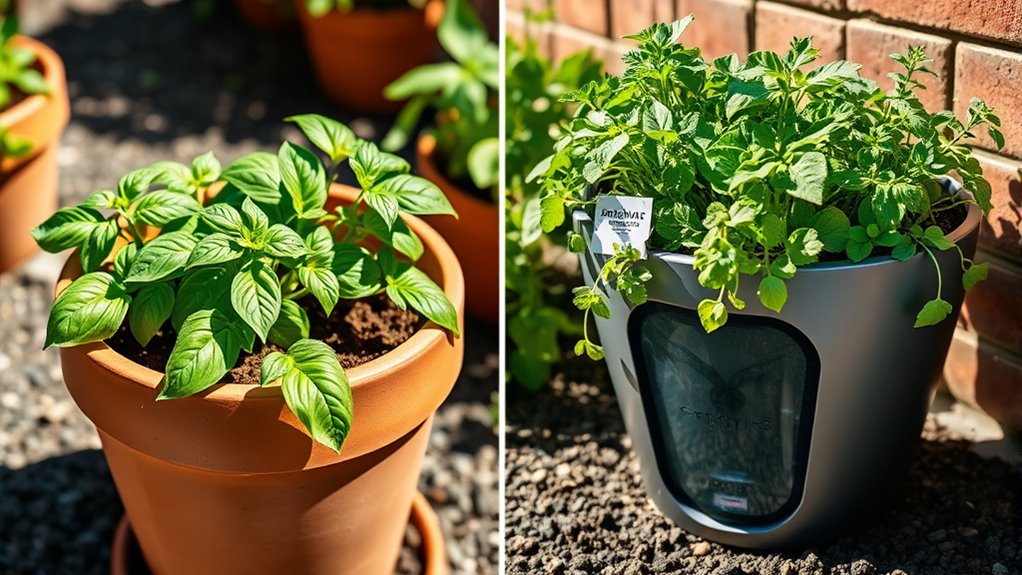
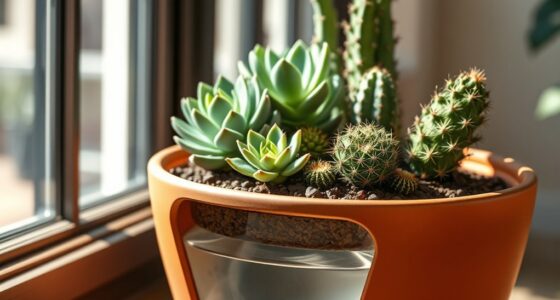
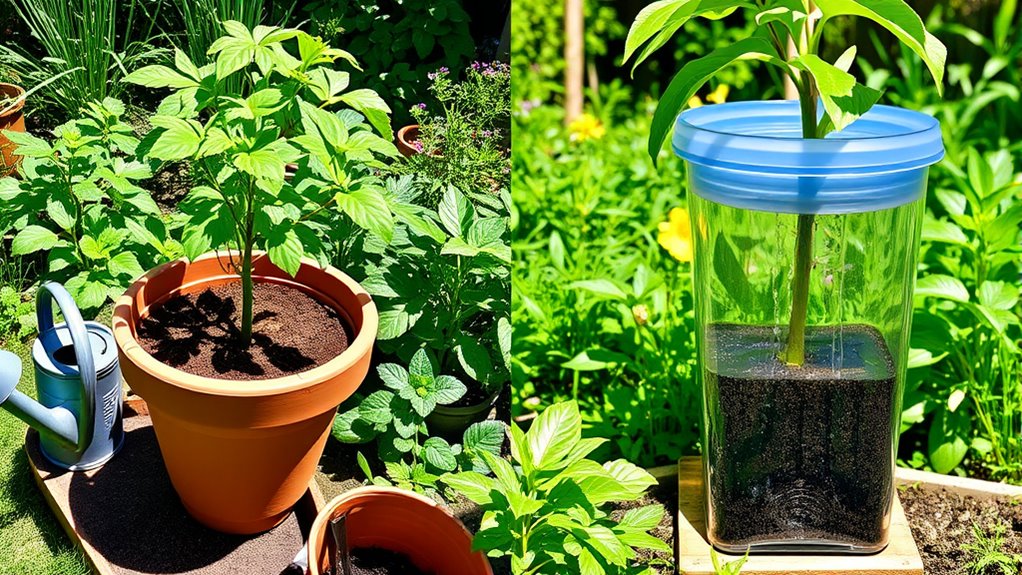
When it comes to caring for your plants, choosing the right pot can make a big difference in maintaining healthy growth. One of the key factors to consider is how the pot manages soil moisture and watering frequency. Traditional pots often require regular checking and manual watering, which can lead to overwatering or underwatering if you’re not careful. You might find yourself watering too frequently, causing water to pool at the bottom and potentially drown roots, or too infrequently, leaving plants thirsty and stressed. On the other hand, self-watering pots are designed to maintain a consistent soil moisture level, reducing the guesswork involved. They typically feature a reservoir that supplies water gradually through capillary action, ensuring your plants receive the right amount of moisture without constant attention. This steady supply helps keep soil moisture levels stable, which is crucial for healthy root development.
Choosing the right pot ensures healthy plant growth by managing soil moisture and watering needs effectively.
With traditional pots, watering frequency is entirely up to you and depends on factors like plant type, pot size, and environmental conditions. You need to develop a routine, checking soil moisture regularly and watering when it drops below a certain point. This can be time-consuming and sometimes inconsistent, leading to periods of drought stress or oversaturation. Self-watering pots simplify this process by reducing the need for frequent checks. The reservoir acts as a buffer, ensuring your plants stay moist without overdoing it. This not only conserves water but also prevents common issues associated with overwatering, such as root rot and fungal growth.
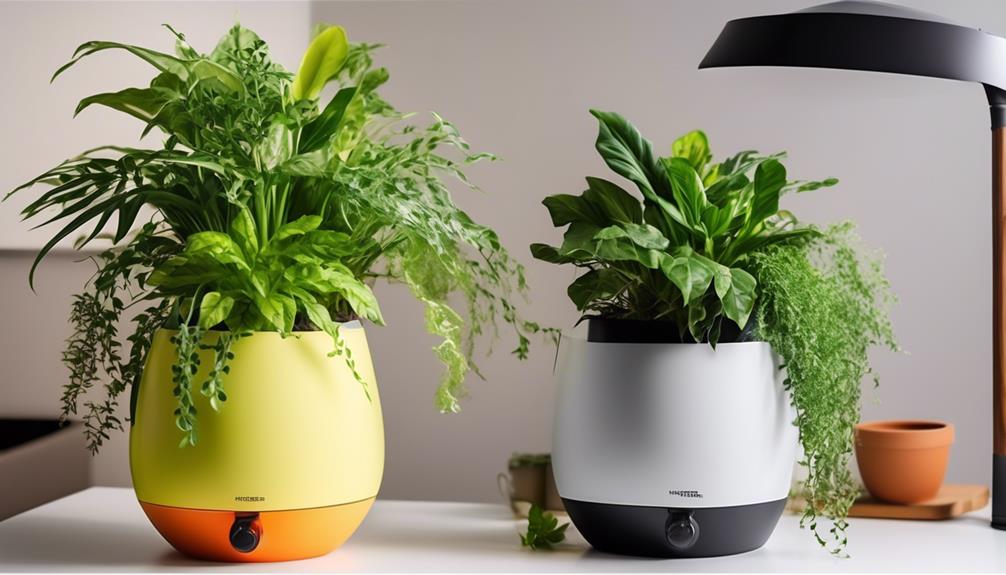
In terms of water savings, self-watering pots generally use less water because they deliver moisture more efficiently and prevent waste. You’re less likely to overwater, which is a common problem with traditional pots when you water on a fixed schedule without considering actual soil moisture levels. The reservoir system means you only add water when it’s needed, which can considerably cut down on unnecessary watering. Meanwhile, traditional pots often lead to excess runoff or evaporation, especially if you water too much at once or if the soil dries out quickly. Over time, this can translate into higher water bills and more frequent trips to refill your watering can.
Another advantage is that self-watering pots can help maintain optimal soil moisture levels even during periods of drought or high heat, supporting healthier plant growth. Ultimately, if you’re looking to save water and reduce the effort involved in maintaining your plants, self-watering pots are a smarter choice. They promote ideal soil moisture levels with less frequent watering, making your gardening routine more efficient. Traditional pots, while more straightforward and less costly upfront, require a more attentive approach to watering frequency and soil moisture management. By understanding how each type handles these aspects, you can choose the option that best fits your lifestyle and helps your plants thrive while conserving water.
self-watering plant pots
As an affiliate, we earn on qualifying purchases.
As an affiliate, we earn on qualifying purchases.
Frequently Asked Questions
Do Self-Watering Pots Require More Maintenance Than Traditional Pots?
Self-watering pots generally require less maintenance than traditional pots because you don’t need to water as often. You’ll find that watering frequency decreases, and you won’t need to water daily. However, you should still check the water level regularly and clean the reservoir periodically to prevent algae and buildup. Overall, they save you time and effort, making them a convenient choice with minimal cleaning requirements.
Are There Specific Plants That Thrive Better in Self-Watering Pots?
Imagine your plants thriving effortlessly—certain species do better in self-watering pots. You’ll find that plants with consistent watering needs, like herbs, ferns, and peace lilies, suit these containers perfectly. Their watering preferences stay balanced, reducing stress and encouraging lush growth. By choosing the right plants for self-watering pots, you create a low-maintenance, thriving garden with minimal effort and maximum water efficiency.
How Do Self-Watering Pots Impact Soil Health Over Time?
Self-watering pots can positively impact soil health by maintaining consistent moisture, which helps prevent soil nutrient depletion. However, over time, they may limit root oxygenation if the soil becomes too compacted or waterlogged, harming plant roots. You should regularly check the soil’s condition, guarantee proper drainage, and occasionally aerate the soil to promote healthy root growth and maintain nutrient levels.
Can Traditional Pots Be Modified to Improve Water Efficiency?
Yes, you can modify traditional pots to boost water efficiency. Start with drainage enhancement by adding holes or using porous materials to prevent waterlogging. Consider pot material modification—switching to clay or glazed ceramics helps retain moisture longer. These tweaks ensure your plants use water more wisely, reducing waste and keeping your garden healthier. Just a few simple changes can make your traditional pots almost as efficient as self-watering systems.
What Are the Cost Differences Between Self-Watering and Traditional Pots?
You’ll find that self-watering pots generally have a higher initial expense, but their cost comparison over time often favors water savings and reduced maintenance. Traditional pots are cheaper upfront, making them appealing for short-term use or budget constraints. An expense analysis shows that investing in a self-watering pot can save you money in the long run through less watering and healthier plants, despite the higher initial cost.
water-saving flower pots
As an affiliate, we earn on qualifying purchases.
As an affiliate, we earn on qualifying purchases.
Conclusion
Just like the wise gardener who learns from the past, choosing self-watering pots can help you conserve water more effectively than traditional ones. Their design ensures consistent hydration, reducing waste and your effort. Like the steady drip of a well-tuned clock, they provide a reliable source of moisture. In the end, embracing smarter watering methods means you’re not only nurturing your plants but also respecting nature’s precious resources—because, as they say, a little water goes a long way.
reservoir gardening pots
As an affiliate, we earn on qualifying purchases.
As an affiliate, we earn on qualifying purchases.

Little Green Leaf Automatic Plant Watering Globes Self Watering Planter Inserts (Set of 4) | Hands Free Multicolor Glass Bulbs | Planter Spikes to Support Indoor & Outdoor Plant Health (100ml)
Improve Plant Wellness – LGL small self watering globes automatically distribute water to your plants when the soil…
As an affiliate, we earn on qualifying purchases.
As an affiliate, we earn on qualifying purchases.