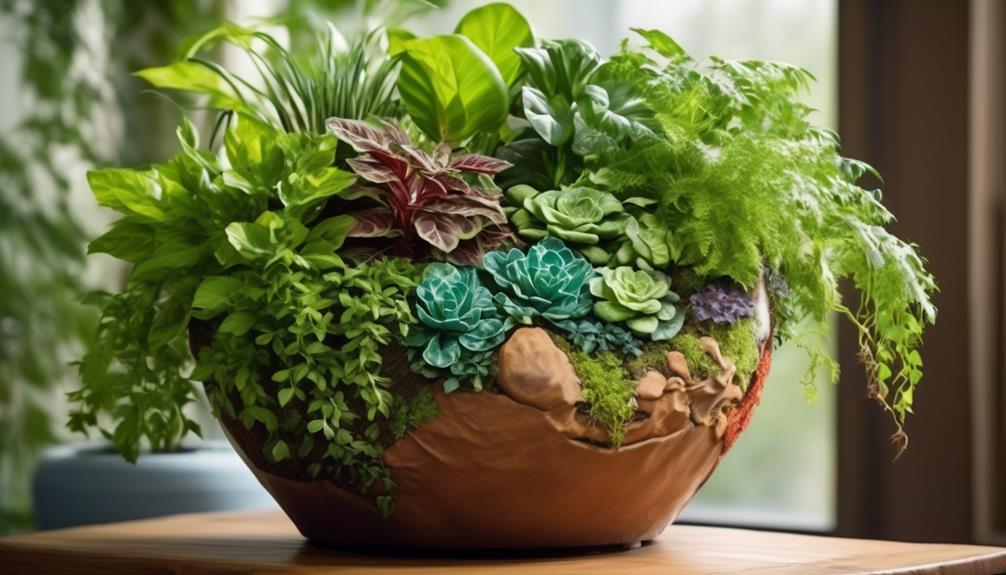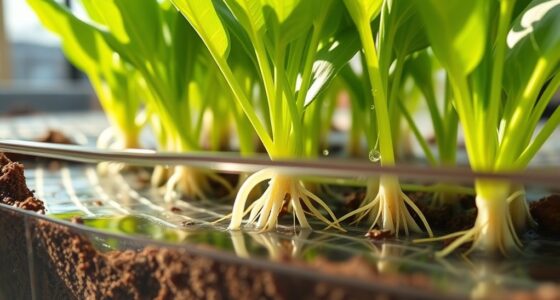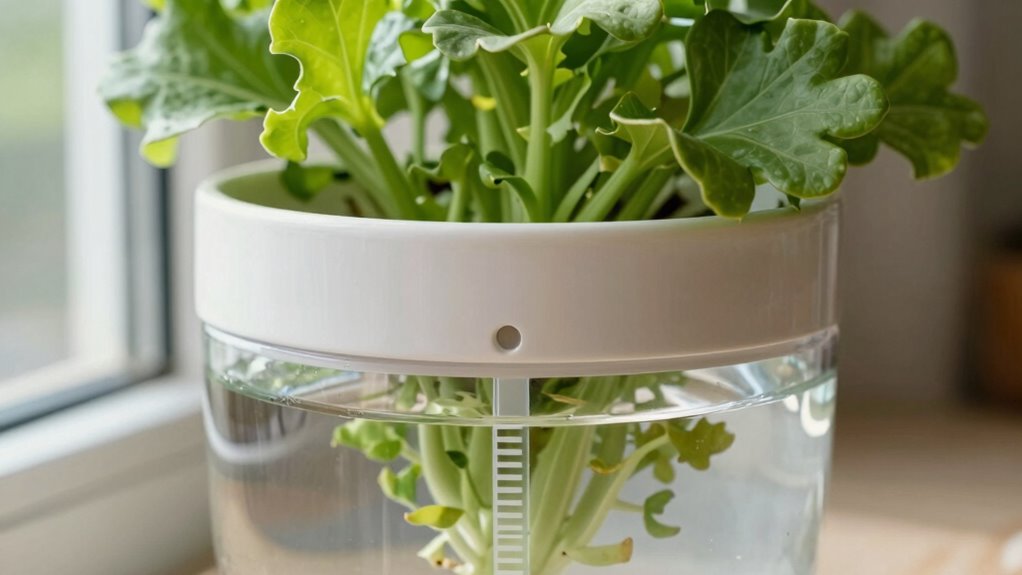

Self-watering pots keep your plants consistently hydrated by using a water reservoir that supplies moisture through capillary action. This design reduces the chances of missed waterings, especially if you forget or have a busy schedule. They help maintain steady moisture levels, preventing issues like overwatering or drought stress. Plus, they promote healthier growth and conserve water by minimizing evaporation. Want to discover how these pots can make your gardening easier and more sustainable? Keep exploring for more tips.

Get the little things that make your day delivered free with Prime
- Fast, free delivery on millions of items
- Prime Video, Amazon Music and more included
- Member-only deals all year
Key Takeaways
- Self-watering pots have a water reservoir that supplies moisture gradually, reducing the need for manual watering.
- They maintain consistent soil moisture, preventing plant stress caused by missed watering days.
- The reservoir design minimizes water evaporation and runoff, ensuring efficient water delivery.
- They promote healthier plant growth by providing steady hydration over extended periods.
- Self-watering pots support busy schedules by automating watering, decreasing the risk of forgetting to water.
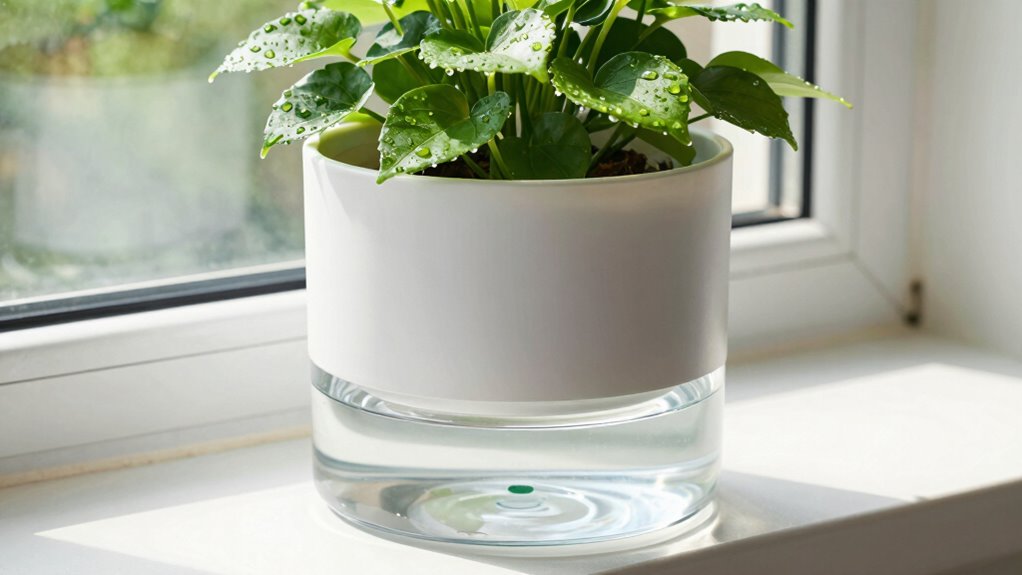
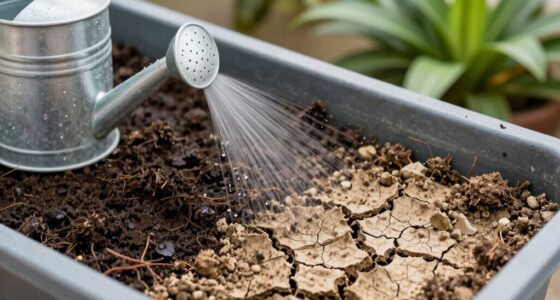
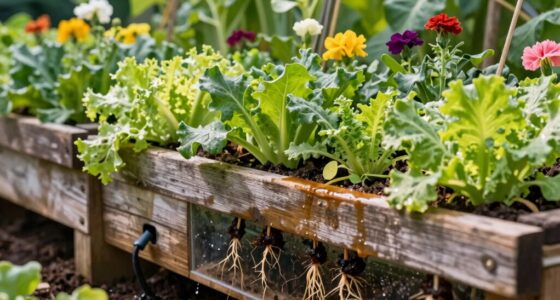
One of the biggest advantages of self-watering pots is how they help reduce missed waterings. Traditional pots require regular monitoring and manual watering, which can be easily overlooked when your schedule gets hectic. Forgetting to water even once can cause plants to wilt or become stressed, impacting their overall health. With self-watering pots, a reservoir holds water that is slowly absorbed by the soil through capillary action. This design means your plants receive a steady supply of moisture, even if you forget to water them for a day or two. As a result, your plants stay consistently hydrated, and you minimize the risk of dehydration or stress that can weaken their growth. Additionally, the long-term structure of these pots allows for more consistent watering without frequent intervention. This water conservation not only benefits the environment but also reduces the frequency of watering needed, making gardening more manageable. Proper soil moisture regulation is essential for healthy plant growth, and self-watering pots help achieve this by maintaining optimal moisture levels. Beyond plant hydration, these pots also promote water conservation. Since the water is stored in a reservoir and delivered directly to the roots, there’s less evaporation and runoff compared to traditional watering methods. This efficient use of water means you’re using less overall, which is especially beneficial if you’re trying to reduce your water bill or minimize your environmental footprint. Incorporating self-watering pots into your gardening routine can also help you learn more about plant care and moisture needs, making you a more knowledgeable gardener over time. Furthermore, the comprehensive design of self-watering pots can help prevent overwatering and underwatering, ensuring your plants thrive with minimal effort. Self-watering pots make it easier to water precisely, avoiding wasteful overwatering that can lead to root rot or other issues. Over time, this precise watering can notably cut down on water usage, making your gardening more sustainable.
As an affiliate, we earn on qualifying purchases.
Frequently Asked Questions
Are Self-Watering Pots Suitable for All Plant Types?
Self-watering pots are suitable for many plants, but their plant compatibility depends on soil requirements and watering needs. You’ll find they’re ideal for plants that prefer consistent moisture, like herbs and ferns, but not for plants requiring dry soil, such as succulents. Before using, check your plant’s soil needs to guarantee the self-watering system supports its growth, preventing overwatering or underwatering issues.
How Often Should I Refill the Water Reservoir?
Think of your self-watering pot as a steady drip, not a flood. You should refill the reservoir when it’s about a quarter full, usually every 1-2 weeks, depending on your plant’s watering frequency and environment. Keep an eye on the water level and monitor your plants for signs of thirst. Regular reservoir refills guarantee your plants stay hydrated without overwatering, making plant care effortless.
Do Self-Watering Pots Prevent Overwatering?
Yes, self-watering pots help prevent overwatering by maintaining ideal soil moisture levels. They automatically supply water as needed, reducing excess and runoff. This feature promotes water conservation, as you use only what the plant requires. You won’t have to worry about overwatering or underwatering, making plant care easier. By regulating moisture, these pots guarantee your plants stay healthy without waste, supporting sustainable watering habits.
Can Self-Watering Pots Be Used Outdoors?
Yes, you can absolutely use self-watering pots outdoors! They’re like superheroes for your plants, offering seasonal durability that withstands various weather conditions. Just make certain you choose the right outdoor placement—shade or protection is best for extreme weather. These pots make watering effortless, even during hot summers or rainy seasons, so your plants stay healthy and happy without constant attention. They’re truly game-changers for outdoor gardening!
What Is the Average Lifespan of a Self-Watering Pot?
On average, a self-watering pot lasts about 2 to 5 years, depending on plant durability and reservoir maintenance. If you choose durable materials like ceramic or high-quality plastic, your pot can last longer. Regularly cleaning and refilling the reservoir helps prevent mold and guarantees proper water absorption. Proper care extends the pot’s lifespan, making it a reliable option for maintaining healthy plants over time.
As an affiliate, we earn on qualifying purchases.
Conclusion
So, thanks to self-watering pots, you’ll never have to worry about forgetting to water your plants again—imagine the horror of dry leaves or sad, drooping blooms. Now, your plants can thrive while you binge-watch that new series guilt-free. They’ll happily sip away, leaving you free to conquer your busy schedule or nap in peace. Truly, these pots turn your green thumb into a lazy gardener’s dream—no more missed watering, just thriving plants and a smug sense of achievement.
As an affiliate, we earn on qualifying purchases.
watering system for indoor plants
As an affiliate, we earn on qualifying purchases.
As an affiliate, we earn on qualifying purchases.
Fall Picks
fall essentials
As an affiliate, we earn on qualifying purchases.