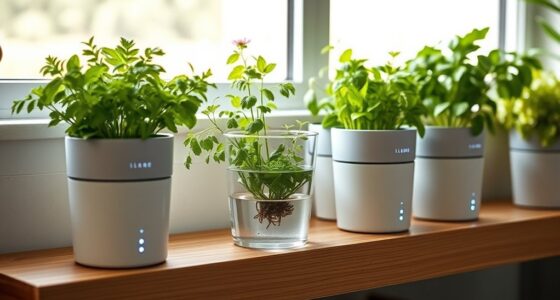

To clean mineral buildup from your self-watering reservoir, start by disconnecting and emptying it. Rinse with warm water, then soak parts in a vinegar-water solution for about 30 minutes to loosen deposits. Use a soft brush or pipe cleaner to scrub away stubborn residues, especially around nozzles and corners. Rinse thoroughly and inspect for clogs. Regular maintenance with filtered water helps prevent future buildup. Keep going to discover more tips for keeping your system efficient and your plants healthy.

Get the little things that make your day delivered free with Prime
- Fast, free delivery on millions of items
- Prime Video, Amazon Music and more included
- Member-only deals all year
Key Takeaways
- Disconnect and empty the reservoir, then rinse with warm water to remove loose mineral deposits.
- Soak reservoir parts in a vinegar-water solution for 30 minutes to loosen mineral buildup.
- Use a soft brush or pipe cleaner to scrub nozzles, corners, and tubing, removing stubborn deposits.
- Rinse thoroughly with clean water to eliminate vinegar residue and residual minerals.
- Implement regular cleaning with filtered water and inspect nozzles to prevent future mineral accumulation.
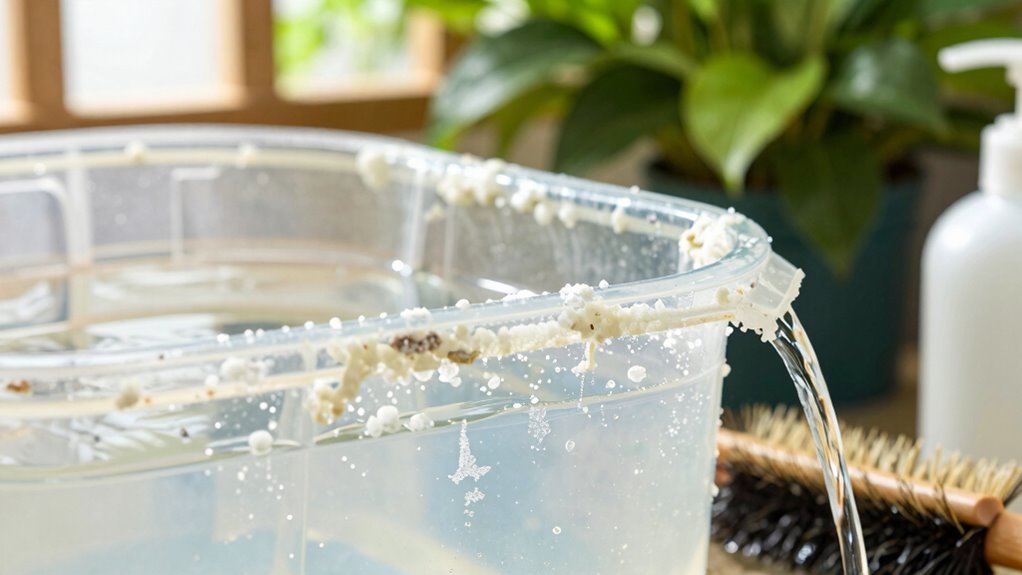
Have you noticed mineral deposits building up in your self-watering reservoir? If so, you’re not alone. Over time, mineral buildup from tap water or fertilizers can accumulate, leading to clogged nozzles and reduced water flow. This buildup can also impact your plant health, as uneven watering or contaminated water may stress your plants or hinder their growth. Addressing this issue promptly is vital for maintaining a thriving, healthy garden and guaranteeing your self-watering system continues to function smoothly.
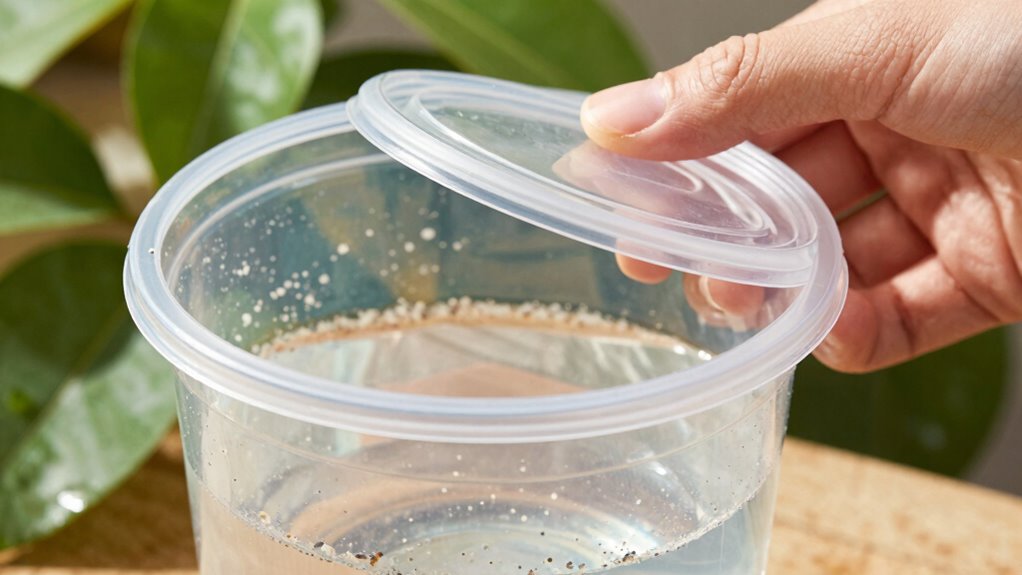
To begin, disconnect your reservoir from the system and carefully empty any remaining water. Rinse the container thoroughly with warm water to remove loose deposits. Avoid using harsh chemicals at this stage, as residual residues could harm your plants or interfere with future watering. Next, prepare a cleaning solution using equal parts white vinegar and water. Vinegar is a natural, non-toxic cleaner that effectively dissolves mineral deposits without damaging your reservoir or introducing harmful substances into your watering system.
Submerge the reservoir parts in the vinegar solution and let them soak for about 30 minutes. During this time, the vinegar will break down the mineral deposits, making them easier to scrub away. After soaking, use a soft brush or cloth to gently scrub the interior and exterior surfaces, paying close attention to corners and nozzles where deposits tend to accumulate. If stubborn deposits remain, you can repeat the soaking process or use a toothbrush to target hard-to-reach spots. Incorporating regular maintenance can help prevent the buildup of mineral deposits over time.
Once the deposits are loosened and scrubbed clean, rinse all parts thoroughly with clean water to guarantee no vinegar residue remains. This step is vital because leftover vinegar can alter the pH of your water, potentially affecting your plants’ health. In addition, using filtered water for refilling can reduce the chances of mineral deposits returning quickly, extending the period between cleanings. Maintaining a clean system is also important, as it reduces the likelihood of buildup and keeps your watering system functioning efficiently. After rinsing, inspect the nozzles and tubing for any clogs or buildup. If necessary, use a fine brush or pipe cleaner to clear any blockages and restore proper water flow. Regular maintenance of your self-watering system can prevent future mineral buildup and keep your plants thriving.
Finally, before reassembling and refilling your reservoir, wipe down all surfaces to remove any lingering residue. Filling the reservoir with fresh, filtered water can help prevent future mineral buildup. Routine aquarium maintenance, including cleaning your self-watering system, is key to supporting your plants’ health. When your system stays clean, your plants receive consistent, clean water, promoting stronger root systems and more vigorous growth. By staying vigilant about mineral buildup and performing routine cleanings, you’ll keep your self-watering reservoir functioning efficiently and your garden thriving.
self-watering reservoir cleaning kit
As an affiliate, we earn on qualifying purchases.
As an affiliate, we earn on qualifying purchases.
Frequently Asked Questions
Can Mineral Buildup Damage My Self-Watering System Long-Term?
Yes, mineral buildup can damage your self-watering system long-term by clogging water filtration components and disrupting pH adjustment. Over time, minerals can cause blockages that hinder water flow, reducing efficiency. Regular cleaning helps prevent this buildup, maintaining proper water filtration and pH balance. By staying proactive, you’ll extend your system’s lifespan and ensure healthy plant growth, avoiding costly repairs caused by mineral deposits.
Are There Natural Methods to Prevent Mineral Buildup?
Yes, you can naturally prevent mineral buildup by maintaining water quality and preventing algae growth. Regularly changing your reservoir water reduces mineral deposits and discourages algae, which can worsen buildup. Using natural algae prevention methods like adding beneficial bacteria or placing the system in a shaded area also helps. Keep an eye on water quality, and you’ll minimize mineral deposits, ensuring your self-watering system stays clean and functions properly longer.
How Often Should I Clean the Reservoir?
Think of your reservoir as a garden pond; it needs regular attention to stay clear. You should clean the reservoir every 2 to 4 weeks to prevent mineral buildup. Regular reservoir maintenance involves draining, scrubbing, and refilling to keep nutrients balanced. Consistent cleaning frequency guarantees your plants get fresh water and prevents the buildup of deposits that can clog the system or harm your plants.
What Tools Are Best for Removing Stubborn Deposits?
You should use cleaning brushes and vinegar solutions to remove stubborn deposits effectively. Start by soaking a cleaning brush in a vinegar solution to loosen mineral buildup. Gently scrub the reservoir’s interior, focusing on areas with stubborn deposits. For tough spots, let the vinegar sit for a few minutes before scrubbing again. This combination of brushes and vinegar solutions guarantees a thorough clean, restoring your reservoir’s functionality.
Does Mineral Buildup Affect Plant Health?
Did you know mineral buildup can reduce water circulation by up to 50%, affecting your plant’s health? Yes, it can impact plant nutrient absorption, leading to stunted growth or yellowing leaves. Mineral deposits block water flow, preventing roots from getting essential nutrients. Regular cleaning helps maintain ideal water circulation, ensuring your plants receive the nutrients they need for healthy growth and vibrant foliage.
vinegar cleaning solution for plant reservoirs
As an affiliate, we earn on qualifying purchases.
As an affiliate, we earn on qualifying purchases.
Conclusion
Cleaning mineral buildup from your self-watering reservoir isn’t just about maintenance; it’s about ensuring your plants thrive. Regularly using vinegar or descaling solutions can prevent stubborn deposits and keep your system functioning smoothly. Many believe that mineral buildup isn’t harmful, but over time, it can clog the system and reduce watering efficiency. By staying proactive with cleaning, you’ll enjoy healthier plants and a longer-lasting reservoir. Trust the process—you’ll see the difference!
plant watering system nozzle cleaner
As an affiliate, we earn on qualifying purchases.
As an affiliate, we earn on qualifying purchases.
reservoir pipe cleaner for plants
As an affiliate, we earn on qualifying purchases.
As an affiliate, we earn on qualifying purchases.
NFL season / tailgating Picks
team gear
As an affiliate, we earn on qualifying purchases.